
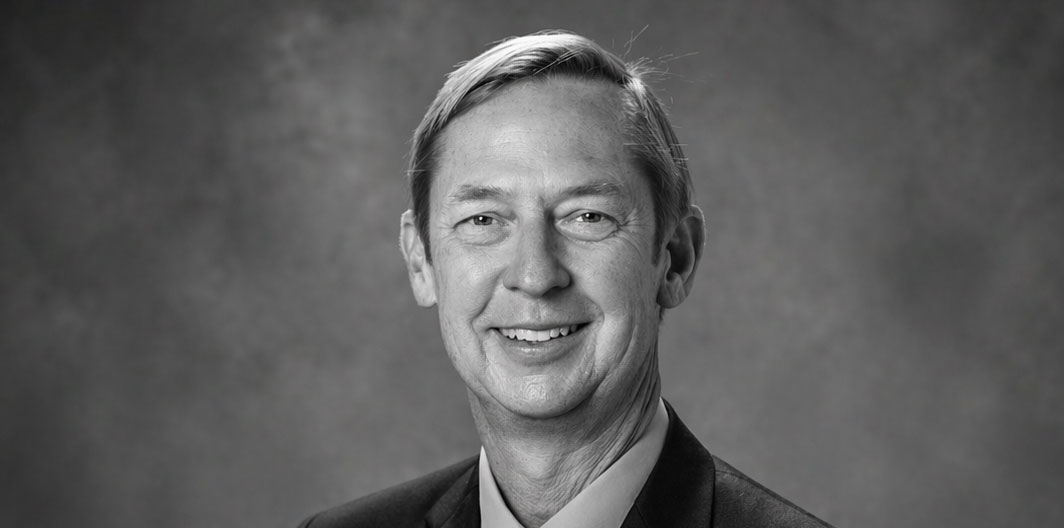

Why was I interested in interviewing Pēteris? He is a Latvian jurist and judge at the General Court of the European Union, appointed in 2021, with a long career spanning international law, public policy, and emerging technologies. Before joining the judiciary, he held senior roles at the European Commission, including leading work on digital innovation, blockchain, and fintech policy, and contributed to shaping regulatory approaches to new technologies. Pēteris’ background also includes positions at the Council of Europe in bioethics, advisory roles at the World Bank, and service in the Latvian government, reflecting a multidisciplinary career at the intersection of law, ethics, and global governance. With expertise in areas such as artificial intelligence, digital markets, and fundamental rights, he represents a generation of jurists navigating how legal systems adapt to technological and geopolitical change.
This interview stands out because it offers a rare and nuanced view into how a senior European judge thinks about the intersection of law, technology, and global policy. Rather than focusing only on institutional positions, it reveals how judicial reasoning operates in practice—particularly in areas like AI, digital regulation, and geopolitical tension—where legal frameworks are still evolving. At the same time, it humanizes the role by connecting Pēteris’ professional outlook with his personal history, cultural background, and intellectual influences. The result is a layered conversation that helps readers understand not only how European law is interpreted at a high level, but also how individual experience, ethical reflection, and historical perspective shape decision-making in one of the world’s most complex legal systems.
Here’s our exchange:
Where are you originally from, and what aspects of your childhood there most shaped who you are today?
I was born in Los Angeles, California, and mostly grew up there, with the exception of a year of primary school spent in Tehran, Iran. I later studied at and graduated from Mira Costa High School in Manhattan Beach, California. I was born to two Latvian parents in the Latvian exile community. I was a very studious child and was selected at a young age for gifted programmes in primary school, even though my mother tongue was Latvian. I benefited from these programmes, as well as from a supportive home environment that emphasized reading and culture, and I later received academic scholarships for both my university and law school studies.
I had a passion for reading across many subjects and, a little later, became seriously involved in sports, both of which set me apart from some of my schoolmates. At the international level, I was a track and road cyclist, qualifying for and participating in the 1988 Olympic Trials in the United States. That same year, I was a U.S. Collegiate National Team Pursuit cycling champion. I also competed in the Canadian Olympic Trials and took part in international competitions in Hungary, France, and across North America. In addition, I ran track and field and cross-country, played competitive golf, and surfed with the Mira Costa, UCSB, UCLA, and USC surf teams.
The neighborhoods where I grew up—including the streets, sports fields, parks, and my primary school (east and west of Los Angeles International Airport)—have largely been closed off, redeveloped, or replaced by airport-related infrastructure. As a result, I have a sense of having grown up in a place that no longer exists except in memory.
How would you describe your family environment growing up, and who were the most influential figures in your early life?
My parents were both born in Latvia and later became war and political refugees, living in camps in Germany and Belgium before eventually settling in California in the 1950s. They were well educated, enthusiastic about knowledge, and set an example of hard and diligent work, while remaining active in the Latvian Lutheran Church and at the Latvian Cultural Center in Los Angeles. Like many from refugee and immigrant backgrounds, they placed great importance on education and achievement.
My paternal grandparents and maternal grandmother, who had also experienced exile, were a caring and important presence in my life in California and nearby (my maternal grandmother later moved to New Mexico). My maternal grandfather was deported to Siberia in June 1940, at the very beginning of the Soviet occupation of Latvia, and spent nearly 20 years in the Gulag. When he was finally allowed to return to occupied Latvia in the 1960s, he was not permitted to return to Riga, where he had lived and where my mother and her brothers had been born, but was instead assigned to a small town in the south of the country, to which he had no connection.
His absence from our lives was a constant reminder of the occupation of Latvia and reinforced the sense that, as Latvian exiles, we lived a different reality from many of our neighbors in Southern California. This was felt especially during family holidays such as Christmas. He was reunited with my mother only in 1989, after 49 years of separation, as Latvia accelerated its move toward restoring independence.
After I returned to Latvia in 1990 to work as Chief Counsel in the newly established Ministry of Environment, I was able to see him frequently over the next four years until his death at the age of 99. Reuniting with my extended Latvian family—many of whom had been deported to or born in Siberia—was a source of inspiration and led to deep relationships that gave me strength and perspective.
My early professional experiences in Latvia from 1990 onward—in environmental protection within the civil service, in the environmental movement (VAK), and in cultural and social life—formed a distinct and formative chapter. They enabled me to contribute, in some small way, to Latvia’s return to Europe and the international community as an independent and constructive actor. The evacuation of the Ministry and its archives during the August 1991 coup attempt, and preparations for Latvia’s signature of the United Nations Framework Convention on Climate Change at the 1992 Rio Conference, remain particularly vivid memories.
Culturally, I sang and played Latvian bagpipes in a folklore group (which continues without me), reflecting how much I benefited from being able to live in Latvia and fully engage with its traditions. My marriage to my wife, Ilze, in 1996, and the birth of our sons in 2000 and 2003, established our own family and represent the most important and cherished aspect of my life.
Were there particular family or cultural traditions that played a lasting role in shaping your values or worldview?
I grew up in a strongly Latvian family environment. Latvian was my mother tongue, and we regularly attended the Latvian Lutheran Church in Los Angeles and participated in events at the Latvian Cultural Center. I was confirmed in the Latvian Lutheran Church at the age of 18 after completing the study programme.
The political and historical circumstances behind my grandfather’s absence were always present in our lives. The Latvian community maintained a vibrant cultural life, including music and newspapers, which are vivid memories from my childhood. The still-popular Latvian writer Anšlavs Eglītis lived in Los Angeles at the time and was often present at cultural events; my parents explained his importance in Latvian literature and art.
Latvian history, traditions, and language were ever-present, as was the understanding that the Soviet incorporation of Latvia was not recognized by the United States and its allies. When independence movements in Estonia, Latvia, and Lithuania gained momentum in the late 1980s, I participated in Baltic youth actions and protests at cultural centers and at UCLA, and was interviewed by local media about the independence movement.
At the same time, my parents maintained a broader European cultural orientation. During family holidays, I traveled with them to Spain, Portugal, France, Germany, Switzerland, Austria, the United Kingdom, and Italy. Their work also took them to Asia and the Middle East, allowing me to spend time in Iran and visit Japan, Taiwan, Vietnam, Singapore, Australia, and Morocco. As a result, my worldview developed as both distinctly Latvian and Californian, but also deeply international.
My father, an engineer with strong computer skills, introduced me to technology at an early age. This was reinforced through programming courses at UCSB and UCLA and by the fact that UCLA was closely linked to the early development of the Internet. I had an excellent experience at the University of California system and later benefited from a strong academic foundation in international and environmental law at the University of Southern California Law Center.
I was also shaped by the dynamic culture of Southern California in the late 1970s and 1980s. There was a vibrant cycling scene centered around the Encino Velodrome and later Cal State Dominguez Hills, where I raced frequently alongside Olympic champions and even rode a training ride with sponsor, Eddy Merckx.
A strong “do-it-yourself” ethos prevailed—friends shaped surfboards, designed clothing, and built bicycle frames. I founded and captained the Mira Costa High School Surf Club/Team, organizing competitions and promoting events.
The local music scene was also remarkable. Influential punk bands such as Black Flag, the Descendents, the Last, and Pennywise emerged from Hermosa Beach and my high school, alongside members of Circle Jerks and Redd Kross. Their concerts—and sometimes riots—were part of the environment. At the same time, I wrote columns on soul and jazz for a California music magazine. It was a turbulent yet inspiring cultural landscape.
What initially drew you to the field you chose to study, and was there a moment when you realized it was the right path for you?
Due to my family history, I was naturally oriented toward political and legal issues, which led me to study political science and law. For a time, I considered pursuing oceanography, as I have always had a deep appreciation for nature—particularly the Pacific and Atlantic Oceans and the Baltic Sea—and was drawn to the idea of studying the environment throughout my life. Ultimately, however, I concluded that my true calling was in the law.
I was offered the opportunity to pursue a doctorate in political science at UCLA, but I was more attracted to the broader range of career opportunities and flexibility that a law degree could provide.
At what age did you begin working, and what did your first job teach you about responsibility or independence?
My first regular job was at Vans Skateboard Shoes in Manhattan Beach when I was 17. Punctuality was never an issue for me, and since I had skateboarded myself, I had some relevant knowledge. The shop valued my work and wanted me to stay on, but I left shortly before beginning my first year at the University of California, Santa Barbara, as that was clearly my priority. While the experience was positive, it confirmed for me that I did not want to pursue a career in sales.
How would you describe your current professional role, and what aspects of it do you find most meaningful?
I am a judge at the General Court of the European Union, which is part of the Court of Justice of the European Union. I also serve as a member of the Court of Justice’s Artificial Intelligence Management Board and was elected to the General Court’s Management Board for the period 2022–2025.
The General Court is one of two courts that make up the Court of Justice of the European Union and consists, in principle, of 54 judges—two from each Member State. I am one of the two judges nominated from Latvia.
The Court’s main function is to hear cases brought by individuals, companies, and organizations challenging acts or decisions of EU institutions and bodies. In doing so, it ensures that EU institutions comply with the law. It is also responsible for certain preliminary rulings referred by national courts in specific areas.
What I find most meaningful is contributing to the rule of law and ensuring that citizens, companies, and Member States have the opportunity to challenge decisions they believe are unfounded. The European Union is fundamentally a community based on law, and the Court—both the General Court and the Court of Justice—is central to upholding that foundation.
As a judge at the General Court of the European Union, how do you navigate the increasing politicization of legal disputes that sit at the intersection of law, technology, and economic power?
A judge at the General Court must act impartially, autonomously, and independently. Politicization should not influence or interfere with judicial decision-making. Judges are prohibited from seeking or taking instructions from any government, institution, or external body.
The Court’s role is to assess the legality of contested actions, not their political relevance or impact. Proceedings are based on the written and oral arguments presented by the parties, not on public opinion, political considerations, or lobbying.
Before joining the Court, you were deeply involved in EU digital and financial policy—how do you ensure that prior policy perspectives do not consciously or unconsciously shape your judicial reasoning?
One of the reasons I believe judges will not be replaced by artificial intelligence is that judging requires both subjective and objective life experience. These experiences help inform the application of law to specific facts and circumstances—it cannot be a purely mechanical process.
At the same time, judges must remain constantly aware of their own experiences and potential biases. Each case must be approached impartially and independently. Personally, I remind myself that my role is not to formulate policy, but to interpret and apply EU law. This was something I was conscious of when I became a candidate for the judiciary, and after nearly five years on the bench, it has become second nature.
The EU is positioning itself as a global regulator in areas like digital markets and crypto-assets—how does the Court balance legal certainty with the rapid evolution of these sectors?
It is important to emphasize that judges are not legislators. It is the responsibility of the legislator to take such considerations into account. However, when applying the law, judges may consider whether the legislator intended to “future-proof” legislation—that is, to allow it to adapt to technological progress and innovation.
For example, in the Grand Chamber judgment of 10 September 2025, Austria v Commission (T-625/22), where I served as reporting judge, the Court addressed innovation and the Taxonomy Regulation. We noted that the EU legislature had defined environmental sustainability criteria without favoring one technology over another, while allowing the regulatory framework to adapt to future innovation.
The Court recognized that legislation cannot realistically list all existing or future technologies. Doing so would risk making it obsolete. Instead, the framework must remain flexible enough to accommodate ongoing technological and economic development while still providing legal certainty.
Cases involving major technology companies often carry significant geopolitical implications—should judges consider these broader consequences, or remain strictly within legal interpretation?
The judicial role is to interpret and apply the law. While geopolitical considerations may be reflected in legislation and may therefore become relevant in legal arguments, it is not the role of judges to introduce such considerations independently.
Judges are not policymakers or political actors. Their task is to remain within the legal framework established by the legislator and the arguments presented by the parties.
The EU legal order is built on principles like proportionality and subsidiarity—how are these principles tested in disputes involving cross-border digital platforms?
As a judge, I should exercise a degree of discretion in commenting on specific areas, particularly as I have not yet participated in cases involving the Digital Markets Act or the Digital Services Act.
That said, proportionality is a general principle of EU law, and subsidiarity is a fundamental constitutional principle governing the exercise of EU competences. Both principles may be invoked by parties in litigation where they are relevant, including in disputes involving cross-border digital platforms.
With the rise of AI and algorithmic decision-making, how prepared is the judiciary to assess evidence and arguments that are highly technical and often opaque?
In our case, it is not the role of the judge to redo or replace the technical evaluations conducted by an institution, but rather to review their legality. However, a broader future challenge relates to so-called “black box” reasoning, where even the company, programmer, or technical body responsible may not fully—or even partially—understand how an AI system reached a particular conclusion. This is also a relevant issue for our own use of AI tools within the Court of Justice, as reflected in the Artificial Intelligence Ethics Charter adopted in January 2026.
You have worked on blockchain and fintech policy—do you see EU regulation in this space as enabling innovation, or constraining it in favor of risk control?
Ideally, reflecting on my previous roles, regulation should enable innovation, and that was certainly the spirit in which I worked—for example, through the use of regulatory sandboxes. However, given my current judicial role, I must be cautious in evaluating existing legislation and its application.
This is perhaps one of those moments when an interview with a judge may seem somewhat restrained, as we must be discreet in expressing opinions on issues that could potentially come before us. It is simply part of the nature of our profession.
That said, I would point to my article, “The Need for an Innovation Principle in Regulatory Impact Assessment” in the Network Law Review, which benefited from my time as a Visiting Senior European Union Fellow at St. Antony’s College, University of Oxford, and as an Associate of the Political Economy of Financial Markets programme there. In it, I highlighted the importance of an innovation principle and the tools that can support its implementation. My time at Oxford, and observing the regulatory sandbox at the Financial Conduct Authority in London, was a particularly memorable period in my career.
How do you approach cases where regulatory frameworks are still evolving, and legal certainty is inherently limited?
This is another example of why the role of the judge, in my view, will not soon—if ever—be replaced by artificial intelligence. The law should ideally evolve alongside society and technology, rather than remain static or rely solely on past judgments without considering their relevance to present or future conditions.
The General Court increasingly handles complex competition and state aid cases—do you believe the current legal tools are sufficient to address market concentration in the digital economy?
As a member of the judiciary rather than a policymaker or legislator, my role is to apply the law as it stands and to use the legal tools reflected in existing case law. It is natural that both legislation and case law will continue to evolve in response to developments in markets, technologies—such as AI and quantum computing—and society more broadly.
Transparency is a growing demand in EU governance—how does the Court balance openness with the need to protect sensitive commercial or institutional information?
The rights of the parties appearing before us must be fully protected, including with regard to sensitive commercial, institutional, and personal information. We are therefore seeing increasing use of anonymization and pseudonymization in cases involving sensitive matters.
At the same time, openness and accessibility of justice are key priorities for both the General Court and the Court of Justice of the European Union as a whole. This is one area where we aim to make greater use of artificial intelligence, particularly to improve access and communication with EU citizens in all official languages.
More hearings of the Court—and soon of the General Court—are being streamed, and we have launched a series of interviews with judges and Advocates General titled “Open Court” on the Curia website. I will be participating in upcoming interviews on artificial intelligence and on the recently adopted Artificial Intelligence Ethics Charter. We also maintain an active dialogue with national judges, reflecting the fact that we are all European judges working together in the application of EU law.
Given your background in public health and ethics, how do you see fundamental rights shaping decisions in areas like data protection and digital surveillance?
Fundamental rights underpin all of our judgments in EU law. The Charter of Fundamental Rights is binding on EU institutions and applies whenever EU law is implemented. It encompasses a broad range of social, economic, political, and civil rights—not only data protection and digital surveillance, although those are certainly important and sensitive areas.
To what extent does the Court play a role not just in interpreting EU law, but in shaping its practical trajectory through its judgments?
The role of the Court of Justice of the European Union is to ensure that EU law is interpreted and applied uniformly across all Member States. Preliminary rulings—issued by the Court of Justice and now, in certain areas, also by the General Court—are a key mechanism in achieving this.
Historically, the Court of Justice has played a transformative role in shaping EU law—for example, in establishing the principles of primacy and direct effect in landmark cases such as Costa v ENEL and Van Gend en Loos in the 1960s. It has even been described as an architect of European integration.
Today, we stand on the shoulders of those earlier judges and judgments. That said, I would be cautious—particularly in my role at the General Court—about placing myself in that same category. My day-to-day work is important in upholding the rule of law and ensuring legal certainty, even if it is not revolutionary.
How do you ensure consistency in jurisprudence across cases that involve rapidly changing technologies and business models?
Consistency within the General Court is maintained through several mechanisms: monitoring of related cases by the Vice-President, allocation of closely connected cases to the same judges or chambers where appropriate, coordination among chambers and reporting judges, and the use of the intermediate chamber when necessary.
In addition, seminars on emerging legal topics and the work of the Court of Justice’s Artificial Intelligence Management Board—of which I am a member—help highlight technical and legal issues that are either emerging or already relevant.
What is the biggest misconception policymakers have about how courts engage with innovation and regulation?
I would hesitate to suggest that policymakers hold misconceptions about the courts. Ideally, they understand that judicial review is carried out within clearly defined parameters. I do not believe that either the Court of Justice or the General Court is perceived as being inattentive to the role of innovation in the modern economy.
Looking ahead, what would be the greatest legal challenge for the General Court of the European Union in maintaining legitimacy and effectiveness in an increasingly complex and contested regulatory environment?
The General Court must remain efficient and productive in managing its caseload, and ideally continue to improve in both respects. One unique challenge we face is operating in 24 procedural languages, corresponding to the official languages of the European Union. This ensures access to justice for all EU citizens but also entails a substantial translation and interpretation burden.
We hope that the development and use of artificial intelligence tools within the Court will help improve efficiency and meet the expectations of EU citizens.
Another challenge is that judges at the General Court are, by definition, generalists, yet must address increasingly complex technical fields—whether in digital technologies, medicine, chemicals, or taxation. While demanding, this is also one of the aspects that makes the role particularly engaging.
If you reflect on the EU’s ambition to set global standards, what role should the judiciary play in ensuring that this ambition remains grounded in legal coherence and fundamental rights?
As mentioned earlier, fundamental rights are central to the interpretation and application of EU law. This must also apply to technical standards, which can have significant implications in areas such as health, digital regulation, and intellectual property.
More broadly, where “standards” are understood as widely observed legal norms, they must always be assessed in light of fundamental rights protections.
Has there been a book, film, or work of art that significantly influenced the way you see the world or think about your work?
I could mention two books on Latvian history that I have found particularly meaningful. The first is Zeme, kas dzied. 1873. gads by Dainis Īvāns and Māris Martinsons, which recounts the first Latvian Song Festival in Riga in 1873. These festivals remain one of Latvia’s most cherished traditions, bringing together more than 10,000 choir singers. My maternal grandfather, after returning from deportation in Siberia, was the oldest participant in several festivals, and my wife has also taken part, so we have a personal connection.
The book describes how the first festival was organized against significant resistance from local authorities and the Russian Empire, highlighting strategic thinking and perseverance.
The second book is Rainis un viņa brāļi by Roalds Dobrovenskis, which explores key figures in the Latvian social democratic movement, including Jānis Rainis and Aspazija, and how their commitment to social justice led them down very different historical paths.
From a broader perspective, I have also appreciated D.T. Suzuki’s Essays in Zen Buddhism, as well as the Japanese television series Fumō Chitai, which portrays post-war Japan and its economic development, including the experiences of those deported to Siberia.
Looking at younger generations today, what gives you the greatest sense of hope, and what concerns you the most?
I am encouraged by the strong concern many young people show for environmental issues, climate change, and fairness in the economy. At the same time, I am somewhat concerned that some may have become overly reliant on artificial intelligence tools—even in education—and may not be developing the same skills in independent research and problem-solving as previous generations. That said, this may simply be an anecdotal impression.
If you could spend a full day with any historical figure, who would you choose, and what questions would you want to ask them?
Although it may seem that we are living in uniquely turbulent times, history offers many similar periods. One such moment was the end of the First World War and the Latvian War of Independence (1918–1920). Latvia’s founders demonstrated remarkable vision and resilience while navigating pressures from both German and Russian forces.
Figures such as Jānis Rainis and Latvia’s first president, Jānis Čakste, would be fascinating to speak with—particularly about how they maintained their strategic focus and commitment to democracy and self-determination under such challenging circumstances.
If you were asked to teach a class on a subject completely unrelated to your profession, what would it be, and what would you hope students take away from it?
I would choose a subject related to the appreciation of nature and the environment, although I would not claim expertise beyond environmental law. I would hope to instill an understanding of the importance of protecting nature and the climate, as well as an appreciation for diverse cultural traditions that emphasize harmony with the natural world.
If you could ensure that one human value is never lost in society, which value would you choose, and why?
Justice. Values such as fairness, accountability, and impartiality are essential to building a sustainable, equitable, and thriving society.
Humanity is facing radical changes. To name just ten: geopolitical instability, climate change, economic inequalities, technological risks, public health challenges, political polarization, resource scarcity, humanitarian crises, misinformation, and disparities in global healthcare access. If, in an imaginative exercise, you had the power to solve one of these problems, which one would you choose first and why?
I would choose climate change, because it is, in many respects, irreversible. At the same time, it is an area where we still have the capacity to act meaningfully—to ensure that we leave the planet to future generations in a condition that is at least not significantly worse, and ideally more resilient, than the one we inherited.
What do you believe human beings owe one another, both as individuals and as members of a global society?
To care for the planet, to strive for peace and justice, and to contribute to innovation that advances human health and scientific progress.
Interviews often focus on successes. Could you share something from 2025 that did not unfold as you expected, and what that experience taught you?
I continuously strive to improve, so I can honestly say that I could likely have performed better in many areas—more efficiently or more precisely. Overall, however, 2025 was a productive and fulfilling year, both professionally and personally, without any major setbacks, though I may sound somewhat complacent in saying so.
Perhaps I could have done more personally to contribute to climate action and environmental protection.
Are there any personal or professional goals you feel comfortable sharing for 2026?
To continue being a productive and collegial judge, to publish more academic work, to be a good husband and father, and to contribute positively to the planet.
When you imagine the final moments of your life, what kind of news would you most hope to hear, and why?
That our sons are happy, that my wife is safe and as happy as possible, that climate change has been halted, that Europe enjoys a just and lasting peace, and that the rule of law—and the European Union as a community based on law—continues to thrive.