
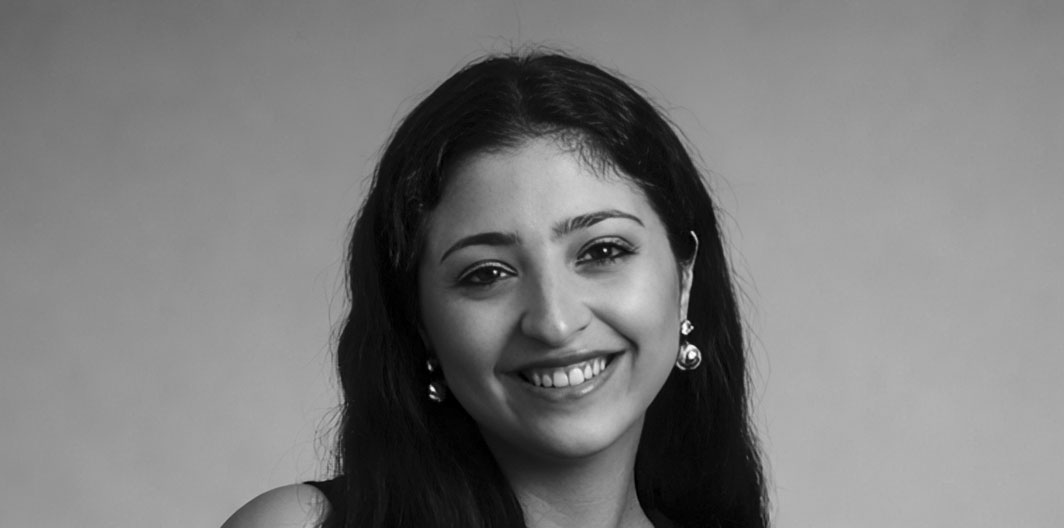

Why was I interested in interviewing Galia? She is a young Argentine lawyer and emerging voice in global youth advocacy, particularly in the fields of peacebuilding, human rights, and civic engagement. She is actively involved in the Organización Argentina de Jóvenes para las Naciones Unidas (OAJNU), where she serves in a leadership capacity, and represents the Americas within the United Network of Young Peacebuilders (UNOY). Her work sits at the intersection of law, youth participation, and international governance, with a strong emphasis on making global institutions more inclusive and responsive to younger generations. She gained international recognition as part of the Americas’ Youth Advocacy Team, which received the Youth Carnegie Peace Prize—highlighting her role in elevating grassroots youth perspectives in global peace and security debates.
This interview is particularly interesting because it offers a rare, insider perspective on youth participation that goes beyond celebratory narratives and directly confronts uncomfortable truths. Rather than presenting youth engagement as inherently positive, it critically examines issues such as tokenism, inequality of access, and the gap between institutional language and lived experience. At the same time, it is deeply personal—grounded in biography, identity, and emotion—which gives weight to its political arguments. What makes the conversation especially compelling is this tension: it is both hopeful and unsparing, showing how a new generation is not only demanding a seat at the table, but also questioning who built the table, who controls it, and whether it needs to be redesigned altogether.
Here’s our exchange:
Where are you originally from, and what aspects of your childhood there most shaped who you are today?
I am from Argentina, specifically from the city of Córdoba, in the province of Córdoba, right in the heart of the country. It is a medium-sized city, and I never felt that opportunities were out of reach because of where I lived—they always felt present and accessible.
Growing up there shaped me in many ways, but I think the strongest influence came from my family. Both of my parents have always been hardworking people, working regular full-time jobs, so I was raised with a strong sense of effort, discipline, and responsibility.
I was also deeply shaped by my family’s immigrant background. My mother is the daughter of Lebanese parents, and my father is the son of a Syrian mother and an Armenian father. Because of this, I grew up feeling connected to a history much larger than myself—one marked by displacement, resilience, sacrifice, and cultural pride. Arabic was present in my home through my mother and grandmother, and even my name reflects that heritage. From an early age, I learned to see identity as something layered, historical, and deeply meaningful.
How would you describe your family environment growing up, and who were the most influential figures in your early life?
I grew up in a very politically aware household. Politics was always present, whether directly or indirectly, and whether we were discussing local issues in Argentina or international events. I remember being very young and seeing my mother cry while watching the news about what was happening in Gaza. That left a deep impression on me. It taught me that what happens in the world is never abstract, and that injustice elsewhere should still move us.
It was also a home where ideas were openly discussed. I grew up listening to debates, opinions, and disagreements, which taught me to think critically and to care deeply about public life.
The most influential figure in my early life was definitely my mother. She has always been an incredibly strong and hardworking woman. She offered me a model of femininity that was independent, dignified, and courageous. Through her, I learned that strength and care are not opposites, and that women can be both deeply compassionate and deeply powerful.
Were there particular family or cultural traditions that played a lasting role in shaping your values or worldview?
Yes, definitely. One of the strongest values I inherited from my parents was generosity. Some of my earliest memories are of my mother preparing food or setting aside clothes to donate, and of both of my parents always giving something when they saw someone in need. It was never treated as extraordinary—it was simply how one should behave.
I also believe that growing up connected to my Arab heritage shaped my worldview in a profound way. It gave me a sense of belonging to a history of sacrifice, survival, and dignity. That connection made me sensitive to injustice, displacement, and the human cost of conflict from a very young age.
What initially drew you to the field you chose to study, and was there a moment when you realized it was the right path for you?
I do not think there was a single moment when I knew it was the right path, but what drew me to law is closely tied to my strong sense of justice. That has been with me for as long as I can remember. Even as a child, I was very sensitive to unfairness and drawn to the idea of defending rights, especially for those in vulnerable positions.
I have a specific memory from primary school when a classmate was being unfairly scolded by a teacher. Without anyone asking me to, I found myself standing up and arguing on their behalf. I was not trying to be brave—I simply could not stay silent. That impulse, to speak up when I witnessed injustice, felt as natural as breathing.
My environment encouraged that as well. I grew up in a space where argument, public affairs, and ethical questions were part of everyday life. Over time, I realized that many of the skills I was developing—public speaking, argumentation, advocacy, and the ability to identify injustice—were closely aligned with the field of law.
It was less a sudden realization and more a gradual recognition that law gave structure to instincts I had always carried within me.
At what age did you begin working, and what did your first job teach you about responsibility or independence?
I am 24 now, and at 18 I joined the Argentine Youth Organization for the United Nations (OAJNU). It was not a formal job but a volunteer role, and it taught me almost everything I know about responsibility.
OAJNU is a non-profit, non-partisan, and pluralistic NGO composed of more than 400 young volunteers. For over 30 years, it has worked across eight provinces in Argentina to promote youth participation, rights-based education, and civic engagement. Through its educational programs, the organization seeks to empower young people between the ages of 12 and 25, whom we see as key agents of change in shaping and strengthening their communities.
I joined as a volunteer and youth trainer, and over time I progressed to the Board of Trustees, where I now oversee the implementation of our strategy.
Through this experience, I learned how to work toward concrete goals, respond under pressure, remain reliable, and navigate frustration when things do not go as planned. It also taught me initiative and self-efficacy—the understanding that even as a young person, you can take ownership of serious responsibilities and deliver meaningful results. In many ways, that experience became the foundation of my professional identity.
How would you describe your current professional role, and what aspects of it do you find most meaningful?
My current role sits at the intersection of legal practice, teaching, and youth advocacy, and I believe that combination reflects who I am more accurately than any single title.
I am beginning to fully practice as a lawyer, with a strong focus on constitutional law and vulnerable populations. At the same time, I serve as an Assistant Professor of Constitutional Law at the Universidad Católica de Córdoba, where I contribute to educating the next generation of legal professionals. This is a responsibility I take very seriously.
Beyond legal practice and academia, I remain deeply engaged in civil society. As a Board Member of OAJNU, I help shape the strategic direction of an organization that has been central to my own development. As the Americas Representative at UNOY, I have the opportunity to connect with individuals and organizations worldwide and contribute to global discussions on youth, peace, and security.
What I find most meaningful is the ability to connect these different spheres. I care deeply about rights, institutions, and the law, but also about making them accessible and relevant—especially for young people. The most fulfilling moments in my work are when I feel I am not only interpreting systems, but helping to open them up for others.
What has surprised you most about how global institutions perceive “youth”—as partners, beneficiaries, or risks?
What has surprised me most is how uneven that perception can be. If by global institutions we mean major international or intergovernmental organizations—many of which are based in the Global North—youth are often seen as valuable stakeholders. There is at least a language of partnership, and sometimes a genuine willingness to engage young people as actors with something meaningful to contribute.
What is striking, however, is how different this can look in parts of Latin America, where young people are still often not taken seriously or are included only in limited ways—primarily as beneficiaries rather than as partners. What surprises me, therefore, is not only the inconsistency, but also how much our role continues to depend on the political culture of each institution rather than on a shared commitment to meaningful youth participation.
Many young people feel disconnected from multilateral organizations they see as slow or elitist. What responsibility do youth representatives have in challenging those perceptions from the inside?
I believe youth representatives carry a significant responsibility in this regard. The purpose of representation is to ensure that grassroots realities are brought into spaces that can often feel distant, closed, or elitist.
This means we cannot become too comfortable within those spaces. We must act as bridges—bringing in the concerns, frustrations, and priorities of young people who are not present, while also communicating back honestly about how these institutions function, including their limitations. Representation loses its meaning if it becomes symbolic rather than accountable.
How do you ensure that youth engagement does not become a substitute for structural reform, allowing institutions to appear inclusive without changing power dynamics?
I would be cautious with the word “ensure,” because I do not think my work alone can guarantee that. What I can say is that I try to consistently push against tokenism, and that requires both honesty and a willingness to remain uncomfortable.
Part of this involves building genuine trust with those in decision-making positions. Without trust, it is difficult to have honest conversations about what is truly happening versus what is being performed. But once that relationship exists, it becomes both possible and necessary to name the problem directly: when youth participation is being used as a symbolic display of inclusion rather than as a meaningful pathway to change, someone has to say so.
I have seen spaces where young people are invited to speak eloquently about their realities, only for the agenda to move on as if nothing had been said. That is not participation. One of the responsibilities of youth representatives—particularly those who have earned a degree of trust within these institutions—is to refuse to simply perform in that setting, or at the very least to make the performance visible.
For me, meaningful youth engagement should transform not only who is consulted, but also how decisions are made.
Global youth communities are far from homogeneous. How do you deal with inequalities of access, privilege, and voice among young people themselves?
Inequality among young people is very real, and it must be acknowledged honestly before any meaningful action can be taken. Not all young people enter these spaces with the same resources, time, networks, or even basic access to information about opportunities. These inequalities are not only material—they also relate to confidence, language, and familiarity with institutional environments, which some of us were raised with and others were not.
What I try to do is help level the playing field in practical ways, wherever possible. This means fostering spaces of genuine solidarity and mutual exchange. Often, the barrier is not only financial, but also the absence of a network, a contact, or simply someone willing to explain how things work. When I encounter opportunities, resources, or open doors that could benefit others, I try to share them actively and make introductions whenever possible.
I also try to remain aware of my own privilege. I speak English fluently, I have a legal education, and I navigate institutional environments with relative ease—advantages that not every young person has. Recognizing this reminds me that my presence in these spaces is never just about me. It carries a responsibility to include others and to ensure that the spaces I help shape do not reproduce the very exclusions they aim to overcome.
While this does not resolve structural inequalities, I believe it matters deeply when young people choose collaboration and generosity over competition.
What issues affecting young people are most consistently deprioritized in global policy discussions, despite rhetorical commitments to youth inclusion?
Policy spaces tend to prioritize issues that are urgent and easily measurable, which is understandable. Topics such as health, nutrition, and immediate protection needs are clearly fundamental. However, urgency and visibility are not the same as importance, and some critical issues remain consistently deprioritized precisely because they are less tangible, harder to quantify, and less suited to short-term policy frameworks.
One such issue is the erosion of democratic culture: declining trust in institutions, reduced civic participation, weakening public ethics, and the growing perception among young people that their voices do not truly matter. These problems do not appear neatly in budgets or indicators, but they accumulate over time and can lead to significant instability. Ignoring them because they are difficult to measure risks exacerbating future crises.
Another under-addressed issue is mental health—not only as a clinical concern, but as a political one. The widespread exhaustion, anxiety, and disillusionment experienced by young people today are not individual shortcomings, but responses to structural conditions: precarity, inequality, the constant presence of crisis, and uncertainty about the future. Treating this as a purely private matter rather than a policy priority is a serious oversight.
Both issues share a common challenge: they require long-term investment, political courage, and a willingness to evaluate success beyond immediate, visible outcomes. That is precisely why they continue to be postponed.
Climate change, conflict, and economic insecurity define your generation’s outlook. How do you prevent constant crisis framing from turning youth activism into burnout rather than sustained engagement?
It is a daily struggle, honestly. There are moments when it genuinely feels like we take one step forward and two steps back—when a policy that took years of advocacy to build is dismantled overnight, or when a crisis we have been warning about for months finally erupts and the response is still inadequate. I do not think there is a perfect answer to burnout, because it is a real and rational consequence of caring deeply in a world that keeps producing emergencies faster than we can respond to them.
For me personally, staying connected to other young people is essential. There is something irreplaceable about being in a room—or even just in a conversation—with people who understand why this work matters without needing it explained. It is both refreshing and sustaining. That is why I continue to be involved in spaces like OAJNU and UNOY, because they give me a sense of hope.
To what extent do you think current global governance models are compatible with the expectations of younger generations?
Only partially. There are moments when global governance frameworks attempt to address the issues younger generations are facing, but often they do so in language that feels distant from our lived realities. Sometimes the agenda does not fully reflect what young people are actually experiencing, and at other times it addresses those issues in ways that feel abstract or disconnected from material conditions.
For example, I sometimes hear conversations about youth participation and think: what kind of participation are we talking about if there are young people who cannot even meet their most basic needs? So I would say the compatibility is incomplete. There is overlap, but also a clear gap between institutional language and lived experience.
What skills do young leaders need today that traditional education systems still fail to provide?
I cannot answer this question without thinking about the mission of OAJNU, the organization where I first learned what leadership truly requires. It captures something I believe deeply: young people need not only knowledge, but also socio-emotional and civic capacities—and these are rarely taught, let alone together.
Traditional education systems are largely built around the transmission of content. They reward memorization, individual performance, and the accurate reproduction of information. These are not useless skills, but they are profoundly insufficient for the world young leaders are navigating today. What is consistently missing is the intentional development of capacities such as self-regulation, perseverance, self-efficacy, empathy, public speaking, effective communication, teamwork, and the ability to organize collective action.
These are not “soft skills” in the dismissive sense the term sometimes implies. They are essential to democratic life. They enable people to sustain commitment when results are slow, to listen across differences, to build coalitions, to communicate under pressure, and to persist even when outcomes are uncertain.
I also believe that traditional education systems often fail to teach how to disagree productively, how to sit with complexity without rushing toward easy answers, and how to act responsibly in conditions of uncertainty.
Is there a risk that global youth platforms privilege those who already speak the language of diplomacy and policy, and if so, how can that be corrected?
Yes, absolutely. I would go further and say that this is not just a risk—it is already happening, and has been for a long time.
These spaces tend to privilege young people who already speak the language of institutions: those who know how to write position papers, navigate formal debates, and present themselves in ways that are legible and credible to decision-makers. These skills are shaped by access to education, exposure, and opportunity, which are very unevenly distributed. Because these spaces often reproduce themselves by selecting familiar profiles, the cycle becomes self-reinforcing: the same voices are amplified, and the absence of others becomes normalized.
At the same time, I want to acknowledge the tension I feel personally. I am someone who has learned to navigate these spaces, and I benefit from that fluency. That creates a responsibility—not a reason for guilt, but a genuine obligation to use that access in ways that extend beyond my own participation. This means actively bringing in voices that are not present, sharing opportunities that are often withheld, and remaining accountable to communities beyond the institutional setting.
In Latin America, there is an additional layer that is often overlooked: access to representative spaces is frequently mediated by party politics. In many cases, the young people who reach international forums are not necessarily those with the deepest grassroots experience, but those with the right political connections. This dynamic excludes a vast amount of talent, knowledge, and legitimacy, and quietly shapes what is presented as “youth representation” at the global level.
How do you measure success in youth engagement when outcomes are often long-term and intangible?
In an ideal scenario, the clearest sign of success is when a decision-maker changes something in their public role and explicitly acknowledges that youth input contributed to that change. That kind of direct and traceable impact is the gold standard. It does happen—but rarely, and almost never quickly.
In practice, success must be understood more broadly. It can be seen in whether youth input is taken seriously, whether it influences the conversation, whether trust is built, and whether young people leave the process with greater capacity, confidence, and connection than they had before. Not all forms of success are immediately visible, but that does not make them any less real.
We also need to be honest about the limits of measurement itself. Some of the most meaningful outcomes—such as a young person realizing for the first time that their voice belongs in such a space, or a connection formed between youth leaders from different countries that leads to long-term collaboration—do not appear in evaluation frameworks. That does not diminish their importance; it simply makes them harder to quantify, which is itself a challenge worth acknowledging.
Looking ahead, what uncomfortable truth about youth participation in global governance do decision-makers most need to confront—but are currently avoiding?
The uncomfortable truth is that much of what is described as youth participation remains largely symbolic. I believe many decision-makers are aware of this, which is precisely why it often goes unspoken.
Young people are frequently invited into spaces after agendas have already been set and key decisions framed, without meaningful influence over implementation, budgets, or accountability mechanisms. We are given opportunities to speak, and sometimes we are genuinely heard—but listening is not the same as sharing power. The underlying architecture of these processes—who designs them, funds them, evaluates them, and defines what counts as success—remains largely unchanged.
What institutions often seek is the legitimacy that youth presence provides. It signals openness, inclusivity, and responsiveness. But legitimacy based on presence without power is borrowed legitimacy. It belongs to the young people who participate in good faith, and it can be withdrawn when that trust erodes.
True participation requires a redistribution of power, and that is costly. It means sharing control over agendas, creating real accountability mechanisms, and accepting outcomes that may not be predictable or fully controllable. The fact that this remains limited is not accidental—in many cases, it is a deliberate choice.
Has there been a book, film, or work of art that significantly influenced the way you see the world or think about your work?
I attended a bilingual school, which gave me access to a wide range of literature in English, much of it focused on themes such as immigration, racism, gender-based violence, and social justice. These works reached me at a formative age and continue to shape how I understand the world.
If I had to choose one, it would be Maya Angelou’s poem Still I Rise. It still moves me deeply. There is something in that poem that goes beyond its immediate subject—it speaks to the refusal to be broken, to the insistence on dignity in the face of everything that seeks to deny it. It also taught me something about language itself: that words can carry pain, memory, and resistance at the same time, and that speaking out can be an act of power.
If I had to choose a film, it would be Argentina, 1985. It tells the story of the trial of the military juntas that ruled my country during the last dictatorship, through the perspective of a young legal team that took on a case many believed was impossible to win. For me, it is deeply personal—it is part of my country’s history and my family’s lived experience. But it is also universal. It shows how the law, when used with courage and conviction, can become an instrument of justice, memory, and repair. It reminded me that young people can carry immense historical responsibility, and of the importance of preserving memory and renewing our collective commitment to “never again”—or, as we say, nunca más.
Looking at younger generations today, what gives you the greatest sense of hope, and what concerns you the most?
What gives me the greatest sense of hope is the everyday effort of young people. If we look honestly at the state of the world, it can be deeply discouraging. So my hope does not come from abstract optimism—it comes from my peers. It comes from seeing how much they care, how hard they work, how they persist despite disappointment, and how they continue to imagine better futures even when the present is difficult.
What concerns me most is not exclusion alone, but disillusionment. Exclusion can be resisted and challenged. Disillusionment is harder to recover from, because it does not announce itself—it simply makes the work feel meaningless. That is why I believe so strongly in building movements and institutions that not only mobilize people, but also sustain them.
If you could spend a full day with any historical figure, who would you choose, and what questions would you want to ask them?
I would choose Eva Perón—or Evita, as we call her in Argentina. She was a remarkable political figure and, in many ways, a feminist before that language was widely available or accepted in public life. She played a crucial role in advancing women’s political rights, including suffrage, and did so with both courage and strategic intelligence.
Her legacy is also personal for me. Through the Eva Perón Foundation, my grandmother received a sewing machine, which allowed her to work and help support my father. So Evita is not only part of my country’s history—she is, in a very real way, part of my family’s story.
I would ask her how she sustained her strength in an environment designed to diminish her, how she maintained her ground when even potential allies questioned her legitimacy. I would also ask how she understood power—whether she saw it as something to be seized, shared, or transformed. And I would ask whether she ever imagined the extent of her legacy, not only in Argentine politics but in the lives of generations of women who would see in her the possibility of standing at the center of history, not its margins.
If you were asked to teach a class on a subject completely unrelated to your profession, what would it be, and what would you hope students take away from it?
I have always felt deeply connected to music, so I would teach a class on how music—and culture more broadly—are essential pillars of a fair and equal society.
I would want students to understand that access to culture, art, and leisure is not a luxury; it is part of human dignity. I would also want them to see that music is never just entertainment. It carries memory, resistance, identity, and social values. It is also a space where important debates can take place and where injustice can be expressed in ways that are both emotionally powerful and politically meaningful.
If you could ensure that one human value is never lost in society, which value would you choose, and why?
My first instinct is to say justice, but that immediately raises the question: what kind of justice—restorative, distributive, proportional? It is one of humanity’s oldest debates.
So if I had to choose one value, I would say solidarity. Not because it replaces justice, but because it is the foundation that makes justice possible.
Even in stable societies, solidarity is what holds communities together—the unspoken understanding that another person’s suffering is not irrelevant simply because it is not your own. It is what enables collective action, sustains movements in difficult moments, and allows people to show up for one another across differences.
In fragile or unequal contexts, solidarity becomes even more essential—and more radical. When institutions fail, when rights are not protected, and when there is a gap between what the law promises and what people actually experience, solidarity helps fill that space. Not permanently, and not as a substitute for structural change, but as proof that people have not abandoned one another while that change is still being fought for.
I also believe solidarity is one of the values most quietly under pressure today. Individualism, precarity, and fear erode it gradually and often invisibly. Protecting it requires an active choice—to act as if other people’s lives matter as much as our own.
Humanity is facing radical changes. To name just ten: geopolitical instability, climate change, economic inequalities, technological risks, public health challenges, political polarization, resource scarcity, humanitarian crises, misinformation, and disparities in global healthcare access. If, in an imaginative exercise, you had the power to solve one of these problems, which one would you choose first and why?
I would choose economic inequality. Not because it is the only issue on that list, or even the most urgent at all times, but because it acts as a multiplier for many of the others.
Inequality shapes who is most exposed to climate risks and who has the means to adapt. It determines access to healthcare. It influences who recovers from conflict and who remains trapped in its consequences. It also affects vulnerability to misinformation, as insecurity and distrust create fertile ground for manipulation. Perhaps most importantly, it determines whose voices are heard politically and whose are not.
Beyond its material effects, inequality erodes the social fabric that makes collective life possible. It weakens trust—between individuals, communities, and institutions. Addressing inequality therefore also means addressing power, which is where many of the most fundamental challenges lie.
What do you believe human beings owe one another, both as individuals and as members of a global society?
I would say solidarity. Ideally, the state should guarantee the rights and needs of all people, and I strongly believe it should strive to do so. But until we live in a world where everyone’s basic needs are fully protected, human beings also owe one another a sense of shared responsibility.
This means refusing indifference. It means recognizing that another person’s suffering is not irrelevant simply because it is not ours. In a global society, solidarity must extend across borders, identities, and distances.
Interviews often focus on successes. Could you share something from 2025 that did not unfold as you expected, and what that experience taught you?
Last year, I had very ambitious plans—perhaps too ambitious. I took on commitments in multiple directions, and at a certain point, I simply collapsed. That experience was not easy, and for a long time it felt like failure.
What it taught me is something I thought I already knew but had not fully internalized: I am not a machine. The work I care about, the causes I want to support, and the people I want to be there for—all of that depends on my own well-being. Health, rest, and balance are not rewards for productivity; they are prerequisites for it.
I think many young people who are deeply committed to their work struggle with this. We are often surrounded by a culture that celebrates constant output and sacrifice, making rest feel like weakness. What 2025 taught me is that understanding your limits is not a failure—it is a form of strength, even if learning that lesson can be difficult.
Are there any personal or professional goals you feel comfortable sharing for 2026?
One of my main goals for 2026 is to continue developing my legal practice, particularly in constitutional law and in work involving vulnerable populations. This matters to me not only as a professional objective, but as a responsibility. Law, for me, is not abstract—it is a tool, and its value depends on how and for whom it is used. I want to continue refining that tool and directing it toward the people and causes that need it most.
I also want to grow as a teacher. Contributing to the formation of future lawyers—people who will shape institutions and public life—is one of the most meaningful aspects of my work. I want to do it better, with greater intention and impact.
When you imagine the final moments of your life, what kind of news would you most hope to hear, and why?
I think I would hope to hear that I am remembered as someone who was never indifferent to the suffering of others—someone who, in every space she entered, made people feel safer, more seen, and more supported.
I would hope to be remembered as someone who used her privileges not only for herself, but to create opportunities for others. And I would hope to be remembered as a warm person, because I believe warmth is also an ethical stance—it is about how we make others feel.
If the people I loved felt loved, and the people I worked alongside felt valued, I think that would be enough.