
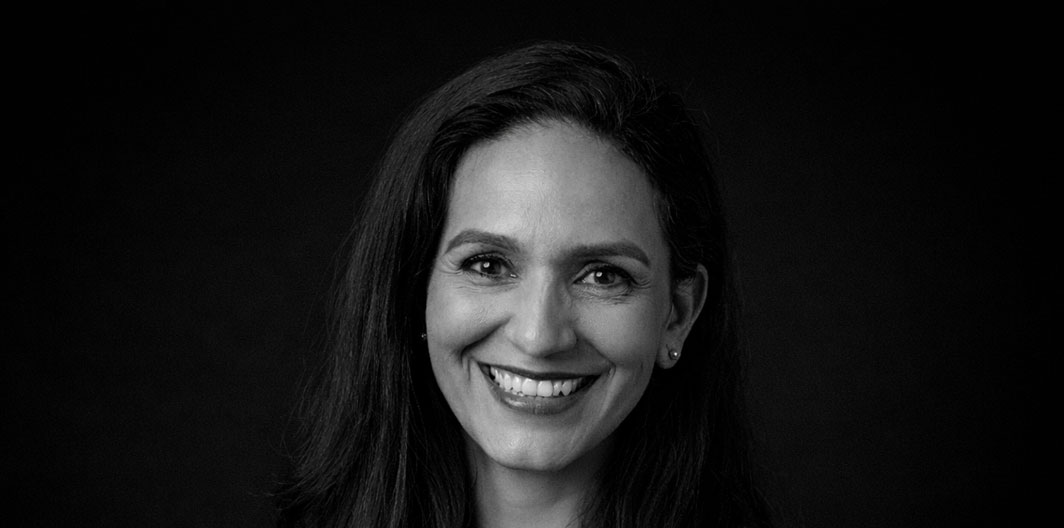

Why was I interested in interviewing Nazanin? She is a leading figure in U.S. refugee policy and international development, currently serving as the CEO of Welcome.US, a national initiative launched in 2021 to mobilize Americans to support and sponsor newcomers seeking safety. Born in the United States to Iranian parents, she has built a career at the intersection of foreign policy, humanitarian response, and institutional reform. Nazanin has held senior roles at the U.S. Department of State and the United States Agency for International Development, where she worked on aid effectiveness, political and economic reform, and major global initiatives such as the President’s Emergency Plan for AIDS Relief (PEPFAR). She later served as Vice President of Global Policy and Advocacy at the International Rescue Committee. Known for her ability to bridge government, civil society, and private-sector actors, Nazanin has been recognized as one of the most influential policy leaders in Washington, particularly for her work reimagining how countries respond to global displacement.
This interview is particularly compelling because it connects large-scale policy questions with deeply personal experience, offering a rare perspective from someone who has lived the realities of displacement while shaping national and international responses to it. Rather than presenting “welcome” as an abstract moral ideal, Nazanin frames it as a practical, community-driven system rooted in agency, reciprocity, and institutional design. The conversation stands out for its clarity about structural challenges—such as the limits of government systems, political polarization, and fragmented infrastructure—while also highlighting innovative solutions like private sponsorship and community-led integration. What makes it especially engaging is its balance: it moves fluidly between personal narrative, policy insight, and philosophical reflection, ultimately showing how migration, democracy, and human potential are interconnected.
Here’s our exchange:
Where are you originally from, and what was your childhood like there?
My family is originally from Iran, but I was born in Kansas and raised in Minnesota and Wisconsin before moving to Southern California when I was ten and a half. My childhood in those places was really difficult, because I was growing up in the Midwest during the Iranian hostage crisis. I was the only Iranian in my school—and what felt like my entire community—and that was quite challenging.
When I moved to Southern California, which is the heart of the Iranian diaspora abroad, I was suddenly in community with more Iranians than I had ever seen in my life. At the same time, they were still very different from me and my family. Many of them were from Iran’s economic elite or from communities that had been religiously persecuted under the Islamic regime. My parents are Muslim and come from what used to be a small town in south-central Iran, so we weren’t part of the economic elite or among those who were religiously persecuted.
What was your family dynamic, and who were the key figures in your upbringing?
My family dynamic had a lot in common with what you might hear from many first-generation immigrant children. I was caught between two cultures. I became a bridge for my parents because of my facility with language and American culture, and in many ways I was also their protector.
I remember my dad bringing me into his classroom, where he was a teaching assistant at the university, because the students couldn’t always understand his English due to his accent—so I became his translator.
It was also very difficult for my parents. They had come to the United States as exchange students, intending to return to Iran after completing their studies. But the Iranian Revolution happened literally on the day my dad was defending his dissertation. They never anticipated that. For them, it was an experience of profound displacement—they were completely torn from their previous life, and it became unsafe to return home. My grandfather was jailed, and many of my dad’s former university friends in Iran were killed in the aftermath of the revolution.
They suddenly found themselves on a completely different path, forced to rebuild a life they had never planned for. That was deeply painful. They were also very young—they had me when they were 19 and 21—so they were navigating a new country, a new culture, a new language, and a completely different life trajectory while raising a child on their own.
Who were the most influential people in your childhood, and what lessons did you learn from them?
My mom and dad.
My dad, because he has an incredible sense of justice and a deep sense of humanity. He is highly attuned to injustice and is compassionate, generous, and giving.
And my mom, because she is made of steel. My parents had an arranged marriage—they got married the summer between my dad’s sophomore and junior year in college. He came home to visit his family, and they decided it was time for him to get married. A week after the wedding, my mom found herself in undergraduate student housing in Kansas. A month later, she realized she was pregnant. It was a complete surprise—they had planned to finish school and return to Iran before starting a family.
My mom never even told her parents. Partly because they had given her strict instructions not to start a family while she was away from home, but also because she didn’t want to worry them. I’ve always found that extraordinary: an 18-year-old, in a new country, far from her family for the first time, pregnant, not knowing the language or culture, barely knowing her husband—and she just powered through. I can’t imagine going through a first pregnancy without the support of my own mother, but that’s what she did.
As my parents navigated a very different culture—my dad, in some ways, being a conservative Middle Eastern man who struggled to understand what it meant to raise a daughter in American society—he was still the kind of father who always told me I could do and be anything I wanted. But my mom was the one who fiercely advocated for what that meant in practice, from small things like going to a school dance to big decisions like leaving home for college.
What is one of your earliest memories, and how do you think it shaped who you are today?
I was walking home from school when we lived in Milwaukee, and a teenager was biking toward me very fast, as if he was going to run me down on the sidewalk. At the last moment, he swerved and yelled an insult at me.
It was terrifying and bewildering. I remember thinking, What does that mean? Why does he hate me? That moment deeply affected my sense of belonging. It made me feel unsafe and uncertain—wondering whether this was how everyone saw me.
What I also remember clearly is getting home, being very upset, and not telling my parents. My mom kept asking what was wrong, but I wouldn’t tell her. I knew there wasn’t anything she could do, and I didn’t want to hurt her or make her fearful for my safety. So I carried that experience alone. It was one of the first times I remember feeling both vulnerable and responsible at the same time.
Were there any cultural or family traditions from your childhood that helped define your values?
My parents tried very hard to make me feel included in American culture. I have vivid memories of their efforts to celebrate holidays like Christmas. But what those moments really represent is probably the strongest and clearest value they instilled in me: their complete devotion to me. There was no sacrifice too great.
When I think about what shaped my values, it wasn’t only the difficulty of growing up in the Midwest during the hostage crisis. It was also the fact that America welcomed us. We found safety and refuge here.
I am deeply aware of how different my life would have been if my parents had been forced to return to Iran—especially as a woman. I also recognize that the accident of timing and geography that made me an American fundamentally shaped my ability to realize my potential.
That awareness defines the core value behind my professional path: removing barriers that prevent people from reaching their full human potential—whether those barriers are based on race, religion, ethnicity, gender, or geography, which is often the defining constraint for displaced people.
What motivated you to study what you studied?
It comes back to that same question: how do you remove barriers to human potential?
I studied political science because I was fascinated by the relationship between citizens and the state, and how power and control are negotiated between them. Government decisions are among the most powerful forces shaping whether people can fully realize their potential.
My favorite political philosopher is John Rawls, and I’ve always been drawn to the concept of the “veil of ignorance”—imagining what policies you would design if you didn’t know whether you would be a man or a woman, Jewish or Muslim, living in the United States or somewhere else. What would policy look like if you had to design it without knowing your own position in society?
That’s also why I pursued a Master’s in Public Policy, focusing on political and economic reform—applying that lens to real-world policymaking and program design.
At what age did you start working, and what did your first job involve?
I started working when I was 15. My first job was as a peer counselor in a runaway and homeless youth shelter.
While I learned a great deal from that direct service work—and saw the real impact we could have on individual lives—it also gave me a deeper understanding of the systemic challenges that led to those situations in the first place. The failures of protection, and the conditions that made it so difficult for those young people to thrive, became very clear to me. I wanted to address those barriers at a larger scale.
How would you describe your current job and its responsibilities?
I am the CEO of Welcome.US, a national initiative that mobilizes Americans of all backgrounds, across many communities, to welcome newcomers and help them thrive.
How do you measure the true long-term impact of welcoming newcomers beyond initial resettlement, especially when integration challenges can take years to surface?
There is no better place than the United States to see the long-term impact—and it is orders of magnitude greater than the initial costs of resettlement.
Where welcoming is done well—meaning there is an orderly legal process, the right to work, freedom of movement, access to education, and social supports—we consistently see what we call “triple wins.” There are clear benefits for newcomers, who can rebuild their lives and pursue opportunity, but also significant gains for local communities and economies.
In the United States, for example, roughly 50% of billion-dollar industries were founded or co-founded by immigrants. Refugees, in particular, have entrepreneurship rates at least four times higher than native-born populations. Newcomers are not only opportunity seekers—they are opportunity creators. But one of the most meaningful indicators for us is the impact on Welcomers themselves. The experience of welcoming transforms people. It helps bridge divides and strengthens community ties in a time of deep polarization. In our surveys, 77% of Welcomers report feeling more connected to their communities, 70% feel more confident in their community’s ability to solve problems together, and 50% have formed relationships with people who hold different political views.
What structural or political headwinds make sustaining broad bipartisan support for newcomer initiatives most difficult, and how do you plan to counter them?
The biggest challenge is achieving what I would call “welcoming done well”—orderly, legal, appropriately scaled, and predictable pathways that allow newcomers to succeed.
Currently, nowhere in the world do we have sufficiently expanded legal pathways that allow people to find safety and fully realize their potential through access to work and stability. Instead, many are forced into dangerous and uncertain journeys across borders. This creates disorderly systems that are difficult for countries and communities to manage effectively. It also leads to restrictions—such as denying the right to work—which increase vulnerability and reduce positive outcomes for everyone involved.
In moments of economic downturn or rising anti-immigrant sentiment, how do you keep communities engaged as sponsors rather than fearful of newcomers?
One of the most powerful aspects of sponsorship is that it creates personal investment. When people are directly involved, it changes how they see the issue.
There is a parallel in American politics: overall approval ratings for Congress are often very low, but individuals tend to have much higher approval of their own representative. Personal connection changes perception.
Sponsorship works in a similar way. It creates relationships that make people more resilient to political narratives designed to generate fear or opposition. When you know someone personally, it becomes much easier to distinguish between rhetoric and reality.
Given your background in U.S. foreign policy and aid, what lessons from international development apply directly to building durable domestic welcome systems?
I approach both my domestic and international work with a core belief: people have agency, and the most relevant ingenuity often comes from the ground up. Solutions that are closest to communities are often the most effective. The question is how we can support, enable, and scale those community-driven solutions.
In my international work, I came to believe that no amount of foreign aid alone can bring about the political and economic changes needed for sustained development. External assistance cannot unlock a country’s full development potential—that lies primarily in the hands of its leaders and citizens. The most significant drivers of development outcomes are the actions and decisions of domestic governments, which are ultimately accountable to their own people, not to international donors.
When you work in deep partnership with communities, that is where you often find the most impactful, durable, and politically viable solutions.
That same principle applies to our domestic work. At the heart of sponsorship is the idea that it is community-driven. Communities raise their hands and say, “We want to welcome.” They have a degree of agency in deciding who they welcome and how many newcomers they can support. They mobilize resources, build relationships, and wrap care around newcomers to help them succeed. Often, they bring capacities and solutions that extend far beyond what federal systems alone can provide.
One of my favorite examples is a family in Unity, Wisconsin—a town of about 400 people. A local farming family welcomed a Ukrainian family fleeing the war. No government agency would have placed newcomers in such a small rural town. The assumptions would have been: no public transportation, limited English-language services, no large diaspora, and few formal refugee services. But the newcomers chose that community because it felt familiar—it reminded them of their own farm and offered a sense of peace. The local librarian became their English tutor, a neighbor donated a car, and they integrated so successfully that the wife is now retraining as a nurse to meet local healthcare needs. That’s what I mean by possibilities that would never emerge from purely top-down approaches.
What does success look like for Welcome.US five years from now, and how will you avoid the trap of measuring progress only by numbers of newcomers resettled?
Success for us means building a broad, durable, and geographically diverse constituency that is deeply committed to welcoming newcomers. It means mayors and governors, small and large business owners, civic leaders, and faith communities who are willing not only to support welcoming, but to advocate for and defend more expansive policies—because they have experienced firsthand how powerful and mutually beneficial it can be.
How do you ensure that the narrative of “welcome” does not become transactional or paternalistic, but instead rooted in mutual respect and reciprocity?
This question goes to the core of why we do this work—and how we do it. I believe deeply in refugee agency. In many ways, the paternalism and “savior” mindset embedded in traditional humanitarian systems have limited both the scale and effectiveness of support.
Less than 1% of the global refugee population has access to resettlement. In the United States, the publicly funded system has welcomed an average of about 70,000 refugees per year over the past four decades, even as global displacement has increased fivefold.
One major constraint is that the system has relied on limited public funding, delivered through a small number of government contractors operating under strict regulations. This has constrained scale and flexibility. Meanwhile, many others in need of protection are forced into irregular pathways, contributing to a broader sense of disorder at the border. Notably, 93% of Americans believe there is a problem at the border—this is not a partisan issue. At the same time, strong majorities across political lines support legal immigration.
We took a fundamentally different approach. We believe Americans have deep reserves of generosity, compassion, and ingenuity. Given the opportunity, people across the country are willing and able to provide meaningful support to newcomers—not as an act of advocacy, but as an act of service.
We also believe that refugees themselves have agency. Given the opportunity, they will succeed. A sense of belonging and inclusion is nearly as important as meeting basic needs. And they should have a say in whether and where they are welcomed.
This model directly challenges paternalism. It expands both who can participate and how many people can be supported.
Most importantly, we see mutual transformation. The example of Unity, Wisconsin is not unique. Communities across the country are discovering that welcoming fosters shared growth and connection. It is not one-directional—it is reciprocal.
What are the risks of relying heavily on private sponsorship and volunteer mobilization to fill gaps that some argue government systems should address?
The reality is that government systems alone are not meeting the need—as I mentioned, they currently reach less than 1% of the global demand for refugee resettlement.
That said, public investment remains essential. Refugees need access to education, healthcare, and other core services. In the United States, for example, we do not have universal public healthcare, so individuals and communities cannot fully compensate for those gaps. Schools also require resources to support students with diverse linguistic and social needs.
In my view, the most effective model is one that combines private sponsorship with strong public investment in social infrastructure. This ensures that newcomers—and, importantly, all residents—have access to essential services.
There are also cases where specialized public support is necessary, such as for individuals with significant medical needs, survivors of trauma, or elderly populations.
At the same time, history shows that much of the initial integration support has always come from communities, neighbors, and diaspora networks. These relationships are foundational to long-term success.
Where do you see the greatest blind spots in U.S. immigration and refugee policy that even well-meaning initiatives like Welcome.US struggle to confront?
One of the biggest blind spots is the lack of a coherent, nationwide welcoming infrastructure, combined with the fragmentation of how services are delivered.
The United States operates under a federalist system, where federal, state, and local policies all play a role. But these systems vary widely depending on geography, immigration status, and population group.
This creates a highly fragmented landscape that makes it difficult to build a consistent and effective integration model for newcomers, many of whom have complex and varied legal statuses.
How do you balance the urgent need to act quickly in humanitarian situations with the responsibility to build sustainable infrastructure for long-term integration?
This tension becomes especially visible during emergency situations, which often fall outside normal fiscal cycles and strain existing systems. However, there are models that address this challenge effectively. One of the most compelling is the “Homes for Ukraine” program in the United Kingdom. It combined private sponsorship—where residents opened their homes—with government support in the form of block grants to municipalities, scaled to the number of newcomers they received.
That kind of model allows for rapid response while also providing the resources needed to support long-term integration and reduce potential tensions in host communities.
What innovations from the private sector or civil society have most surprised you in this work, and which are still underutilized?
One of the most powerful innovations has been matching technology. The platforms used to connect newcomers with sponsors helped break down barriers quickly and at scale.
They allowed people to connect directly, learn about one another, and build relationships. This increased trust, commitment, and a sense of agency for everyone involved.
In many ways, it created a marketplace dynamic where sponsors were essentially saying, “Choose me—here’s what my community can offer.” It democratized welcoming and opened participation to a much broader set of people.
There is significant potential to extend this model further—for example, in employment matching or connecting newcomers with communities that have lower housing costs and labor shortages.
In the United States, states like South Dakota have significant workforce gaps, but there is limited awareness or connection between those communities and potential newcomers. Bridging that gap represents a major opportunity.
How do you prevent the work of welcoming from being co-opted by partisan agendas or reduced to symbolic gestures without substantive follow-through?
The credibility and durability of our approach come from the fact that it is led by people—not politics.
We have mobilized millions of Americans from across the country, representing a wide range of political beliefs, faith traditions, and backgrounds. They are the ones doing the work.
Together, they have helped welcome more than 800,000 people. That is not symbolic—it is tangible, lived impact. And because it is rooted in community action, it is inherently more resilient to political shifts. That is what gives the work its authenticity, sustainability, and long-term strength.
In communities resistant to change, how do you move the conversation from fear to possibility without oversimplifying the real pressures they face?
Welcome.US was not the one leading the change—it was community members themselves: friends and neighbors. The shift came from within. That’s what made it possible to break down resistance.
One of the main drivers of resistance is the feeling that change is out of people’s control—that it is being imposed from the outside or from the top down. But when it is your neighbor or a member of your congregation saying, “I want to do this welcoming work,” it becomes far more effective in opening people up to possibility. The stories and experiences then spread organically—neighbor to neighbor, within trusted relationships.
When you think about scaling Welcome.US, what keeps you up at night: the pace of global displacement, domestic political shifts, or capacity constraints?
It’s not any one of those in isolation. Scaling and sustaining this work requires a strong partnership with government.
One of our key insights is that this partnership should focus on what government does best: setting policy, conducting security and background checks, issuing legal status, and providing a baseline of public benefits so newcomers can access essential services like education and healthcare.
When those elements are in place, communities are ready to step in and provide the rest—the civic infrastructure, relationships, and resources that make welcoming work. For example, we operate with a $10 million budget, but we have leveraged roughly $7 billion in time and resources from private sponsors across the country.
What we need is a willing government partner that fulfills those core responsibilities. I believe the vast majority of Americans support this model, and our task is to make that support visible to policymakers.
What does accountability look like for an organization like Welcome.US—who holds you to your mission, and how transparent are you willing to be when falling short?
We are most accountable to the newcomers and community sponsors who participate in our programs. We feel a deep responsibility not only for the safety of those involved, but also for preserving their agency.
We stay closely connected to their experiences—listening, learning, and adapting. That responsiveness has been essential to our ability to scale quickly and effectively.
At the same time, accountability requires rigor. We need to be passionate about our mission, but disciplined and objective when evaluating our progress and decisions. Data-driven analysis has been critical to our work.
We are committed to transparency, because we believe it is essential for both accountability and continuous improvement.
If you had to make one bold structural reform to how America receives newcomers, one that could outlast any administration, what would it be and why?
I would codify the ability for Americans to privately sponsor refugee newcomers.
The United States is a country of diaspora communities, with a strong culture of civic engagement and a deep humanitarian impulse. By formally enabling Americans to sponsor family members still at risk—and empowering faith groups, veterans, civic organizations, and everyday citizens to participate—we could unlock enormous capacity.
Allowing people to act on their desire to help, and to be part of the solution, would create a system with lasting and transformative impact.
Which book, film, or piece of art has influenced how you see the world, and in what way?
Two works stand out.
One is Development as Freedom by Amartya Sen. It articulated the idea that human development is about far more than material conditions—food, shelter, or income. It is about the real freedom to express one’s potential, free from discrimination, oppression, and structural barriers.
The second is The Poisonwood Bible by Barbara Kingsolver. It is a powerful lesson in hubris, and a reminder that even well-intentioned efforts can cause harm when they are not grounded in humility and understanding.
When you look at younger generations, what gives you hope and what worries you?
What worries me is the polarized media environment in which younger generations are growing up. It can limit the ability to see other perspectives or develop empathy. The fragmentation of public education and shared narratives has contributed to deeper polarization and made collective problem-solving more difficult. In many ways, young people are being socialized into increasingly tribal ways of thinking, which I find deeply concerning.
What gives me hope is youth itself. I see in my own children a level of openness and acceptance that is remarkable. They are largely indifferent to differences in race, sexual orientation, or background. They take pride in their identities—my children have Iranian names—and they do so without feeling excluded. They are growing up in more pluralistic environments where difference sparks curiosity rather than division.
If you could spend a full day with any historical figure—not for their fame but for their mind—who would it be, and what would you ask them?
It would be people like Martin Luther King Jr., Mahatma Gandhi, Harriet Tubman, the suffragists, Frederick Douglass—even Jesus. Individuals who, against overwhelming odds, developed a way of thinking and believing that transcended their circumstances.
I would ask them: How did you come to believe that it was possible to overturn systems like slavery, segregation, and mass injustice? How did you sustain that belief through repeated setbacks, knowing you might never see success in your lifetime?
I’m deeply inspired by people who can envision a radically different future and maintain the strength to pursue it—who can endure hardship while remaining anchored in their convictions.
If you had to teach a class on something completely unrelated to your career, what would you teach and why?
I would teach a cake baking and decorating class. I find baking to be a creative and joyful way to spend time. In another life, I would love to own a bakery.
If you could ensure that one value or principle is never lost in society, which would it be?
I would want to preserve the principle enshrined in our founding ideals—that all people are endowed with inalienable rights based on their humanity, not on citizenship, race, religion, or any other identity.
Humanity is facing radical changes. To name just ten: geopolitical instability, climate change, economic inequalities, technological risks, public health challenges, political polarization, resource scarcity, humanitarian crises, misinformation, and disparities in global healthcare access. If, in an imaginative exercise, you had the power to solve one of these problems, which one would you choose and why?
At the root of many of these challenges is the relationship between citizens and the state. When people have genuine political power and live in truly democratic systems—ones not distorted by money or unresponsive leadership—then many of these problems become more solvable.
What do you think humans owe each other, if anything at all?
I believe strongly in the idea behind the Golden Rule—that what we put into the world comes back to us.
More practically, we are interconnected. Our individual progress depends on our collective progress. What we owe each other is a fair playing field—conditions that allow everyone the opportunity to realize their potential. This is not a zero-sum equation; it is how we all thrive.
Interviews often focus on successes. Could you share something from 2025 that didn’t go as expected and what you learned from it?
In some ways, the re-election of President Trump was surprising; in others, it felt entirely predictable. What it reinforced for me is that the divisions in our society are deep and rooted in a sense of not being heard.
That feeling is powerful enough that people are willing to disrupt the system entirely. And while the responses may be extreme, the underlying emotions are real. You cannot tell people that their feelings are invalid. Recognizing that is a necessary starting point for rebuilding trust and connection.
What personal goals—if you feel comfortable sharing them—do you have for 2026?
My personal goal for 2026 is to continue building confidence in myself. As a first-time CEO—and as a woman of color leading work that often challenges the status quo—I’ve had to actively cultivate that confidence. It is something I will continue to strengthen as I stay focused on our mission.
Imagine you are in the final moments of your life. What work-related news would you like to hear, and why?
I would want to hear that governments and international institutions have recognized that current systems for managing global displacement are fundamentally broken—and have begun to rebuild them from the ground up.
Too many of today’s systems, despite good intentions, have resulted in models that are neither scalable nor effective. They force people into dangerous journeys and leave them without stability or opportunity.
What I hope to see is a fundamental rethinking—one that creates safer, more humane, and more workable systems. And ideally, that change would happen within the next decade, not just at the very end of my life.