
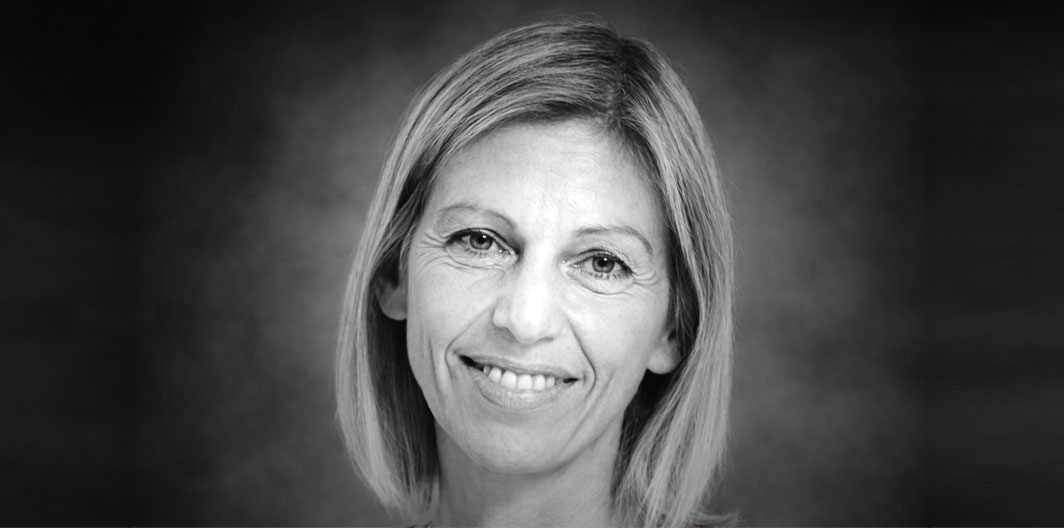

Why was I interested in interviewing Anna? She is a Greek-born sociologist and one of the leading international scholars on migration, integration, and cultural diversity. She currently holds the Canada Excellence Research Chair in Migration and Integration at Toronto Metropolitan University and has previously held senior academic positions across Europe, including a Robert Schuman Chair at the European University Institute. Her work sits at the intersection of sociology, political science, and public policy, focusing on how migration reshapes societies, identities, and governance systems across regions. Beyond academia, Anna has played an active role in policy debates, advising institutions such as the European Commission, the European Parliament, and Canadian authorities, while also shaping the field through editorial leadership and large-scale international research programs.
The interview is particularly compelling because it blends high-level theoretical insight with lived experience, offering a rare combination of intellectual depth and personal reflection. Rather than presenting migration as an abstract policy problem, it reveals its complexity as a human, social, and ethical phenomenon—challenging rigid distinctions such as “economic” versus “humanitarian” migration and questioning dominant frameworks like integration or skills-based selection. At the same time, the conversation stands out for its reflexivity: it openly addresses tensions within the field itself, including Eurocentrism in research, the limits of multiculturalism, and the gap between evidence and policymaking. What makes the interview especially engaging is this dual movement—between structural analysis and personal voice—which allows readers to see not only how migration systems work, but also how a leading scholar thinks, doubts, and evolves within them.
Here’s our exchange:
Where are you originally from, and what aspects of your childhood there most shaped who you are today?
I was born and raised in Athens, Greece, in a middle-class family. My parents and grandparents were lawyers—everyone in my family for the last three generations had gone to university. There were many books at home, and the television was usually off. My parents worked long hours, so when we were not arguing or chasing each other around the house, my brother and I would read—sometimes out of boredom—anything we could find in the library.
We lived in a residential neighbourhood of Athens, close to the sea. When I was little, my maternal grandmother lived with us, but we lost her when I was six, so I only have fleeting memories of her. My paternal grandparents also lived in Athens, not far from us, and I dearly loved my paternal grandmother (more on this below).
I was the only girl in an extended family where most cousins were boys. I used to play war with my cousins and my brother in our grandmother’s garden. We were a tightly knit family, and perhaps what shaped me most was the stability of our family life—there were rituals and celebrations that structured the year and the seasons.
How would you describe your family environment growing up, and who were the most influential figures in your early life?
What was exceptional in our family was that my mother, not only my father, was a lawyer. I was probably the only one in my class throughout school whose mother was a professional. While this was entirely normal for me, my classmates made me aware of how unusual it was—we are talking about the late 1970s and the 1980s. My father, to his credit, worked with my mother on completely equal terms. What was remarkable about them was how symbiotically they lived their lives. They worked together, went out together, and rarely did anything separately. It has been a beautiful model for me, even though I have lived my life differently.
My mother was an influential figure because of her hard work, tireless presence at home, strong principles, and affection. It would not be an exaggeration to say that, as a child, I was in love with my mother—I could not live without her. As a teenager, of course, I had my arguments with both my parents, who, after all, were extremely progressive and strongly committed to gender equality for their time.
My paternal grandmother, Athina, was also an influential figure. I loved her dearly and spent a great deal of time with her. Even when I was 20 and both studying and working, I would find opportunities to have coffee with her and chat. She had an incredible life, and it has long been my sogno nel cassetto (a dream tucked away) to write about her.
Were there particular family or cultural traditions that played a lasting role in shaping your values or worldview?
We were nominally Greek Orthodox but did not attend church or practice regularly. My father and his family were very secular, and this shaped our childhood. We observed Greek traditions, for example around Easter, but always in a detached, non-spiritual way.
For my parents, people’s dignity was linked to hard work, morality, and education. Money was not important. They were civically active—engaged in the school council, local politics, and civil society. At home, we talked a lot about politics, as did my parents with their friends. This gave me a strong social and political consciousness from an early age. As a teenager, I participated in many peace rallies—against nuclear weapons—with my parents and later with my classmates. In many ways, it was a different world—before 1989, when the divide between Left and Right still carried strong meaning.
What initially drew you to the field you chose to study, and was there a moment when you realized it was the right path for you?
I chose to study sociology because I was a Marxist. My uncle had given me his copy of Marx’s Political Economy, and as a 16-year-old I struggled to understand concepts such as a class “in itself” and “for itself,” surplus value, and so on. I wanted to understand how society worked and why it worked the way it did. Sociology was my subject then, and it remains so today.
Since my parents and their parents were in the legal profession—and many of my aunts and uncles were also lawyers or notaries—there was some expectation that my brother and I would follow this path. In the end, however, that expectation fell on my brother—as the male child—and everyone was content that I pursued sociology.
At what age did you begin working, and what did your first job teach you about responsibility or independence?
I started doing summer jobs at 16 and began working full-time at 18 alongside my undergraduate studies. That was very unusual for a middle-class family in Athens in the 1980s, but I very much wanted to earn my own money.
Working has always been an exercise in humility—anyone can boss you around, especially when you are young. That is perhaps the most important lesson I learned. The second is autonomy and resilience: you have to find solutions, work hard, and adapt. I took on many jobs, starting as a typist’s assistant, then working as a phone operator, tourist guide, English language teacher, insurance broker, and sales assistant. I was very proud of my work experience.
How would you describe your current professional role, and what aspects of it do you find most meaningful?
My career has been shaped by a series of serendipitous moments. After finishing university in Athens, I very much wanted to pursue graduate studies abroad. I am not sure whether my main motivation was academic or simply the desire to live abroad. I was fortunate to be accepted directly into a PhD program at the European University Institute in 1990. A month after moving to Florence, my fellow research students and I marked one year since the fall of the Berlin Wall. That moment captures the spirit of the time—it was a period of immense hope and rapid change.
My PhD thesis focused on the social psychology of political party behaviour, particularly minority parties—not ethnic minorities, but ideological minorities such as the Greens. However, as I was completing my PhD, immigration from Central and Eastern Europe to Southern Europe began to increase. Greece, traditionally a country of emigration with a relatively open attitude toward foreigners, became more xenophobic almost overnight. Similar developments were taking place in Italy and Spain. Together with a fellow PhD student, I wrote what became my first academic publication—an article on xenophobia and its drivers. Only later did I realise how fortunate we were that it was accepted in a peer-reviewed journal—we had no idea at the time.
After finishing in Florence, I moved to Brussels for a traineeship at the European Commission, and soon after to the UK for a postdoc at the London School of Economics. My postdoctoral work shifted from social psychology to immigration studies. I wanted to understand how immigration shapes discourses and perceptions of national identity, with a focus on Southern Europe. Being accepted at LSE was another stroke of luck—two professors were competing over their preferred candidates, and I was selected as a third option, without a Doktorvater to support me.
After time in the UK and Belgium, I received a Marie Curie Fellowship in Rome. Without going into too much detail, my career developed alongside the emergence of what the European Commission termed the European Research Area. I secured my first international research project as a principal investigator in 1998, just three years after completing my PhD. My research evolved in response to developments in European societies and economies, shifting from identity and migration to broader questions of immigration governance—labour migration, irregular migration, integration, and civic participation.
I moved from Rome to Florence, then to Patras in Greece (as I started a family and my husband’s work was based there), then back to Athens, to Naples in Italy, and again to Florence, where I took up a Research Chair in Cultural Pluralism at the European University Institute’s Robert Schuman Centre for Advanced Studies. My husband and I sometimes lived in different locations due to our careers—he was a fighter pilot in the Hellenic Air Force—and our four children usually stayed with me. Our family became very close-knit, as frequent moves between cities, schools, and countries made our nuclear family the centre of gravity. Unlike my own childhood, my children saw their extended family mainly during Christmas and summer holidays. We also did not maintain fixed traditions but adapted to wherever we lived.
My career brought me to Canada in 2019, where I had the unique opportunity to take up a Canada Excellence Research Chair in Migration and Integration at Toronto Metropolitan University. My work focuses on mentoring and supervising researchers, managing large research grants, and engaging in dissemination activities. Although I have taught at times, research remains at the core of my intellectual life. I enjoy identifying new research questions and building projects around them.
My life has become so closely tied to independent research that whenever I encounter a new phenomenon, I instinctively start thinking about how we might secure funding to study it.
During my years in Europe, my focus was primarily on Europe and its neighbourhood. Since moving to Canada, I have had the opportunity to engage with other regions of the world, broaden my perspective, and develop more comparative and global analyses.
How do you reconcile the growing emphasis on skills-based immigration systems with the ethical responsibility to protect migrants whose displacement is driven by conflict, climate change, or global inequality rather than labor market demand?
Although migration policy tends to separate economic from humanitarian migration, the reality is messy and complex. Most migrants move for both economic and humanitarian reasons. A refugee still wants to choose where to rebuild their life, and a labour migrant also operates under constraints—even highly skilled ones.
My motto is that migration is not a crisis but a normal part of human life; in fact, it is at the core of human history and development. The way we understand migration today is largely shaped by the nation-state and the nationalist doctrine that cultural, ethnic, and territorial boundaries must coincide. For most of human history, this was not the case. That is the first point.
The second point is that we need to broaden our understanding of international protection to make room for those whose mobility is driven by complex and cascading factors. For example, environmental degradation may lead to the breakdown of local systems of production, which in turn drives internal migration to cities and, from there, international migration in search of better livelihoods. Often, the original motivation for migrating cannot be traced in a linear way.
While I appreciate the proactive and highly regulated Canadian immigration system—based on human capital and offering pathways to citizenship—I believe that a better way to regulate migration is through enhanced regional mobility regimes. Allowing people to circulate freely within a given world region has proven effective. The European Union is one example, enabling flexibility and relatively strong (though still imperfect) access to rights and protection. Mercosur in Latin America is another important case, facilitating the absorption of Venezuelan refugees over the past decade. A similar system exists in West Africa through ECOWAS, although it is not yet fully operational. From a Western-centric perspective, we often overlook that over 80% of migration in West Africa takes place within the region.
How should Canada rethink its self-image as a multicultural success story in light of persistent racialized inequalities in labor market outcomes and political representation among migrants?
Canada is indeed a success story as a multicultural, post-national country—but it is also imperfect. Multiculturalism is like a marriage: it requires continuous effort to sustain. There are many initiatives, policies, and institutions that support the socio-economic, cultural, and political integration of migrants in Canada. Yet more needs to be done.
There is a persistent devaluation of foreign skills and credentials in the labour market, even though such qualifications are recognised by the immigration system. In other words, people are selected for their education and professional expertise, but once they arrive, they often find that their qualifications are undervalued or mistrusted by employers. Discrimination and negative stereotypes are certainly part of the problem, and they affect some migrant groups more than others. Racialized immigrants—and racialized immigrant women in particular—face the greatest systemic barriers to labour market integration.
We can see the glass as either half empty or half full. In my view, it is half full. Canada’s diversity is reflected in its political institutions, universities, civil society, and schools. However, more progress is needed to ensure greater diversity at senior levels in the private sector.
To what extent does the concept of integration itself remain a useful analytical framework, rather than a normative expectation that places disproportionate responsibility on migrants rather than institutions?
Integration can be interpreted in many ways. For me, it is a two-way process: migrants must adapt to their new context, but that context is not static—it evolves both through broader societal changes and through immigration itself.
Integration should be understood across multiple dimensions, as many theorists have suggested. We need to distinguish between economic integration (employment), social and cultural integration, political participation and representation, and everyday life—friendships, habits, and lived experiences. Finally, integration also involves subjective dimensions: how people feel, whether they identify with and feel a sense of belonging in their new environment.
But when can we say someone is “integrated”? Am I “integrated”? The concept also carries ethnic, religious, and racial connotations. In Canada, for example, a Muslim individual may feel the need to “perform” integration more actively than someone who is not. A newcomer from Sub-Saharan Africa may face greater pressure to demonstrate integration than someone from East Asia. A young man or someone identifying as LGBTQ2S+ may experience different expectations than a middle-aged woman. These intersectional dynamics shape how integration is experienced and judged.
How do you assess the long-term social consequences of temporary migration programs that deliberately deny pathways to permanent residence and political belonging?
There are different types of temporary migration programs. In Europe, all migrants—including highly skilled professionals—are initially temporary. After meeting certain conditions, typically several years of residence and employment, they can obtain long-term permits and eventually apply for citizenship. Naturalisation usually requires at least five years of residence, though in some countries it may be eight or more. In Europe, citizenship acquisition is often discretionary, and becoming a citizen is the key marker of belonging. Thus, the main barrier is not temporary status itself but access to citizenship.
In Canada, there have traditionally been two main pathways. The first involves applying for permanent residency from abroad and arriving in the country with that status already granted. Permanent residents enjoy extensive socio-economic rights and security of residence and are treated as “citizens-in-waiting.” At the airport, they even share the same queue as citizens.
The second pathway is through temporary work or study permits. Traditionally, these migrants were seen as transient. However, over the past 10–15 years, “two-step migration” has become more common: individuals arrive on a temporary status and later apply for permanent residency. The system, however, is highly competitive, based on age, education, work experience, language skills, and Canadian experience. Currently, there is a significant bottleneck: many highly qualified individuals who have lived in Canada for years cannot transition because they are over 35 and therefore receive no points for age. This is a serious issue. People are not commodities to be sent back once they have built lives, families, and connections in the country.
Another category is seasonal migration, often with very limited prospects for long-term residence. This raises fundamental questions about how we define “skill” and how we value contributions in sectors such as agriculture, care work, and food processing. In my view, points-based systems should better recognise these essential contributions—especially those we briefly acknowledged during the pandemic.
Can policies designed to attract “global talent” coexist with commitments to social cohesion, or do they inevitably deepen stratification within migrant populations?
Yes, they can coexist. Highly skilled migrants are also subject to racialization and discrimination, as the Canadian case demonstrates. Moreover, integration is a whole-of-society process—it involves migrants of all backgrounds as well as the host population.
I would add a footnote: in Canadian terminology, an “immigrant” is a permanent resident, while a “migrant” is a temporary resident. I use the terms interchangeably because, in a broader sense, we are all migrants. It is best not to draw rigid distinctions—we all come from somewhere. The first European, after all, was an African woman.
How should migration governance adapt to climate-induced mobility when existing legal categories fail to recognize environmental displacement as a legitimate ground for protection?
The relationship between climate change and migration is complex and mediated by many factors, including state capacity, socio-economic conditions, and whether affected populations are rural or urban. It is therefore difficult to define a clear legal category of “climate refugees.”
First, many people affected by climate change are internally displaced and do not cross international borders. Second, causality is often indirect and multifaceted. Third, climate change affects both rural populations (through drought or soil degradation) and urban populations (through extreme weather events such as flooding or heatwaves). These complexities make it challenging to establish clear legal frameworks.
What role do cities play in reshaping migration and integration policies when national governments adopt increasingly restrictive or polarized approaches?
Cities are where integration ultimately takes place. They are themselves products of internal and international migration. Historically, cities have been diverse and multicultural, often providing spaces of protection for people with insecure or irregular status. Local authorities are typically driven by the need to provide services to all residents, regardless of origin. Many cities in North America and Europe have declared themselves sanctuary or welcoming cities.
At the same time, cities can also become sites of exclusion, where racist or xenophobic policies and practices emerge. In this sense, the local level often becomes a battleground where different state and civil society actors pursue competing agendas.
How do you respond to critiques that multiculturalism has been depoliticized into a symbolic framework that avoids confronting structural racism and power asymmetries?
Multiculturalism is not depoliticised; it is a framework that recognises individual and collective diversity and creates spaces where diversity is acknowledged, valued, and celebrated. However, racism can still persist within these spaces—and unfortunately, it often does. Such racism may occur between majority and minority groups, as well as among minority groups themselves.
As mentioned earlier, multiculturalism is not a panacea. It requires sustained commitment and effort, and it is not a one-size-fits-all solution. Addressing structural racism and inequality requires targeted policies and actions adapted to specific contexts.
In what ways does the securitization of migration reshape public perceptions of migrants even when empirical evidence contradicts narratives of threat?
The securitization of migration is deeply problematic. It associates migrants with criminality and disorder, reinforces racism and xenophobia, and fosters mistrust within society. It also obscures the many positive contributions migrants make.
Negative stories tend to dominate media coverage. If a migrant commits a crime, it becomes news; the countless migrants who live peacefully, work hard, study, and contribute to society remain invisible.
While it is important to provide data to counter these perceptions, the evidence is often complex. For example, higher representation of migrants in police statistics does not necessarily mean higher criminality—it may reflect discriminatory policing practices, as migrants are more likely to be stopped or monitored, particularly those who are young, male, or racialized. Such nuances are difficult to communicate to a broad audience.
For this reason, it is also important to use narratives and real-life stories that help people understand context and develop a more balanced perspective.
How can comparative migration research avoid reproducing Eurocentric or Global North biases when analyzing integration models and policy effectiveness?
That is relatively straightforward: we need more humility and deeper engagement with colleagues from other world regions. I have often argued that Latin America and Africa have much to teach us about refugee reception and integration. Low-resource contexts often generate the most innovative initiatives.
Such a decentring of knowledge production requires not only geographical or geopolitical shifts (i.e. looking beyond Europe and the Global North), but also a shift in terms of actors. Too often, we focus primarily on state institutions, whereas in many contexts the most important actors are communities, civil society organisations, or even the private sector.
What responsibilities do receiving states have toward the countries of origin that experience sustained brain drain as a result of selective immigration systems?
They have significant responsibilities that are rarely acknowledged. Countries of destination receive people who have been raised, educated, and trained elsewhere—at the expense of the country of origin, which has invested in their social and professional development. Destination countries with highly selective immigration systems—such as Canada, the United States, Australia, and the UK—benefit enormously from this imported talent.
These “reverse remittances” are rarely quantified and may even be considered non-quantifiable. Both origin and destination countries tend to focus on the financial remittances migrants send back, without adequately considering the costs of brain drain or how to compensate for them. Power asymmetries between origin and destination countries are so large that there is little incentive for destination countries to negotiate more balanced arrangements.
More recently, there have been initiatives aimed at creating more equitable migration systems. For example, some programs involve employers in destination countries investing in the upskilling of professionals in countries of origin. These programs may include an “away” track for those who will emigrate and a “home” track for those who will remain and contribute locally. However, such initiatives remain small in scale, often involving only a few dozen or hundred participants.
How do digital surveillance technologies used in migration management challenge fundamental principles of privacy, due process, and democratic accountability?
The capacity of advanced digital technologies has grown exponentially in recent years. These technologies are now used in both enforcement (“fencing”) and administrative (“gatekeeping”) strategies in migration management.
By “fencing,” I refer to enforcement measures such as border controls or public raids. “Gatekeeping,” by contrast, involves remote management tools such as visa systems or restrictive permits. Advanced technologies are used to detect people crossing borders (e.g. infrared systems), to monitor public spaces through facial recognition, to process biometric data in passports, and even to scrape online data to identify individuals without legal status.
In many of these cases, individuals have not given meaningful consent for the use of their data. At the same time, we have witnessed an erosion of due process, judicial safeguards, and, in some instances, the rule of law—such as in the United States in recent years. In Europe, recent return directives, and in Canada, legislative developments such as Bill C-12, illustrate how migration control objectives can take precedence over civil liberties, privacy, human security, and the right to seek protection.
Is it still meaningful to speak of national integration policies in an era where migrants’ lives, identities, and solidarities are increasingly transnational?
Both migrants and non-migrants participate in transnational spaces through work, family ties, and leisure. The ability to communicate instantly through digital technologies has transformed not only how we connect with one another but also how we engage in public life.
While migrants may be more embedded in transnational networks, this reality applies to all of us. At the same time, our lives remain locally anchored. Our everyday activities—work, relationships, routines—are grounded in specific places, even if they now include a virtual dimension.
How should scholars of migration navigate the tension between policy relevance and critical distance when their research is embedded in state-funded frameworks?
This is a complex issue. The challenge does not primarily stem from the fact that migration research is often state-funded. In the contexts where I have worked—the European Union and Canada—there is generally no censorship or systematic bias in project selection, not least because evaluation is conducted by peer researchers.
The real challenge lies in how to ensure that research findings reach policymakers and have an impact beyond the academic community. How do we communicate effectively with audiences that are not already convinced?
There is no simple answer. These are strategic choices, and each situation is different. Broadly speaking, one must decide whether to adopt a more activist role—like Greenpeace, directly confronting harmful practices—or a more institutional role—like the World Wildlife Fund, engaging in negotiation to achieve incremental policy change. Both approaches are necessary.
Ultimately, impact depends on political will. While policymakers often speak of evidence-based policymaking, in reality we frequently see policy-based evidence-making. The most favourable scenario is when political decisions are already made, but implementing agencies remain open to learning from research. Another possibility is that researchers and civil society mobilise together to advocate for change—sometimes successfully, sometimes not. In all cases, building coalitions is key.
Has there been a book, film, or work of art that significantly influenced the way you see the world or think about your work?
Yes—a book by journalist Jonny Steinberg about a young Somali man and his migration journey through Eastern and Southern Africa. It is based on Steinberg’s extensive conversations with the protagonist, Asad.
It is an extraordinary work. When I began reading it, I thought I knew what to expect—but I was wrong. The way it explores human agency, community, friendship, belonging, solidarity, as well as racism, discrimination, and violence, is truly unique. I highly recommend it.
Looking at younger generations today, what gives you the greatest sense of hope, and what concerns you the most?
What concerns me most is the absence of strong political ideals—clear visions of what a good society should look like.
What gives me hope is the ability of young people to mobilise transnationally and connect across borders, cultures, and languages. I believe that diversity and interconnectedness can help us build a better world.
If you were asked to teach a class on a subject completely unrelated to your profession, what would it be, and what would you hope students take away from it?
I do not feel I could teach something entirely unrelated to my profession. However, if I were to teach something connected to my hobbies, it would be running—how to listen to your body and your mind while running, and how to build resilience and self-confidence through it.
If you could ensure that one human value is never lost in society, which value would you choose, and why?
Solidarity. It is what makes us human.
Humanity is facing radical changes. To name just ten: geopolitical instability, climate change, economic inequalities, technological risks, public health challenges, political polarization, resource scarcity, humanitarian crises, misinformation, and disparities in global healthcare access. If, in an imaginative exercise, you had the power to solve one of these problems, which one would you choose first and why?
I would choose climate change—because there is no planet B.
What do you believe human beings owe one another, both as individuals and as members of a global society?
Solidarity and empathy. We are all human beings with equal dignity. We can only live together if we believe in community and in a shared interest that goes beyond individual gain. Striving for a common civic and public good is what elevates us and allows us to build a better world.
Interviews often focus on successes. Could you share something from 2025 that did not unfold as you expected, and what that experience taught you?
I experienced some challenges in team management this year. What I learned is that managing a team is always a work in progress. There are always new challenges and new lessons. I realised that I need to listen more carefully and step outside my comfort zone to better understand my colleagues’ needs and how to support them.
Are there any personal or professional goals you feel comfortable sharing for 2026?
I would like to work less and travel more—for leisure, since I already travel extensively for work. I would also like to ensure the long-term sustainability of the research programme I currently lead.
When you imagine the final moments of your life, what kind of news would you most hope to hear, and why?
That we have found a solution to climate change—and that my children are well, healthy, and happy. Climate change, for the well-being of all; my children, because they give meaning to my life.