
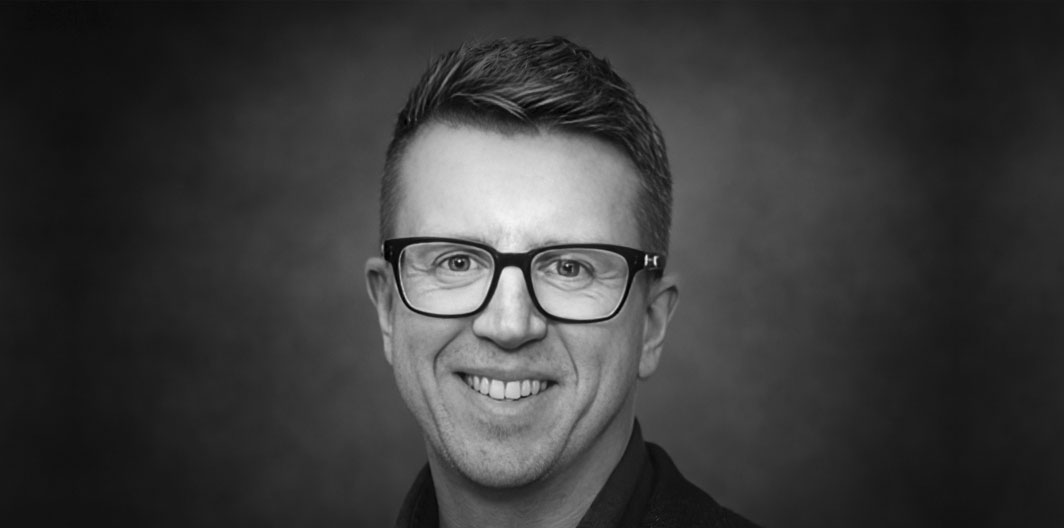

Why was I interested in interviewing Matt? He is a British charity leader and Chief Executive of the Lloyds Bank Foundation for England and Wales, a major grant-making organisation that supports small and local charities tackling social disadvantage. He took on the role in 2024 after more than a decade as Chief Executive of The Scout Association, where he oversaw significant growth in membership and helped expand the movement into more disadvantaged communities. Earlier in his career, Matt served as Chief Executive of the National Union of Students, following his own beginnings as a student leader at Queen Mary University of London Students’ Union. Across these roles he has focused on youth development, civic participation, and strengthening civil society. Matt also serves as Vice-Chair of Comic Relief and has supported initiatives promoting volunteering and social action, including co-founding the nationwide “Big Help Out.” He was awarded an Order of the British Empire (OBE) in 2020 for services to young people and the voluntary sector.
The interview above is particularly interesting because it blends personal history with a strategic view of how modern philanthropy and civil society operate. Matt reflects on growing up in a family business deeply rooted in community service and traces how those early experiences shaped his approach to leadership, volunteering, and social change. The conversation also offers rare insight into the mechanics of charitable funding—addressing topics such as grassroots organisations, risk-taking in philanthropy, the pressures of impact measurement, and the balance between corporate backing and community autonomy. By combining personal anecdotes with reflections on systemic challenges in the voluntary sector, the interview provides a thoughtful perspective on how philanthropy can empower local organisations while navigating complex institutional and economic realities.
Here’s our exchange:
Where are you originally from, and what was your childhood like there?
I was born in Peterborough, Cambridgeshire, England, and grew up above a family business on the High Street of a small market town called Ramsey, also in Cambridgeshire.
The business sold furniture, drapery, giftware, school uniforms, and even soap powder. Over four generations of Hydes, the shop had pretty much sold everything since George Hyde established it in 1876.
In many ways, the family business—G.B. Hyde and Son—was run like a non-profit organisation. The focus was always on providing a service to the community. That included supplying essential goods to Fenland villages around Ramsey for elderly and disabled residents, often as a loss leader. Originally, a horse and cart distributed goods, but by the time I was growing up it had been replaced by a small van. There were about eight charity collection tins on the counter, and my dad was always fundraising.
What was your family dynamic, and who were the key figures in your upbringing?
I was the fourth of four children—the happy accident!—with twin brothers seven years older than me and a sister ten years older.
It was a very loving household, and the sense of service was central to family life. Mum and Dad volunteered most nights of the week and are still regularly volunteering in their mid-80s. They have always been regular churchgoers and deeply connected to civil society organisations in town, including Rotary, the Women’s Institute, Scouts, schools, and more.
Who were the most influential people in your childhood, and what lessons did you learn from them?
Mum and Dad were the key figures in my life and instilled in me the importance of service and social action. Like me, all my siblings have dedicated much of their lives to community building and serving others.
Beyond my family, scout leaders and teachers also had a significant influence on my development.
What is one of your earliest memories, and how do you think it shaped who you are today?
When I was 14, the showroom of the family business—next to our house—burned down while I was studying at home. It was shocking. Many memories went up in smoke as the building burned completely to the ground.
Thankfully, no one was hurt. Watching my parents bounce back taught me an important lesson in resilience. As the fire was being put out, my dad asked me to write a sign for the shop door that said: “We are still open for business.”
It was a profoundly impressionable moment for me. I later wrote about that experience during Covid.
Were there any cultural or family traditions from your childhood that helped define your values?
We were all encouraged to take part in Scouts—or Girlguiding in my sister’s case. I was actually born on 22 February, the same day as Baden-Powell.
Through Scouts, I first experienced leadership and volunteering. In 1985, when I was ten, I also raised money for the first time by organising a sponsored leapfrog down the main street of the town to support the very first Comic Relief campaign—the fundraising initiative created by Richard Curtis and Sir Lenny Henry that has since raised more than £1 billion for good causes.
Forty years later, I now serve as Vice-Chair of Comic Relief.
What motivated you to study what you studied?
I fell in love with literature at school and initially wanted to become a journalist. I spent two summers doing work experience with local newspapers and even managed to land front-page stories.
It seemed inevitable that I would study English. However, when I became involved in the student movement, I realised I wanted to help create change rather than simply write about it.
At what age did you start working, and what did your first job involve?
If we exclude sweeping hair at a local hairdresser’s—where I lasted one day—and delivering newspapers, my first real job was as an elected student officer after studying English at Queen Mary University of London.
I was elected Students’ Union President and then re-elected, serving from 1996 to 1998.
How would you describe your current job and its responsibilities?
As Students’ Union President, I represented the students of the university, chaired the board, and oversaw a wide range of services.
Students’ unions are ideal places to accelerate experiential learning in a safe environment. You have a staff team that operates a bit like a civil service supporting elected leaders.
It was a transformational experience. Many politicians, charity leaders, and business figures in the UK began their careers as student leaders.
In a philanthropic landscape often dominated by large institutions and metrics-driven funding, how do you protect the space for small, grassroots charities that may be rich in impact but poor in data?
Lloyds Bank Foundation has a strong track record of supporting small charities, which make up the vast majority of the 170,000 charities in England and Wales.
We recently conducted major research showing that the key ingredients for helping smaller charities grow include unrestricted income, multi-year funding, and capacity-building support—such as access to consultants or infrastructure assistance. In our case, charities can also leverage additional assets from Lloyds Bank, including volunteers.
Part of our role is to help grassroots organisations tell their stories and demonstrate their impact. New tools in data, digital technology, and AI are helping us capture evidence of impact without placing unnecessary administrative burdens on small charities.
You’ve said the Foundation exists to support the most underfunded and overlooked organisations. How do you ensure that support doesn’t come with unintended strings—like pushing small charities to professionalise in ways that dilute their grassroots character?
We are very proud of our track record as a relational funder. Our regional teams build strong relationships with the charities we support, which allows us to understand their unique character.
There are tools we can offer to help charities improve efficiency and impact, but that support must be welcomed by the charity itself—it cannot be imposed.
In a time when trust in big banks and institutions is under pressure, how do you navigate the tension between being a corporate foundation and a force for radical community change?
We are an independent charitable corporate foundation. Our governance is separate from Lloyds Banking Group, and our trustees are legally required to act in the best interests of our beneficiaries and the public.
Remaining focused on our “north star”—serving communities—is essential to maintaining trust. UK charities remain among the most trusted institutions in the country.
Our new strategy, launching in May, also explores how we can leverage more resources from our principal funder, including encouraging more giving from customers, greater staff volunteering, and increased use of social investment.
With so many funders leaning toward measurable innovation, how do you make the case internally—and externally—for backing unproven ideas that may not yield immediate results?
The beauty of being a funder is that we can take a long-term perspective, unlike governments that may focus on short political cycles.
That allows us to take risks. The key is embedding learning and evaluation into our culture so that decisions are informed by evidence. Mistakes will inevitably happen—and that’s acceptable.
In fact, we published research called How to Be Wrong, which emphasised the importance of failure in a culture of risk-taking and learning. Over the past 40 years we have supported charities at their inception that later became household names, including Childline and Changing Faces.
After decades of underinvestment in the voluntary sector, what role do you think institutional funders like yours should play in rebalancing power between charities and their communities?
Our new strategy focuses on strengthening systems that ensure the voluntary and community sector remains central to local communities.
This involves growing philanthropy and volunteering, influencing policy to ensure sustainable funding flows to charities, and encouraging innovation within charities themselves so they can become more resilient.
Charities that embed lived experience in governance and decision-making often have stronger legitimacy within their communities.
Coming from a youth-focused background at the Scouts and NUS, how has your view of leadership changed now that you’re working primarily with adult-led community organisations?
The National Union of Students was student-led, with most participants in their early twenties. Scouts, by contrast, was volunteer-led, and the majority of volunteers were significantly older.