
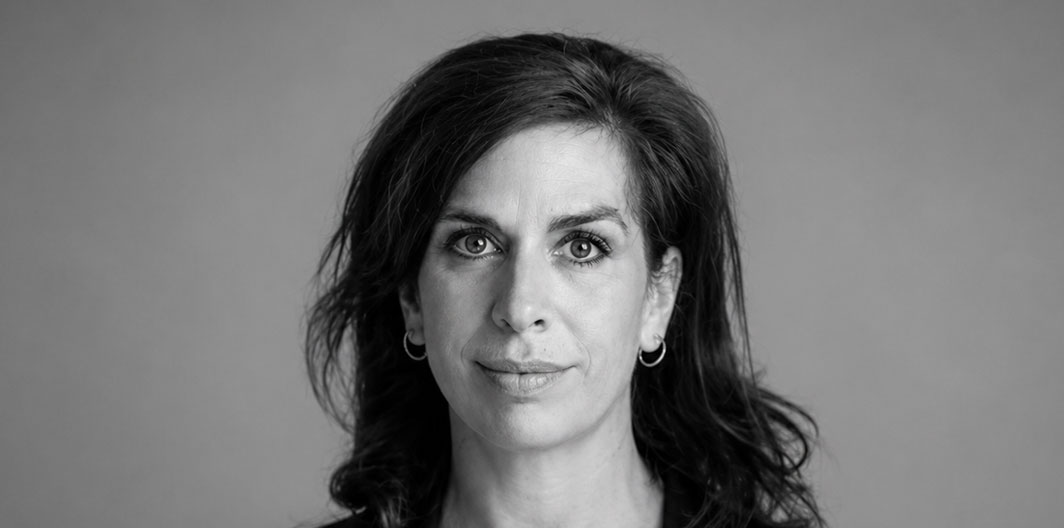

Why was interviewing Laura interesting? She is the Secretary General of Médecins Sans Frontières International (MSF), leading one of the world’s most respected independent humanitarian medical organizations at a time of unprecedented global instability. Before assuming the role in 2026, she served as the General Director of MSF Austria and was Deputy Head of Department in the UK Department for International Development. Throughout her career, Laura has worked across humanitarian response, refugee protection, global health, and international advocacy, combining frontline experience with strategic leadership.
This is more than an interview about humanitarian work. It is an unflinching exploration of the moral challenges defining the twenty-first century—from war, migration, and climate change to the erosion of international law, the ethics of artificial intelligence, and the future of global solidarity. Combining strategic insight with personal reflection, Laura offers a rare perspective on what it means to lead with humanity in an era increasingly marked by polarization, uncertainty, and profound global change. Anyone interested in leadership, ethics, international affairs, or the future of humanitarianism will find this an essential and thought-provoking read.
Here’s our exchange:
Where are you originally from, and what aspects of your childhood there most shaped who you are today?
My father is Argentinian, and my mother is Austrian. I was born in Vienna, Austria, but I had the privilege of regularly visiting my grandparents and other family members in South America as a child. Those experiences shaped me profoundly.
I still vividly remember the moment I first realized that not everyone was as fortunate or well-off as I was, and that children my age did not even have enough food to eat. That realization made me determined to contribute to creating a more just world when I grew up. And here I am today.
How would you describe your family environment growing up, and who were the most influential figures in your early life?
I grew up in a very loving but relatively traditional home. During my early years, my mother stayed at home with me and my sister, while my father was the family’s primary income earner. He also devoted a great deal of time to attending classical concerts and the opera—the very reason he had moved to Vienna in the first place.
Several people and experiences shaped me during my childhood. My parents gave me unconditional love and support, and they firmly believed I could become or achieve whatever I wanted. They also gave me the freedom to follow my own path. For example, I became vegetarian at the age of five, and that decision was fully respected.
I inherited my love of travel from my father, and my affinity for feminism from my grandmother, who completed her PhD during her retirement. Above all, I was raised with strong values of mutual respect and kindness.
Were there particular family or cultural traditions that played a lasting role in shaping your values or worldview?
Definitely the strong women in my family, especially my mother and grandmother. They never made me doubt myself simply because I am a woman. I was also deeply influenced by my father’s openness to the world and his curiosity about different cultures.
What initially drew you to the field you chose to study, and was there a moment when you realized it was the right path for you?
I had a defining moment when I was about eight years old while visiting my family in South America. It was then that I became acutely aware of the inequality that exists in our world. From that moment on, I knew I wanted to contribute to creating better opportunities for everyone.
Later, when it was time to attend university in Vienna, I discovered there was no degree in development studies. Together with a group of motivated students and professors, we created one.
At what age did you begin working, and what did your first job teach you about responsibility or independence?
We were not a wealthy family, particularly after my parents divorced. I wanted to become financially independent as early as possible, so at the age of 15 I took a summer job in a bakery. It taught me how demanding work can be and how fortunate I was to have the opportunity to attend school.
Around the same time, I discovered my other great passion in life: rock climbing. I was able to teach climbing alongside school and university, earning money by doing something I truly loved.
How would you describe your current professional role, and what aspects of it do you find most meaningful?
I have been the Secretary General of Médecins Sans Frontières (MSF) International since March 2026. It is an incredibly challenging, but also deeply rewarding and meaningful role.
My responsibilities are broad and complex, ranging from managing a large international office and coordinating the organization’s strategic leadership to representing MSF externally and engaging with partners around the world.
Even though the days can be long and difficult, and events in our projects can be heartbreaking, I always know why I get up in the morning. I am inspired by the many brilliant colleagues around me, all of us working together as part of this remarkable organization during a period of profound external change and internal evolution.
It is truly my dream job.
Médecins Sans Frontières operates in places where politics, violence, disease, migration, and human suffering collide in their rawest forms. After years working across humanitarian and refugee contexts, do you believe the international system is genuinely designed to prevent human suffering — or primarily designed to manage it without destabilizing global power structures?
It is my personal belief that the international system was originally designed to prevent unnecessary human suffering, informed by the lessons of history. However, I have witnessed a gradual dismantling of that system and a shift in global power toward a new equilibrium in which the interests of the strongest increasingly prevail.
This is an extremely worrying development. It has immediate consequences for the world’s most vulnerable communities and poses longer-term risks for humanity as a whole. Reversing this trend will require genuine political will and courageous leadership.
Humanitarian organizations are often expected to remain neutral while operating inside deeply political crises. Yet silence itself can sometimes become political. How do you personally navigate the tension between maintaining operational access and speaking openly about the actors responsible for suffering, particularly when those actors are governments funding the humanitarian system itself?
This is one of the reasons I love working for MSF. Speaking out about the suffering we witness—and its causes—is a fundamental part of who we are as an organization. At the same time, neutrality, impartiality, and independence are core humanitarian principles that enable us to work in conflict settings and reach people who need our support.
While we always remain neutral within a conflict, we also stand firmly with our patients. When we witness systematic harm against civilians or the obstruction of healthcare, we speak out.
This is also one of the reasons MSF accepts very little government funding. Today, 98% of our income worldwide comes from private donations by individuals, foundations, and companies. That independence enables us to openly condemn governments when they cause, contribute to, or tolerate humanitarian crises.
There are, however, difficult dilemmas. Speaking out can sometimes jeopardize our access to the very people who need our help. Yet we have also learned that remaining silent has cost many lives.
MSF has repeatedly warned about the normalization of preventable deaths at borders, in conflict zones, and in refugee camps. Do you feel the world is becoming morally desensitized to suffering because humanitarian crises have become constant background noise within the digital age?
What I observe most is the dehumanization of people caught in conflict or forced to flee their homes. The human reality of their suffering is deliberately pushed aside. People who are simply trying to live their lives—just like you or me—often after experiencing unimaginable hardship and urgently needing safety and support, are reduced to statistics or portrayed as threats.
At the same time, deliberate violations of international humanitarian law—such as pushbacks and violence at borders, or the disregard for civilian lives and infrastructure during armed conflict—combined with a lack of accountability, are contributing to growing levels of preventable human suffering and death.
That said, I do not believe empathy has disappeared. We continue to witness extraordinary solidarity from people around the world. The real question is whether societies and political leaders still feel a sense of responsibility toward people beyond their own national or social boundaries.
Europe frequently presents itself as a defender of human rights while simultaneously implementing increasingly restrictive migration policies. Having worked extensively with displaced populations, do you believe there is now a widening gap between Europe’s moral language and its political behaviour?
MSF made the decision to stop accepting funding from the European Union and its member states in 2016 in protest against the EU–Turkey deal and the realization that European migration policies were increasingly focused on deterrence and border closures rather than protection and assistance.
One of the difficult realities is that migration has become highly politicized across many democracies. This often creates pressure for short-term, symbolic policies rather than sustainable and humane approaches.
What humanitarian organizations can do is continue documenting the human consequences of these policies and insist that human rights principles are applied consistently, including at Europe’s borders.
Many humanitarian professionals eventually confront a difficult psychological question: whether emergency response can unintentionally normalize permanent crisis by treating symptoms while deeper political causes remain untouched. Have you ever struggled with the fear that humanitarian aid risks becoming a mechanism that allows governments and institutions to avoid structural accountability?
This is an important and uncomfortable question, and I think many humanitarian workers—as well as MSF as an organization—reflect on it seriously.
There is always a danger that emergency response becomes integrated into systems of chronic political failure. In some places, humanitarian organizations end up compensating for collapsed public responsibilities year after year. However, I would be cautious about concluding that humanitarian aid itself is the problem. The absence of humanitarian aid would not create accountability; it would simply create more suffering.
The real challenge is ensuring that humanitarian action does not become a substitute for political action. Humanitarian organizations must continue speaking honestly about the causes of crises and the limits of emergency relief, while also contributing, where possible, to political change.
MSF has always tried to maintain that balance: providing medical care while refusing to pretend that medical aid alone can resolve the underlying violence, exclusion, or inequality that produces these crises.
The humanitarian sector increasingly speaks about resilience, empowerment, and adaptation. Yet millions of people are trapped in conditions produced not by natural disaster alone, but by war, inequality, climate change, exploitation, and geopolitical interests. Do you worry that some humanitarian language unintentionally softens the political realities that create suffering in the first place?
Language matters enormously. Terms such as resilience or adaptation can be valuable, but they can also become overly technocratic if they are detached from questions of power, politics, and lived reality.
People are not suffering because of abstract “crises” alone. Many are suffering because of war, persecution, inequality, the climate crisis, or failures of international protection.
One risk within humanitarian discourse is that managerial language can unintentionally depoliticize profoundly political realities. We should avoid speaking about displacement, malnutrition, or the collapse of healthcare systems as though they were natural phenomena, disconnected from human decisions.
At the same time, humanitarian organizations must remain focused on saving lives in the immediate situation. Our first responsibility is to provide care and assistance in often extremely difficult conditions. There is therefore always a balance between operational pragmatism and political clarity. Other actors—including development organizations, political institutions, and international forums—have a specific responsibility to address the political realities that humanitarian organizations alone cannot change.
In recent years, aid organizations have faced growing criticism regarding power imbalances, representation, and decision-making structures rooted in colonial histories. How far do you think the humanitarian sector has genuinely evolved—and where does it still remain shaped by paternalistic assumptions inherited from the past?
The humanitarian sector, including MSF, has evolved significantly, but there is still a long way to go. Today there is much greater awareness of issues such as representation, power imbalances, and the concentration of decision-making within international institutions historically dominated by Europe and North America. That conversation is both necessary and healthy.
At the same time, structural inequalities remain very real—in funding flows, governance, media visibility, and whose expertise is recognized internationally. Even current AI models can reinforce these structural inequalities.
For organizations like MSF, this requires constant reflection, including on how decisions are made, whose voices shape priorities, and how we implement our operations. We need to become even better at listening to the communities we support and embrace greater diversity in our approaches. At the same time, we must safeguard our core organizational values and recognize that diversity itself is multifaceted.
The key is to approach this work with humility, accountability, and a genuine commitment to continuous learning.
MSF is known for its operational independence, but humanitarian work increasingly depends on navigating relationships with governments, donors, corporations, and international institutions. Is true independence still possible in modern humanitarianism, or has the system become too financially and politically interconnected?
What makes us independent, impartial, and neutral is that:
- We make our own decisions, guided solely by medical and humanitarian needs—not by political, military, economic, or religious interests.
- We provide assistance according to need alone, without discrimination based on nationality, ethnicity, religion, gender, political affiliation, legal status, or perceived affiliation with any side in a conflict.
- We do not take sides in armed conflicts or align ourselves with political, military, or ideological actors.
These remain our core principles and will not change. Of course, we work in partnership with many others and must negotiate with governments and other stakeholders. But we do so only where those principles are not compromised.
While MSF is financially independent—with 98% of our funding coming from private sources—we are nevertheless affected by the broader decline in humanitarian funding for other organizations. This is creating enormous gaps, particularly in healthcare, that we simply cannot fill on our own.
Climate change is already transforming migration, food systems, public health, and conflict. Do you believe the humanitarian world is psychologically prepared for the scale of human displacement and instability that may emerge over the next two decades?
I sometimes wonder whether the world as a whole is prepared for the profound impact of climate change. Its effects are already being felt across many regions, with vulnerable communities often experiencing the consequences first and most severely.
Humanitarian organizations are witnessing these impacts through rising levels of malnutrition, disease outbreaks, displacement, conflict, and the destruction of livelihoods. Yet many existing systems remain reactive rather than anticipatory.
One concern is that political responses may become increasingly securitized, focusing more on controlling human movement than on addressing vulnerability and strengthening adaptation.
The humanitarian sector will need to adapt operationally to these new realities. Ultimately, however, climate-driven suffering cannot be addressed through humanitarian action alone. It requires far-reaching political, economic, and environmental transformation at the global level.
There is a growing trend toward technological humanitarianism: AI-assisted crisis prediction, biometric refugee systems, digital identity tracking, algorithmic aid distribution. While these tools may improve efficiency, do you worry they also risk reducing vulnerable people into datasets to be managed rather than human beings to be understood?
Technology and innovation can already improve humanitarian response significantly. Better epidemiological analysis, logistics, communication, and forecasting can save lives. But there are also serious ethical questions. Communities at risk should not become subjects of surveillance or data extraction in the name of efficiency. We must be extremely careful about data protection, informed consent, and the unintended consequences of digital systems, particularly in contexts of conflict or displacement.
It is also crucial to maintain direct engagement with affected communities to ensure that every individual is recognized as a human being, not simply as a data point.
Much of modern public discourse rewards speed, certainty, outrage, and simplified narratives. Yet humanitarian work often requires nuance, ambiguity, patience, and uncomfortable moral complexity. Do you think contemporary political culture still has the emotional capacity to engage seriously with human suffering beyond performative empathy?
I think many societies are struggling with fragmentation, polarization, and information overload. That environment often rewards simplified narratives and emotional immediacy rather than sustained engagement with complex realities.
Humanitarian work rarely fits neatly into binary frameworks. Situations are often morally difficult, politically contested, and emotionally exhausting.
At the same time, we continue to see extraordinary commitment from journalists, civil society organizations, healthcare workers, volunteers, and citizens around the world. The challenge is how institutions and political systems can create space for complexity without losing public trust or attention.
Humanitarian workers are often exposed to extreme trauma while simultaneously expected to remain functional, composed, and mission-driven. What have you personally learned about the psychological cost of witnessing suffering repeatedly, and do you think the humanitarian sector speaks honestly enough about burnout, emotional fragmentation, and moral injury?
The work we do can involve profound emotional strain. Repeated exposure to violence, preventable deaths, displacement, and human loss affects my colleagues and me deeply, including those with many years of experience. In fact, not being affected by the suffering we witness would itself be a warning sign. We need to learn how to remain emotionally open despite repeated exposure to so much pain.
One important development in recent years is that we speak much more openly about mental health and psychological support than we did in the past. We also provide that support to our colleagues before, during, and after their assignments.
We need to ensure not only that support is available, but also that people feel able to accept it, rather than reinforcing a culture of endurance in which humanitarian workers are expected to keep functioning regardless of the emotional cost.
What I personally find most difficult is moral distress: witnessing situations where suffering could be reduced, and lives—often those of children—could be saved, if different political choices were made.
Recognizing that reality honestly is important, both for individual wellbeing and for organizational culture.
In many countries, younger generations are increasingly sceptical of institutions — governments, media, corporations, even NGOs. Why do you think trust is eroding so profoundly across societies, and what responsibility do humanitarian organizations have in rebuilding credibility in a world saturated with cynicism?
We are living through a period in which many societies feel economically insecure, politically polarized, and overwhelmed by misinformation. In that context, skepticism toward institutions can grow very quickly.
At MSF, we recognize the importance of speaking only about what we have directly witnessed and of ensuring consistency between our values and our actions.
At the same time, we are working to become even more transparent, while also being honest about our vulnerabilities, our limitations, and the dilemmas we face.
There is a recurring historical pattern in which societies only recognize moral catastrophes fully after they have already occurred. Looking at today’s world—Gaza, Sudan, Ukraine, migration routes, rising authoritarianism, ecological instability—what current reality do you think future generations may judge us most harshly for ignoring or normalizing?
I believe we will be judged most harshly for our inaction and indifference in the face of human suffering, as well as other global crises such as climate change. We know these problems exist, and we have the wealth, expertise, technology, and resources to address them—but too often we fail to act.
Moreover, history seems to be forgotten too easily. International humanitarian law is increasingly disregarded with near-complete impunity, leading to immense civilian suffering and the deliberate destruction of civilian infrastructure.
Although the COVID-19 pandemic is still recent history, many of its lessons appear to have been forgotten. Even now, a global pandemic treaty has yet to be agreed.
It is this normalization of violence and indifference, together with the retreat behind national borders, that I believe future generations will judge most harshly.
After years working at the intersection of humanitarian action, displacement, public advocacy, and global inequality, what still gives you genuine hope about humanity? And conversely, what developments most seriously concern you when you imagine the moral direction of the world over the next generation?
What gives me hope is that, even in situations of extreme violence or polarization, people continue to care for one another in remarkable ways. We witness solidarity every day—from healthcare workers operating under impossible conditions, to communities supporting displaced families, to individuals who refuse to accept that some lives matter less than others. Human resilience and solidarity remain incredibly powerful forces.
What concerns me most is the erosion of shared international norms and protections—the idea that certain rules should apply universally, especially when it comes to protecting civilians, healthcare, and human dignity. When those norms weaken, preventable suffering increases very quickly.
Has there been a book, film, or work of art that significantly influenced the way you see the world or think about your work?
Albert Camus’ The Plague has stayed with me for many years. It is often read as a novel about disease, but for me it is fundamentally about responsibility, solidarity, and the choices people make when confronted with crisis and suffering.
What I find so powerful is that its characters are not heroic in a grand sense. They simply refuse to accept indifference. They act, despite knowing that their efforts are limited and that they cannot save everyone.
That resonates deeply with humanitarian work. At MSF, we are constantly confronted with the limits of what medical action can achieve in the face of war, displacement, epidemics, or political failure. But those limits do not remove our responsibility to act.
Looking at younger generations today, what gives you the greatest sense of hope, and what concerns you the most?
I have two children, and what gives me hope is that they—and many other young people—are globally connected, politically aware, and unwilling to accept injustice as inevitable. There is often a strong ethical awareness around inequality, climate change, discrimination, and human rights.
What concerns me, however, is the scale of uncertainty many young people are inheriting—economically, environmentally, and politically. Constant exposure to crisis and digital overload can also create fatigue and disillusionment. And we must not forget the millions of young people growing up with seemingly little hope, including those living in refugee camps or in the midst of active conflict. Our challenge is to create environments in which these young people can once again build hopeful futures.
If you could spend a full day with any historical figure, who would you choose, and what questions would you want to ask them?
There are many. 😉
But I would probably choose Florence Nightingale. She is often remembered simply as “the lady with the lamp,” yet she was so much more: a reformer, a strategist, and a pioneer in using evidence to improve healthcare.
As a woman in the nineteenth century, she led without the formal authority enjoyed by the men around her. She changed systems through competence, persistence, and moral clarity.
I would ask her how she managed to influence institutions that were never designed to listen to women, and what she would make of today’s global health inequalities.
If you were asked to teach a class on a subject completely unrelated to your profession, what would it be, and what would you hope students take away from it?
I would probably teach a class on literature and moral imagination—not literature in a purely academic sense, but as a way of entering lives, histories, and dilemmas different from our own.
I would hope students would leave with a deeper appreciation for listening carefully, thinking critically, and remaining open to complexity. In a polarized world, those are not simply soft skills—they are essential civic skills.
If you could ensure that one human value is never lost in society, which value would you choose, and why?
I would choose humanity, because it is the foundation of everything else.
If we lose the ability to recognize the full humanity of another person—especially someone who is distant or different from us—then solidarity, justice, and compassion become fragile.
Humanity is what prevents us from reducing people to categories, numbers, threats, or burdens.
Humanity is facing radical changes. To name just ten: geopolitical instability, climate change, economic inequalities, technological risks, public health challenges, political polarization, resource scarcity, humanitarian crises, misinformation, and disparities in global healthcare access. If, in an imaginative exercise, you had the power to solve one of these problems, which one would you choose first and why?
None of these.
I would use my newfound superpower to fix bad governance. By that I mean governance that is short-sighted, exclusionary, self-serving, unaccountable, or indifferent to people’s needs.
I would choose this because almost all of the major challenges you listed are profoundly shaped by governance. Conflict, inequality, weak health systems, displacement, food insecurity, climate vulnerability, and political polarization are rarely simply accidents or natural phenomena. They are largely the result of political choices—whose voices are included or excluded, and whether leaders govern for the common good or for narrow interests.
What do you believe human beings owe one another, both as individuals and as members of a global society?
At a minimum, I believe human beings owe one another mutual respect and a commitment to do no harm.
That may sound modest, but it is actually profound. Mutual respect means recognizing that every person has equal worth, even when we do not share the same nationality, beliefs, politics, culture, or life experience. It means resisting the temptation to dehumanize others, especially during times of fear, conflict, or crisis.
And “do no harm” is not only a medical principle; it is also a social and political one. It means recognizing that our choices—as individuals, institutions, and states—can profoundly affect others, for better or for worse.
Interviews often focus on successes. Could you share something from the first half of 2026 that did not unfold as you expected, and what that experience taught you?
I often say that we make plans, and then life happens. Naturally, many things have unfolded differently than I expected.
On a very personal level, taking on this role has meant relocating to Geneva while my family has remained in Vienna, combined with extensive travel. I never expected this transition to be easy for my family, but it proved much harder for my children than I had anticipated.
It was a humbling reminder that we should never assume we know how others will respond to change. We need to give people the space, time, and support they need to adjust, while also doing what we can to make those changes more manageable.
Are there any personal or professional goals you feel comfortable sharing for 2026?
On a personal level, I hope to continue finding a sustainable balance between my professional life, my family, and time for myself—and to improve my French. 😉
Professionally, my goal is to help guide MSF through the many external and internal changes we are facing while ensuring that we continue delivering lifesaving humanitarian assistance to meet ever-growing needs.
When you imagine the final moments of your life, what kind of news would you most hope to hear, and why?
I think I would hope to hear that humanity had moved, however imperfectly, toward greater solidarity rather than greater exclusion—that societies had chosen cooperation over dehumanization and fear.
I would hope that this had enabled us to tackle humanity’s greatest challenges together, including climate change, armed conflict, and political polarization, leaving future generations with a world that offers genuine hope rather than despair.