
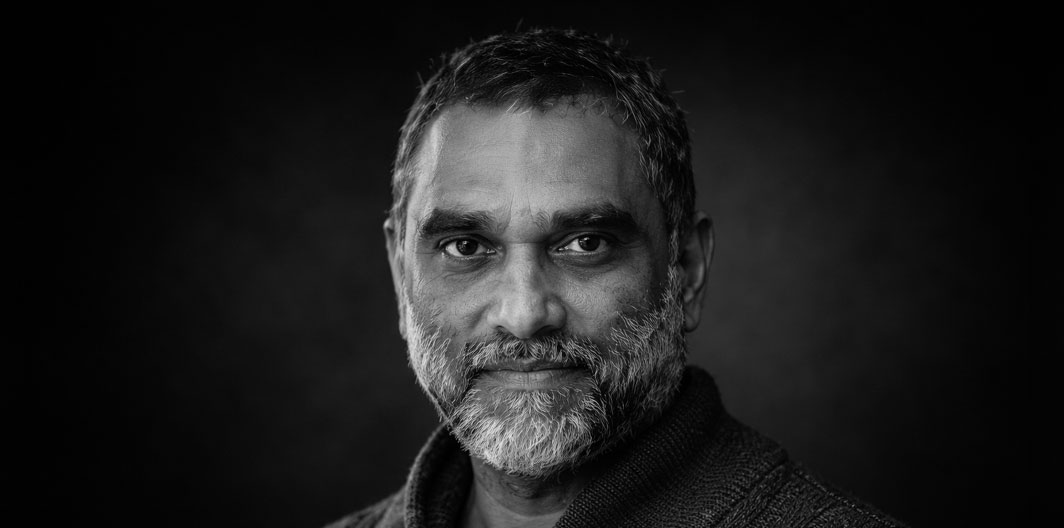

Why did I feel it was interesting to interview Kumi? He is a South African human rights and environmental activist whose life has been defined by courage, moral clarity, and a commitment to justice. Born under apartheid in Durban, he began organizing against systemic oppression at a young age, channeling personal tragedy and the brutality of segregation into activism. Over the years, he has led major global organizations, including Greenpeace International and Amnesty International, and now serves as President of the Fossil Fuel Non-Proliferation Treaty Initiative. Beyond institutional leadership, Kumi combines art, culture, and activism through the Global Artivism Movement, demonstrating that social change requires both strategy and imagination. His work spans the intersections of climate justice, human rights, and grassroots empowerment, emphasizing that movements are only as strong as the communities they serve.
This interview offers a rare and intimate window into Kumi’s worldview, revealing the personal experiences, values, and moral compass that have shaped his approach to activism. It is compelling not only for the scope of his accomplishments but for the depth of reflection on topics often treated abstractly: vulnerability, dignity, justice, and the interconnection between individual and collective struggle. Readers gain insight into how personal loss, historical oppression, and the realities of climate and social crises inform his strategic thinking, bridging the gap between theory and lived experience. The conversation is both a lesson in leadership and a meditation on courage, illustrating how a life committed to justice navigates complexity, urgency, and hope.
Here’s our exchange:
Where are you originally from, and what was your childhood like there?
I was born in Durban, South Africa, into a working-class Indian family under the brutal system of apartheid. My childhood was shaped by sharp contradictions: deep warmth and resilience within our community on the one hand, and the daily violence of state-enforced racial segregation on the other.
We lived in Chatsworth, a township created when the apartheid government forcibly removed Black people—African, Indian, and Coloured—from mixed neighbourhoods. We didn’t have much materially, but we had an abundance of community. My memories are filled with cricket and football in the streets, music spilling out of homes, and neighbours who raised one another’s children as if they were their own.
And yet apartheid was never background noise—it was an ever-present humiliation. “Whites only” signs, the indignities my parents endured, and the casual cruelty of a system designed to crush dignity were part of daily life. That tension—between human solidarity and institutional cruelty—helped form the moral compass I still live by.
What was your family dynamic, and who were the key figures in your upbringing?
My mother was the rock of our family—tender, fierce, and full of moral clarity. She carried immense strength, but she also shared her vulnerability openly, and that honesty taught me early that courage and tenderness are not opposites.
My father was deeply involved in the community. He served as the unofficial auditor for religious organisations in the township and taught us the importance of organisation through his volunteer work as an administrator for local football and cricket associations. He was more emotionally distant, but his quiet sacrifices helped keep us afloat.
When my mother died when I was fifteen, my older sister Kay became both sister and mother to me. She remains one of the most important people in my life.
In our world, “family” was never confined to blood. It included the aunties and uncles next door, neighbours who watched out for every child, and later, comrades in the struggle. Community was our safety net—and often our schooling.
Who were the most influential people in your childhood, and what lessons did you learn from them?
My parents were the most influential people in my childhood. From my mother, I learned compassion—and that dignity is non-negotiable. She also taught me that truth matters, even when it hurts, especially when that truth challenges power.
My father taught us how to run organisations and why it is essential to help those less fortunate than ourselves.
I was also shaped by older activists in my community who taught us something crucial: resistance can be joyful. Struggle did not have to erase music, humour, dance, or tenderness. That lesson stayed with me. It is why I believe movements must also be spaces where people feel human, not just mobilised.
What is one of your earliest memories, and how do you think it shaped who you are today?
One of my earliest memories is standing outside a “whites-only” beach with my parents and asking why we couldn’t go in. They said, “Because the law says so—but the law is wrong.”
That moment lodged a permanent truth in me: legality and morality are not the same thing. It shaped my willingness to defy unjust laws later in life—whether in the anti-apartheid struggle or through climate-related civil disobedience. It also taught me that the first responsibility of a conscience is not obedience, but discernment.
Were there any cultural or family traditions from your childhood that helped define your values?
Yes—storytelling and communal meals. In our culture, food was never just nourishment; it was solidarity. It was how you made sure no one ate alone and no one was abandoned to hardship in silence.
Those traditions instilled in me the belief that our lives are interconnected and that survival is collective. They also taught me that dignity is practiced in everyday choices—who you include, who you feed, and whether you make space for one another.
What motivated you to study what you studied?
I studied law and political science because I wanted to understand the architecture of injustice—and how to dismantle it. I wasn’t motivated by a conventional career path; I was trying to make sense of how a system could call oppression “normal” and violence “legal.”
Later, when I earned my doctorate at Oxford, my research focused on protest and social movements. But if I’m honest, my deepest education came from organising: building boycotts, facing tear gas, learning strategy, and forging solidarity across communities. The streets were my most rigorous classroom.
At what age did you start working, and what did your first job involve?
I began working informally as a teenager, doing odd jobs to help support my family after my mother’s death. My first “formal” work, though, was as a youth organiser in the anti-apartheid struggle.
There was no salary in the way people mean it today. But we were “paid” in something else: lessons in courage, sacrifice, discipline, and the power of collective action. That work made me who I am.
How would you describe your current job and its responsibilities?
I serve as President of the Fossil Fuel Non-Proliferation Treaty Initiative. My work focuses on building momentum for a global agreement to phase out coal, oil, and gas—while ensuring a just transition for workers and communities.
In practice, that means working across governments, civil society, and frontline communities; persuading decision-makers; amplifying grassroots leadership; and challenging entrenched fossil fuel power. I sometimes describe myself as a professional troublemaker—with a constructive agenda.
I am also part of the Global Artivism Movement, which seeks to address one of the key deficits of traditional activism by bringing together the power of art, culture, and political action.
How do you reconcile the urgency of phasing out fossil fuels with the political and economic realities of countries still dependent on them, particularly in the Global South?
It would be dishonest to pretend this is easy. The urgency is non-negotiable—the science is clear, and the timelines are unforgiving. At the same time, we cannot pursue a fossil fuel phase-out in a way that treats workers and communities as collateral damage. That is not transition; it is abandonment.
For the Global South, the situation is especially complex. Too often, countries that built their wealth through fossil fuels now lecture poorer nations about restraint while continuing to expand oil and gas at home. That hypocrisy breeds mistrust—and rightly so. One part of reconciliation, then, is holding the Global North accountable for climate finance, technology transfer, and genuine solidarity, not charity.
But we must also look inward. Some leaders in the South use the failures of the North as an excuse for inaction, even as fossil fuels poison our air, water, and public health. Transition is not only about emissions; it is about unlocking cleaner industries, resilient livelihoods, and energy systems that serve people rather than corporations.
What I have learned is this: urgency and justice are not opposing forces. They are two sides of the same coin. If we pursue urgency without justice, we fracture society and weaken the movement. If we pursue justice without urgency, we risk losing the future we are fighting for. The task is to hold both—and to ensure that workers and frontline communities lead the transition, not simply “participate” in it.
Looking back on your years at Greenpeace and Amnesty International, what lessons did you learn about the limits of leading large global NGOs in achieving meaningful systemic change?
Large NGOs are a double-edged sword. They can bring reach, resources, and visibility that grassroots movements often struggle to access. But if we are honest, they can also become part of the system they set out to change.
First, bureaucracy can consume energy. The larger the organisation, the more time is devoted to managing structures, risk, and fundraising—sometimes at the expense of organising and solidarity. I’ve seen brilliant staff spend more time producing reports than building power with communities.
Second, caution can be weaponised. Large institutions often fear losing access to governments or funders, so they soften their demands. But history teaches us that real change rarely comes through polite lobbying alone; it comes through courageous disruption and a willingness to take risks.
Third, there are still deep imbalances of representation. Too many global NGOs reproduce power dynamics in which Northern offices dominate Southern voices. If we don’t confront that honestly, we end up speaking about people rather than standing with them.
My central lesson is simple: NGOs are not the movement. At best, they can serve movements—by amplifying, resourcing, and supporting grassroots leadership. When NGOs forget that, they risk becoming just another layer of the problem.
You’ve called for a Fossil Fuel Non-Proliferation Treaty. How do you deal with critics who argue that treaties rarely deliver rapid results in times of crisis?
Critics are right to say treaties can be slow. But the deeper question is this: what is the alternative to coordinated global action on the supply of fossil fuels? We are out of time for half measures.
If governments could negotiate binding agreements to limit nuclear weapons—because they understood the threat—then surely we can negotiate an agreement to stop expanding coal, oil, and gas, which are destabilising the climate and the life-support systems we all depend on.
A Fossil Fuel Non-Proliferation Treaty is not about waiting for diplomats to save us. It is about creating a clear global line: no new fossil fuel expansion. That clarity strengthens campaigns, unifies movements, and exposes the hypocrisy of leaders who claim climate ambition while approving new drilling.
And treaties, even when they take time, can shift the boundaries of what is politically possible. I learned that in the anti-apartheid struggle: sanctions and boycotts were not the whole story, but they helped build the moral and political pressure that eventually tipped the balance.
So I don’t see the treaty as the endgame. I see it as a tool—something movements can wield alongside direct action, grassroots organising, litigation, and political pressure. Every major justice victory has looked impossible—until it was won.
Your early activism was shaped by apartheid South Africa and personal tragedy. How has that pain evolved into your current approach to climate and human rights issues, and do you still feel that same fire of youth today?
Those early years—seeing neighbours brutalised, families torn apart, and dignity systematically denied—stripped away any polite illusions I may have had about how power works. Personal loss and collective suffering taught me that injustice is not an abstract idea; it is lived experience.
But pain did not push me into cynicism. It became a teacher. It taught me, first, that struggle must be rooted in the lives of those most affected. Policy and numbers matter, but they only become meaningful when connected to people’s stories, grief, and aspirations. Second, it taught me that anger without strategy burns itself out. Moral clarity must be matched with organisation, alliances, and the patience to turn urgency into lasting change.
Do I still have the same fire I had as a young activist? The fire—yes. The physical endurance—perhaps less. But experience adds discipline, humility, and a deep commitment to building leadership beyond oneself. I try to carry both: the urgency of youth and the craft of seasoned organising. That combination helps you be fearless without being reckless—relentless while still caring for people.
What sustains me is a simple belief: hope is not passive. It is a practice. Pessimism is a luxury we cannot afford. Our pain must sharpen compassion and deepen commitment—not extinguish our capacity to imagine and build.
Some argue that climate justice has become an elite conversation disconnected from everyday struggles. How do you ensure your activism speaks to people facing poverty, unemployment, and political disenfranchisement?
That criticism is valid. Too often, the climate conversation is captured by elite spaces—full of jargon, panels, and strategies that are unintelligible in a township, a rural village, or a mining town. If our activism doesn’t connect to everyday struggle, it isn’t justice; it’s performance.
We have to start where people are. If someone is facing unemployment, you don’t begin with “net zero by 2050.” You begin with jobs, dignity, and survival. You show how community-owned renewables, clean public transport, and resilient local economies can put food on the table while protecting life.
We also have to listen more than we speak. Frontline communities already understand the costs of climate breakdown—they are living with floods, droughts, and polluted air. What they need is solidarity: amplification, partnership, and power-building.
And we must reject the false choice between jobs and the environment. The real choice is between an economy that destroys both livelihoods and the planet, and one that sustains life. Climate justice must sound like bread, dignity, and democracy—or it will never build the power we need.
The idea of a “just transition” is central to your work. What does justice truly look like for workers and communities who currently rely on fossil fuel industries for survival?
A just transition cannot be an abstract slogan. It has to be felt in people’s lives—quickly, concretely, and with dignity.
Justice means guaranteeing that workers are not discarded. Retraining matters, yes—but so do wage guarantees, pensions, healthcare, and social protection during the shift. You cannot ask a worker to care about the future if tomorrow is uncertain.
Justice also means communities are no longer treated as sacrifice zones. For decades, fossil fuel extraction has generated wealth for a few while leaving pollution, disease, and poverty behind. A just transition means reinvesting in those places—schools, clinics, clean energy, and decent unionised jobs where people live.
And justice means workers and frontline communities lead the design of the transition—not merely being “consulted” after decisions have already been made. If we replicate the same top-down power structures, we will only change the fuel source, not the system.
Put simply: the people who carried the heaviest burdens of the old economy must be the first to benefit from the new one. Anything less is betrayal dressed up as progress.
You’ve been described as both a troublemaker and a bridge builder. Do you ever feel those roles conflict, and which is more effective in today’s political climate?
Being called a troublemaker has never offended me. Under apartheid, making trouble in the face of injustice was simply another name for dignity. Disruption was necessary then—and often it still is.
But over time, I learned that courage without connection can leave you isolated. Movements don’t win with anger alone; they win by expanding who feels they belong in the struggle. That’s where bridge-building comes in: listening, building alliances, and holding diverse people together across race, class, and geography.
Do those roles conflict sometimes? Yes. Speaking hard truths can strain relationships, and building bridges can be misread as compromise. But I don’t see them as opposites. The best troublemakers disrupt in ways that invite others to join rather than retreat. And the best bridge builders never forget why the bridge exists: to carry people toward justice, not to preserve the status quo.
In today’s world—where democracy is under strain and the climate crisis is accelerating—we need both. Trouble alone can burn you out. Bridges without courage collapse under pressure. The art is knowing when to switch hats.
From your memoir, it’s clear that loss shaped your courage. What role does vulnerability play in activism, and is there a danger of activists hiding too much of their humanity behind slogans and movements?
Loss has been one of the hardest teachers of my life. I learned early how silence can consume you, and how easily pain can be buried under activity. For a long time, being busy—being “useful”—was also a way of surviving.
That is why I believe vulnerability is not weakness in activism; it is strength. Movements are built by human beings, not machines. When we pretend to be unbreakable, when we hide behind slogans, we rob others of the chance to see that activists also struggle—with grief, doubt, and exhaustion. And when people only see a polished surface, they assume they can never measure up, and they stay on the sidelines.
Courage and vulnerability are two sides of the same coin. To admit fear or uncertainty and still show up—that is a deeper kind of bravery than marching as if you feel nothing.
Yes, there is a danger in hiding too much humanity behind movements. It makes activism brittle. It fuels burnout. And it separates us from the love that is meant to sustain our struggle. Vulnerability keeps us connected to why we fight in the first place: because we care, because injustice wounds us, and because we want a world where people can live whole.
Having led global campaigns and institutions, what have you learned about power—how to build it, how to share it, and how to resist being consumed by it?
I’ve learned that if power isn’t built from below, it isn’t real. Too often we confuse access with influence. Sitting with presidents or CEOs may feel significant, but without organised people outside that room applying pressure, you are simply a voice that can be ignored.
I’ve also learned that power must be shared to last. Movements collapse when leaders hoard influence instead of multiplying it. Leadership should be a bridge, not a bottleneck—making space for young people, for women, for frontline communities, and for those who are too often spoken about rather than listened to.
Resisting power’s seduction is a daily practice. Titles, platforms, and invitations can quietly soften your edge. The antidote is staying rooted: returning to communities, listening more than talking, and being willing to step aside when others should lead.
Power isn’t something you possess; it is a collective force you cultivate. And if you try to hold it for yourself, it will eat you alive. The most sustainable leaders are those who make themselves replaceable.
Civil disobedience is a tactic you’ve long embraced. How do you judge when it is necessary and when dialogue is still possible?
Civil disobedience becomes necessary when dialogue is exhausted, ignored, or weaponised to delay action. Under apartheid, conventional channels were closed to us. You could petition politely, but the response was silence—or violence. In that context, disobedience wasn’t abstract; it was survival.
That experience taught me this: civil disobedience is not a first step, but it must not be treated as a last resort either. If you wait until every formal process is exhausted, you may discover that the damage has already become irreversible.
I ask three questions:
- Is there good faith in the dialogue—or is it theatre?
- Is delay itself causing harm?
- Is the action designed to build awareness and power, not simply to vent anger?
When those conditions are met, civil disobedience becomes both legitimate and necessary. It is not a rejection of democracy; it is a demand that democracy serve justice.
You’re working at the intersection of diplomacy and activism. How do you keep radical urgency alive when entering spaces that thrive on compromise and slow consensus?
Diplomatic spaces move slowly by design—consensus, procedure, and endless negotiation. The danger is that patience turns into complacency. I try to keep urgency alive by holding one question close: who is not in the room, and what are they enduring while we debate language?
I enter these spaces as a translator of movement demands, not as someone seeking comfort or accolades. The streets and frontline communities are my compass, and that keeps my urgency grounded and disciplined.
I’ve also learned that change is often built over time. Movements are measured in decades, not meetings. Urgency must therefore be paired with strategy, persistence, and moral courage. Even in slow corridors, activism can shape the direction of travel—if you refuse to let compromise become surrender.
If global north countries fail to act quickly on fossil fuel reduction, do you believe the global south should still make sacrifices to cut emissions, or should they take another path?
Let’s be honest: the Global South did not create this crisis, yet we are paying the highest price. Our people are already losing lives, livelihoods, and land while many in the Global North preach “sacrifice” and continue expanding oil and gas. That is not justice; it is climate colonialism.
So no, the South should not accept austerity disguised as climate action. But we also cannot afford to repeat the North’s destructive path. The opportunity before us is leapfrogging—building energy systems rooted in renewables, public benefit, and community ownership.
But the North must pay its climate debt. Finance and technology are not charity; they are owed. Without them, the world forces the South to choose between development and survival—an immoral and false choice.
Our task is to build enough power that delay has consequences, and to show our people that climate justice is not about giving up, but about gaining: clean air, decent jobs, secure food and water, and real sovereignty.
Africans Rising focuses on justice, peace, and dignity. How do you balance continent-wide solidarity with the diverse and sometimes conflicting priorities of different African nations?
Africa is not a monolith, and any movement that pretends otherwise will fail. Our histories, political contexts, and priorities differ. The work is to build unity without demanding uniformity.
The anchor is principle: justice, peace, and dignity. When those are non-negotiable, debates about tactics become part of a healthy movement rather than a crisis. You can disagree on strategy; you cannot compromise on humanity.
We also distribute leadership. Africans Rising is a network, not a hierarchy—local movements, youth groups, women’s organisations, and community leaders learning from one another and acting together. Solidarity is not sentiment; it is disciplined practice. And when we win even small victories together, trust grows—and trust is the glue of continental power.
The climate crisis has been called a failure of imagination. What future are we failing to imagine, and how do we begin to tell that story more powerfully?
The deepest failure of imagination is that we have been trained to believe there is no alternative to an economy built on extraction, endless growth, and profit. We have not dared to imagine abundance without exploitation.
The future we are failing to imagine is one where a worker can provide for their family without poisoning their lungs; where energy is treated as a public good and a human right, not a commodity; where women, Indigenous peoples, and frontline communities are the starting point of policy, not an afterthought; where children inherit clean rivers instead of toxic debt.
Facts and graphs tell us what we are running from. Stories, art, and imagination show us what we are running toward. That is why artists and cultural workers matter as much as scientists and policymakers. In communities building solar microgrids, defending forests, or growing food gardens, people are not only resisting—they are rehearsing the future.
We don’t lack solutions. We lack the courage to imagine them as the new common sense. Once we do, politics begins to follow.
If you were speaking directly to a fifteen-year-old activist today—someone as determined as you were in apartheid South Africa—what would you tell them about hope, fear, and the cost of commitment?
I would begin with honesty: this path is not easy. Commitment can be lonely. Change rarely comes on our timelines. You will face setbacks that feel crushing.
But you are not alone. Every generation that fought before you—against slavery, colonialism, apartheid, patriarchy—carried fear and doubt and still found ways to keep going. You are part of that lineage. Draw strength from it.
Don’t confuse hope with optimism. Hope is a decision, a discipline: choosing to act even when outcomes are uncertain. Don’t be ashamed of fear. It reminds you what matters. Shared in community, it becomes glue.
Yes, commitment will cost you. But there is also a gift: the gift of living a life aligned with your values, of knowing you did not stay silent while others suffered. Stay grounded. Stay humble. Find joy where you can. The struggle is long—and it is also beautiful.
Which book, film, or piece of art has influenced how you see the world, and in what way?
Paulo Freire’s Pedagogy of the Oppressed shaped me profoundly. It helped me understand that education can either domesticate people into accepting injustice or liberate them to question it and transform it. That insight has guided my activism ever since: the struggle is not only over resources or laws, but over consciousness.
When you look at younger generations, what gives you hope and what worries you?
What gives me hope is their boldness—their refusal to accept “this is just the way it is.” Young people are connected, informed, and courageous in ways my generation could only have dreamed of. They don’t ask permission to act; they organise, they strike, and they insist on moral clarity.
What worries me is the pressure they carry. The climate crisis, economic insecurity, war, and authoritarianism—this polycrisis can feel unbearable. Social media amplifies both their voice and their anxiety. Too many young activists feel they must carry the world alone. That is dangerous.
Our responsibility is to nurture their courage—through mentorship, community, rest, and solidarity—so it doesn’t burn out or get co-opted. Youth carries the future. Our job is to protect that flame.
If you could spend a full day with any historical figure—not for their fame but for their mind—who would it be, and what would you ask them?
I would choose Mahatma Gandhi—not as a saint, but as a complex human being whose philosophy of nonviolent resistance continues to challenge and inspire.
I would ask how we sustain nonviolence in the face of relentless violence; how we keep faith when repression feels unbearable; and how we adapt moral courage to crises he never had to face, such as the climate emergency.
I would also press him on his contradictions, particularly around caste and gender, because even the greatest leaders have blind spots. I would want to understand how we hold truth and accountability in the same hand—how we resist fiercely without losing our humanity.
If you had to teach a class on something completely unrelated to your career, what would you teach and why?
If I had to teach a class on something completely unrelated to my career, I would teach how to cook simple, soulful food for people you love.
Not fancy cuisine. No celebrity-chef nonsense. Just honest food—dhal that has sat on the stove long enough to learn patience, rice cooked with care, vegetables treated with respect rather than domination.
Why? Because cooking, at its best, is about care, memory, and connection. It teaches humility. The pot will not be rushed. The fire demands attention. If you are distracted, the food will tell you—usually by burning. There is a powerful lesson in that.
Growing up, food was one of the few places where dignity could not be taken from us, even under apartheid. A simple meal could say, “You matter. You belong. Sit down.” In a world obsessed with speed, profit, and performance, cooking slows us down and reminds us that nourishment is not just physical—it is emotional and political too.
“When you cook together, you eat each other’s stories.” In that classroom, we wouldn’t just learn recipes. We’d talk. We’d laugh. We’d argue about salt levels. We’d remember our grandmothers. We’d understand that building community sometimes starts with chopping onions together—and yes, shedding a few tears along the way.
And maybe, just maybe, people would leave that class remembering something essential: that changing the world does not only begin in the streets or the halls of power—it also begins around a table, with shared food, shared stories, and shared humanity.
Because no movement, no family, no future survives without nourishment.
If you could ensure that one value or principle is never lost in society, which would it be?
Human dignity.
Everything else—democracy, justice, equality, peace—depends on the simple recognition that every person is worthy of respect, compassion, and opportunity. When dignity is eroded, exploitation becomes normal, and suffering becomes acceptable.
Apartheid was built on the erosion of dignity. Today, the climate crisis is deepened by the same logic: some lives are treated as disposable while others are protected. If we anchor our politics and economies in dignity, compassion and justice can follow. Without it, we risk building a future that is efficient—and profoundly inhumane.
Humanity is facing radical changes. To name just ten: geopolitical instability, climate change, economic inequalities, technological risks, public health challenges, political polarization, resource scarcity, humanitarian crises, misinformation, and disparities in global healthcare access. If, in an imaginative exercise, you had the power to solve one of these problems, which one would you choose first and why?
Economic inequality.
I choose it because inequality sits at the root of so many crises: political instability, public health failures, resource scarcity, and climate vulnerability. When power and wealth are concentrated, the many are forced into survival mode while the few shape the world in their own interests.
From my childhood, I learned that inequality is never abstract. It is the difference between safety and danger, dignity and humiliation, opportunity and despair. Solving inequality would not automatically eliminate every crisis, but it would change what becomes possible—by giving communities the resources to adapt, the power to resist oppression, and the freedom to innovate rather than merely endure.
And it must be said: this is not about charity. It is about justice—systems that are accountable to those most affected. If we tackle inequality, we unlock the foundation for human flourishing across the planet.
What do you think humans owe each other, if anything at all?
We owe each other the things that make us human: dignity, solidarity, honesty, and compassion.
We owe one another the courage to stand up not only for our own rights but for the rights of those whose struggles differ from ours. We owe one another truth—especially when it is uncomfortable, especially when power would rather we stay quiet.
At a deeper level, we owe one another recognition that our destinies are bound together. The air does not respect passports. The oceans do not discriminate. Climate change, pandemics, and inequality reveal the myth of separation for what it is.
So what we owe each other is to live as if we are a human family: diverse, imperfect, and bound by responsibility to leave this world more just, more sustainable, and more loving than we found it.
I am also deeply inspired by the notion of Ubuntu, which says: I am because you are. A human being is only a human being through their interactions with other human beings. Understanding our own identity is tied up not only with our relationships with people but also with our relationships with nature—an insight that is critically necessary today.
Could you share something from 2025 that didn’t go as expected and what you learned from it?
In 2025, I placed too much faith—again—in global political processes to deliver the level of courage this moment demands. The gap between rhetoric and action was deeply disappointing.
What I learned is what history keeps teaching us: power rarely concedes because it is persuaded; it concedes because it is pressured. The most meaningful change will not come from conference halls alone. It will come from organised people—workers, communities, young people—making delay politically and economically impossible.
Perhaps the biggest betrayal in 2025 was the Climate COP in the Amazon, in Belém, which promised a lot but delivered very little and still denies that 86% of climate change is caused by fossil fuels.
What personal goals—if you feel comfortable sharing them—do you have for 2026?
In 2026, I want to deepen the work of strengthening the Global Artivism Movement, because culture and imagination are not accessories to justice—they are often the engine of it.
Another urgent goal is to build momentum toward the commencement of negotiations for a Fossil Fuel Non-Proliferation Treaty over the course of the year.
Personally, I want to write more, laugh more, prioritise my health, and spend more time with my grandchildren. The work can be heavy, and joy is not a distraction from resistance. Joy is part of how we survive—and how we keep our humanity intact.
Imagine you are in the final moments of your life. What work-related news would you like to hear, and why?
I would want to hear that humanity finally agreed to a binding Fossil Fuel Non-Proliferation Treaty—not because it would solve everything overnight, but because it would mean we chose life over profit, and survival over greed.
I would also want to know that a global wave of artivism had taken root—people in the streets painting, singing, dancing, writing, and creating—making visible a future worth fighting for.
Because at the end of life, what matters most is not whether we were “right,” but whether we helped widen the circle of courage so the next generations inherit a fighting chance.