
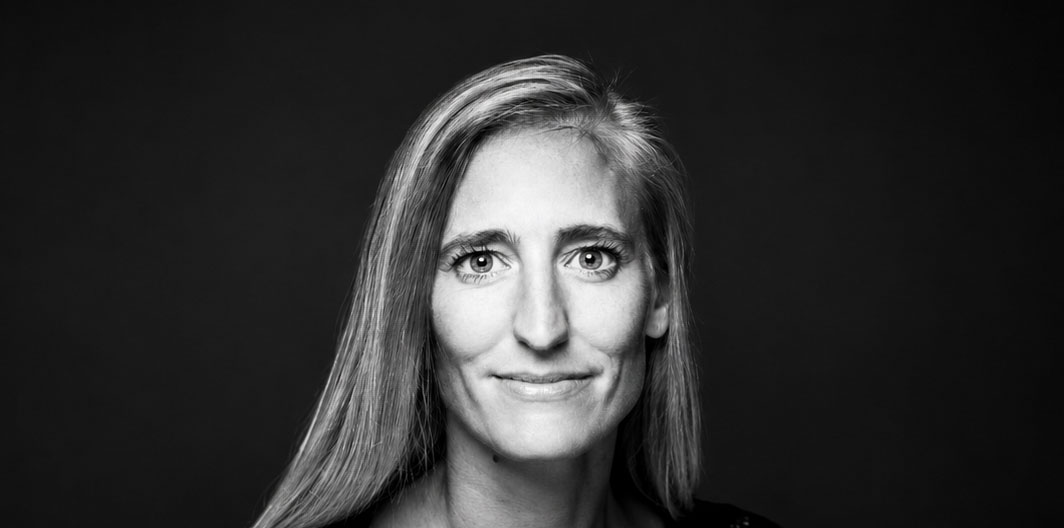

Why was I interested in interviewing Joëlle? She is a Swiss humanitarian leader, lawyer, and negotiation specialist who serves as Executive Director of the Centre of Competence on Humanitarian Negotiations (CCHN), a global community of more than 9,500 frontline humanitarian negotiators. Over the course of her career, she has worked across conflict zones, diplomatic settings, and international humanitarian organizations, helping to bridge the gap between humanitarian principles and operational realities. Her experiences range from negotiating access to vulnerable populations in some of the world’s most challenging environments to leading global efforts to professionalize humanitarian negotiation as a discipline. Combining legal expertise, field experience, and a deep commitment to dialogue, she has become a leading voice on how negotiation, trust, and human relationships can help preserve humanitarian space amid growing global instability.
The interview is a must-read because it offers a rare and deeply personal look into the realities of humanitarian negotiation from someone who has lived them firsthand. Moving far beyond abstract discussions of diplomacy and aid, Joëlle reflects on power asymmetries, ethical dilemmas, trust-building with hostile actors, the future of humanitarian principles, and the growing challenges posed by artificial intelligence and disinformation. Equally thoughtful and practical, the conversation explores how frontline negotiators navigate moral ambiguity, political manipulation, and human suffering while remaining committed to dialogue and humanitarian values. Blending personal stories, leadership lessons, and reflections on conflict, resilience, and human connection, the interview provides a compelling examination of why negotiation remains one of humanity’s most important tools in an increasingly polarized and uncertain world.
Here’s our exchange:
Where are you originally from, and what was your childhood like there?
I was born in Bern, Switzerland. My father comes from the French-speaking canton of Neuchâtel, while my mother is Austrian and grew up in Vienna. I was born in Bern, and when I was two years old, our family moved to Neuchâtel, where I spent most of my childhood.
Looking back, I realize how fortunate I was to grow up in such a stable and nurturing environment. I was the youngest of three children, and my older brother and sister always looked out for me. We lived a quiet life surrounded by nature, in a region where community, family, and the outdoors were an integral part of everyday life.
My mother’s side of the family had a particularly strong influence on me. As the eldest of five children, she came from a large Austrian family, and we regularly travelled to Vienna to spend holidays together. Those gatherings were filled with laughter, conversation, and a deep sense of belonging. They showed me that family is not simply something you inherit; it is something you nurture through presence, generosity, and care for one another.
Many years later, working in conflict-affected environments, I often found myself reflecting on those early experiences. They taught me the importance of human connection and community—values that continue to shape both my personal life and my professional journey.
What was your family dynamic, and who were the key figures in your upbringing?
My mother was undoubtedly one of the most influential people during my upbringing. Trained as an interpreter, she chose to put her professional career on hold while raising us. She created a home filled with warmth, stability, and affection, and her presence gave me a profound sense of security throughout my childhood.
My father influenced me in a different but equally important way. He was endlessly curious and believed deeply in learning, growth, and hard work. Together, my family taught me values that have remained constant throughout my life: respect for others, intellectual curiosity, perseverance, and a belief that meaningful achievements are rarely the result of individual effort alone. They are built through relationships, trust, and collective endeavour.
Who were the most influential people in your childhood, and what lessons did you learn from them?
My maternal grandparents were among the most influential people in my life.
Both lived through the Second World War. My grandmother served as a nurse on the front lines, while my grandfather worked as a radio operator for the army. Like so many of their generation, they experienced uncertainty, loss, and profound disruption before facing the difficult task of rebuilding their lives after the war.
What impressed me most was not what they had endured, but how they chose to live afterwards.
Despite everything they had experienced, they remained remarkably optimistic, generous, and deeply committed to others. Their home was always open. It was a place filled with warmth, laughter, and hospitality. As a child, I never heard them speak with bitterness about the past. Instead, they focused on what could be built, shared, and celebrated. They taught me that resilience is not simply the ability to withstand hardship. It is the ability to preserve your humanity despite it.
From them, I learned the importance of gratitude, forgiveness, and service to others. They showed me that caring for people unifies families and communities, and that the most enduring legacy we leave behind is often not what we achieve for ourselves, but what we contribute to others.
Were there any cultural or family traditions from your childhood that helped define your values?
One tradition stands out above all others: our Easter gatherings at my grandparents’ house.
Every year, the entire family would come together for several days. My grandmother would begin preparing weeks in advance and often spend the night before cooking. By the time everyone arrived, the house would be overflowing with food, conversation, and an infectious sense of joy.
What stayed with me was not the food itself, but the extraordinary effort my grandparents invested in bringing people together. They understood that relationships do not sustain themselves. They require time, attention, and care.
Those gatherings taught me the value of generosity and presence. They showed me that community is built through countless small acts of care, and that investing in relationships is one of the most meaningful things we can do in life.
In many ways, these lessons would later influence my understanding of humanitarian work and negotiation. Lasting solutions are rarely built through transactions alone; they emerge through relationships, trust, and a willingness to understand one another.
What motivated you to study what you studied?
From an early age, I was fascinated by different cultures, international affairs, and the forces that shape societies. I wanted to understand why conflicts emerge, how cooperation becomes possible, and what motivates people to make the choices they do.
Over time, that curiosity naturally led me towards international relations and global affairs. What attracted me was not only the study of institutions or politics, but the human dimension behind them. I became increasingly interested in how individuals and communities navigate uncertainty, disagreement, and change.
After completing my bachelor’s degree in International Relations, I decided to take a year off before pursuing further studies. During that time, I volunteered in a community school in Peru, where I also learned Spanish. The experience was deeply formative. Living and working within a local community gave me a different perspective on social realities, inequalities, and the importance of education and opportunity. It also reinforced my desire to engage more directly with international issues and different cultures.
This led me to work as a Political Attaché at the Swiss Embassy in New Delhi. Working in a diplomatic environment gave me a deep appreciation for the importance of dialogue, relationship-building, and diplomacy in managing complex international issues. While I found the diplomatic dimension fascinating, I realized that before engaging at the political or diplomatic level, I wanted to better understand what was happening on the ground and what was truly at stake for the people most affected by conflict, poverty, and crisis. I felt a strong desire to be closer to communities, to witness realities firsthand rather than primarily through reports, briefings, or policy discussions.
That realization became one of the main reasons I chose to pursue a humanitarian career and seek field deployments as early as possible. At the age of twenty-five, I was deployed to conflict-affected contexts, driven by the conviction that meaningful engagement on international issues requires a deep understanding of the realities people face in their daily lives. Those experiences in the field would later shape my perspective on humanitarian action, negotiation, and leadership in profound ways.
Eventually, the experience in New Delhi made me also realize that dialogue and diplomacy are essential, but that they are often most effective when combined with a strong understanding of international law. I therefore decided to pursue a master’s degree in International Public Law with a specialization in International Humanitarian Law.
At what age did you start working, and what did your first job involve?
My first meaningful work experience came when I was 16 years old. I volunteered with a Swiss development NGO that used sports and the arts as tools for social development. Through the programme, I spent six weeks in the townships of Port Elizabeth, South Africa, working on HIV prevention initiatives.
That experience had a profound impact on me and, looking back, it shaped much of my professional journey.
Before travelling to South Africa, I had read extensively about the HIV epidemic and the challenges facing the country. Yet once I arrived and began spending time with local communities, I quickly realized how incomplete my understanding had been. The reality on the ground was far more complex, nuanced, and human than anything I had encountered in books or reports.
For the first time, I experienced the gap that can exist between how we perceive a problem from a distance and how it is lived by the people directly affected by it. It taught me that proximity matters. If we genuinely want to understand an issue—and hope to contribute positively to addressing it—we need to listen to communities, spend time with them, and appreciate the realities they face every day.
That lesson has stayed with me throughout my career, whether working in humanitarian operations, negotiating access in conflict settings, or leading a global network of practitioners today. The people closest to a problem often understand it best, and meaningful solutions rarely emerge without their voices and perspectives at the centre.
In many ways, those six weeks in South Africa were my first introduction to a principle that continues to guide me: humility. Before trying to change the world, we must first take the time to understand it.
How would you describe your current job and its responsibilities?
Looking back, I never imagined that the path would lead me from field deployments and frontline negotiations to leading a global community of humanitarian practitioners. Yet each stage of that journey reinforced the same conviction: meaningful humanitarian action depends not only on principles, but also on our ability to build dialogue in difficult environments.
I currently serve as Executive Director of the Centre of Competence on Humanitarian Negotiations (CCHN) – a global community dedicated to strengthening the practice of humanitarian negotiation.
At its core, our work is about supporting humanitarian professionals who operate in some of the world’s most complex and challenging environments. These are individuals who negotiate every day with governments, armed groups, local authorities, community leaders, and countless other actors to ensure that people affected by conflict and crisis can access assistance, protection, and basic services.
Today, the CCHN brings together an impressive global community of over 9,500 deeply committed professional frontline negotiators. What makes this community remarkable is its willingness to learn collectively. Humanitarian negotiators often work in isolation, facing difficult decisions under immense pressure. Through the CCHN, they have a space to exchange experiences, reflect on challenges, and strengthen their practice alongside peers who understand those realities firsthand.
What drew me to this field, and what continues to inspire me today, is that humanitarian negotiation sits at the intersection of principles and reality.
Throughout my career, I have seen that agreeing on humanitarian principles is rarely the hardest part. The real challenge lies in translating those principles into action in environments shaped by conflict, mistrust, competing interests, and profound human suffering. Negotiation is often the bridge between what should happen and what can happen.
One of the greatest privileges of my role is meeting extraordinary practitioners from across the globe. I regularly encounter people working in circumstances most of us can scarcely imagine, yet who remain deeply committed to dialogue, humanity, and problem-solving. Their resilience and creativity continually remind me that even in the most difficult situations, meaningful progress remains possible.
What do you see as the biggest blind spot in how humanitarian organizations approach frontline negotiations today?
One of the most significant blind spots is that humanitarian negotiation is still not consistently recognized as a professional discipline that organizations need to invest in.
For many years, there has been a tendency to view negotiation as an innate talent—something people are naturally good at rather than a skill that can be systematically developed. Yet my own experience in the field taught me the opposite.
When I began negotiating in conflict settings, I quickly realized that good intentions were not enough. Preparation, analysis, relationship-building, emotional awareness, strategic thinking, and adaptability all play a critical role. Like any profession, negotiation requires training, practice, mentorship, and continuous learning.
Over the past decade, one of the central missions of the CCHN has been to help professionalize humanitarian negotiation by documenting field experience, facilitating peer learning, and developing practical tools and research that practitioners can use in their daily work.
A second challenge is that humanitarian knowledge often remains fragmented. Some of the most experienced negotiators work in highly isolated environments, where valuable lessons are learned but rarely captured or shared. As a result, organizations sometimes find themselves reinventing solutions to problems that others have already faced.
Finally, there is the constant tension between action and reflection. Humanitarian professionals are under immense pressure to respond quickly to crises, often leaving little time to analyse what worked, what failed, and what could be improved. Yet it is precisely that reflection that allows practice to evolve.
If we want humanitarian negotiation to continue maturing as a field, we need to invest not only in operational response, but also in learning, professional development, and collective knowledge-sharing. Eighty percent of the success of a negotiation lies in its preparation.
How do you reconcile the need for confidentiality in sensitive negotiations with increasing calls for transparency and accountability in the humanitarian sector?
I do not see confidentiality and transparency as mutually exclusive. In fact, I believe both are essential.
Over the years, I have learned that many misunderstandings about humanitarian negotiations stem from a lack of dialogue about what these negotiations actually involve. Humanitarian organizations often negotiate in highly sensitive environments where confidentiality is necessary to protect relationships, maintain access, and, ultimately, safeguard affected populations.
At the same time, humanitarian actors have a responsibility to explain their actions, their limitations, and the difficult choices they sometimes face.
I believe the sector can do more to engage openly with donors, communities, and the broader public about the realities of humanitarian action. We should be transparent about the obstacles we encounter, the compromises we must navigate, and the reasons certain conversations need to take place.
That transparency does not require revealing confidential information. Rather, it requires honest communication about the complexity of the environments in which we operate.
In my experience, accountability begins with dialogue. Trust rarely emerges from declarations alone; it is built over time through openness, consistency, and a willingness to explain not only our successes but also our constraints and failures.
In your experience, are humanitarian negotiators adequately prepared for the political manipulation of humanitarian access, or are we still too reactive?
One of the most insightful observations I have heard came from a diplomatic adviser who contributed to CCHN’s latest research on humanitarian diplomacy: “It takes a great deal of political acumen to remain apolitical.”
That statement captures a reality that humanitarian negotiators confront every day.
Humanitarian negotiations do not take place in a political vacuum. Whether engaging with governments, armed groups, local authorities, or other powerholders, negotiators operate within highly political environments. As a result, they frequently become targets of influence, pressure, and manipulation.
Throughout my own deployments, I learned that maintaining a principled humanitarian position often requires a sophisticated understanding of political dynamics. You need to understand the environment without becoming absorbed by it.
I believe the sector has made important progress, but we are still not investing enough in preparing frontline staff for these challenges. Technical expertise alone is insufficient. Negotiators need opportunities to strengthen their political analysis, exchange experiences with peers, and learn from practitioners who have faced similar situations.
One of the reasons the CCHN was created was precisely to provide such spaces for collective learning. The more complex humanitarian crises become, the more important it will be to equip negotiators with the skills and judgment required to navigate political realities while remaining faithful to humanitarian objectives.
Having worked in both conflict zones and Geneva headquarters, what disconnects have you observed between field realities and policymaking?
One disconnect I have observed repeatedly is the tendency to invest enormous amounts of time and energy in developing policies, frameworks, and compliance mechanisms, while dedicating far less attention to understanding how those policies actually perform in practice.
I say this with some humility because I am a lawyer by training and a strong believer in a rules-based international order. Laws, norms, and institutions matter deeply. They provide the foundation upon which humanitarian action is built. Yet my years in the field taught me that having a rule is not the same as implementing it.
What often fascinated me was the gap between intention and reality. Policies are usually created with good intentions, but when they encounter the complexity of conflict environments, they can produce unexpected outcomes, practical obstacles, or simply fail to achieve their intended purpose.
Real learning begins when we ask why. Why did a policy succeed in one context but fail in another? Why did communities respond differently than expected? Why did access improve in one negotiation and deteriorate in the next?
These questions shaped my growing interest in humanitarian negotiation. I came to see negotiation as one of the most practical tools available to bridge the distance between principles and implementation. It helps transform abstract norms into concrete action and enables humanitarian actors to find pragmatic solutions in situations where legal frameworks alone may not be enough.
What have you learned about power asymmetry when negotiating with armed groups or governments that have little incentive to comply with humanitarian norms?
One of the first lessons I learned as a frontline humanitarian negotiator is that we rarely sit on the stronger side of the table. I often found myself entering rooms where I was the youngest person present, sometimes the only woman, and rarely the person with the most formal authority. Those experiences taught me that influence is not synonymous with power.
Whether negotiating with governments, armed groups, gangs, or local powerholders, humanitarian actors often operate from a position of relative weakness. We do not control territory, resources, or military power. Our influence depends largely on our ability to build relationships, understand the stakes, and create pathways for common shared interests.
Over time, I came to realize that the greater the power asymmetry, the more important negotiation skills become. When leverage is limited, preparation, patience, cultural understanding, and credibility become your most valuable assets.
I remember one particular negotiation during a field deployment where we were trying to encourage an armed group to change its behaviour regarding gender-based violence during conflict. Initially, our discussions made little progress. The group’s leaders viewed the legal frameworks and international norms we referenced as foreign concepts imposed from outside their community.
What changed the conversation was not a stronger argument, but a different approach.
Together with local experts, we began exploring the group’s own traditions, values, and social norms. We searched for concepts within their cultural framework that reflected similar principles of protection and dignity. Once we were able to connect the discussion to rules that were rooted within their own tribal norms, the dynamic shifted.
For the first time, they began to listen. That experience taught me a lesson that has stayed with me throughout my career: influence rarely comes from imposing ideas. More often, it emerges from understanding how others make sense of the world and finding common ground from which genuine dialogue can begin.
Negotiation is ultimately not about winning an argument. It is about creating the conditions for change.
Do you think humanitarian principles—neutrality, impartiality, and independence—are becoming harder to defend in modern conflicts?
I do not believe the principles themselves have become less relevant. If anything, they are as essential today as they have ever been.
What has changed is the complexity of the environments in which humanitarian organizations operate. Contemporary conflicts are increasingly fragmented, polarized, and shaped by competing narratives. In such contexts, the challenge is often not the principles themselves, but how they are understood, demonstrated, and perceived by others.
One of the insights emerging from recent CCHN research on humanitarian principles in negotiations is how the humanitarian system performs its own values. Organizations sometimes focus heavily on explaining the theoretical meaning of these principles while paying insufficient attention to how their actions are interpreted by counterparts on the ground. From a negotiation perspective, perception matters.
A humanitarian organization may consider itself neutral, but if its actions are perceived differently by local actors, that perception will inevitably influence access, trust, and acceptance. This is why I increasingly see humanitarian principles not as abstract concepts, but as practices that must be demonstrated consistently through behaviour.
The principles were never intended to be ends in themselves. Their purpose is to preserve a humanitarian space where assistance and protection can reach people in need.
In that sense, negotiation plays a crucial role. Humanitarian negotiation is sometimes misunderstood as negotiating the principles themselves. In reality, it is often one of the most powerful tools we have to operationalize those principles and ensure they are respected in practice.
How do you build trust with actors who fundamentally distrust humanitarian organizations or view them as extensions of foreign agendas?
One of the realities of working in conflict environments is that trust is often in short supply.
In some contexts, expecting trust may even be unrealistic. What is usually possible, however, is creating a respectful relationship and a meaningful human connection. For a humanitarian negotiator, that is often where progress begins.
Over the years, I have learned that humanitarian negotiations are fundamentally relational. Technical expertise matters, for sure, but relationships are often what determine whether a conversation can move forward.
One experience that remains particularly vivid involved negotiations over detention conditions in an interrogation facility operated by intelligence services in West Africa. My counterpart was initially extremely reluctant to engage with me. He viewed our presence with suspicion and had little interest in granting access to such a sensitive location.
What made the situation even more challenging was that, in his eyes, I had little legitimacy to negotiate with him. I was a young Swiss woman seeking access to a highly sensitive security facility run by powerful senior intelligence officials. From his perspective, there was little reason to take me seriously, let alone engage in a sustained dialogue about detention conditions.
Building trust was not a matter of a single breakthrough conversation. It took months.
I remained present, followed through on commitments, listened with empathy, and sought areas of common concern. Rather than trying to assert authority, I focused on demonstrating professionalism, consistency, and respect. Gradually, a relationship developed. He began answering my calls. Meetings became easier to arrange. Limited access was eventually granted, which over time created opportunities for further engagement.
That experience taught me an important lesson about vulnerability and legitimacy. In many negotiations, particularly as a young woman early in my career, I could not rely on formal authority or status. Credibility had to be earned patiently through actions rather than assumed. While that sometimes made negotiations more difficult, it also taught me the value of humility, persistence, listening, and authentic relationship-building.
What I learned from that experience is that trust is rarely built through persuasion alone. It emerges through consistency, predictability, and demonstrated intent.
At the CCHN, we place significant emphasis on the interpersonal dimension of negotiation. Our approach is grounded in neuroscience, particularly our understanding of how emotions and stress affect decision-making, communication, and human relationships. In high-pressure environments, the ability to remain calm, present, and genuinely attentive can be as important as any negotiation strategy.
At its core, trust is not built through words. It is built through presence and repeated actions that demonstrate reliability and respect.
What is the single hardest ethical compromise you have seen negotiators face in the field?
Without hesitation, I would say the tension between denunciation and silence.
It is one of the most difficult dilemmas humanitarian professionals encounter, and one that can stay with you long after a mission ends. I have faced it myself.
Imagine witnessing a serious violation and knowing that publicly denouncing it could bring attention to the abuse and perhaps even generate pressure for change. At the same time, you also know that speaking out may jeopardize access to affected communities and prevent humanitarian assistance from reaching those who depend on it.
The question becomes painfully simple: do you denounce what you have seen and risk losing access, or do you remain silent in order to continue helping people? There are situations where neither option feels fully satisfactory.
One of the lessons I learned in the field is that humanitarian work often unfolds in shades of grey rather than clear moral certainties. Decisions must be made with incomplete information, under significant pressure, and with real consequences for vulnerable communities.
What matters is remaining anchored in the humanitarian purpose behind those decisions and continuously reflecting on their implications and learning from our mistakes.
To illustrate some of the most common ethical dilemmas frontline negotiators face on the ground, the CCHN, together with the International Committee of the Red Cross (ICRC), has developed an interactive story where you can test your negotiation skills. It illustrates just how difficult these decisions can be when there are no perfect answers and every choice carries consequences.
These dilemmas are rarely discussed publicly, yet they are among the defining realities of humanitarian negotiation.
Do you believe humanitarian negotiation should remain an art practiced by individuals, or should it evolve into a formalized discipline with standardized methods?
For many years, there has been a persistent myth that some people are simply born negotiators.
My own experience, and the collective experience of thousands of practitioners within the CCHN community, suggests otherwise. Negotiation is not an innate personality trait. It is a profession and a discipline that can be learned, refined, and mastered through practice.
Certainly, some individuals may possess natural qualities that help them communicate or build relationships. But effective humanitarian negotiation requires much more than intuition and good soft skills. It requires preparation, analysis, strategic thinking, emotional regulation, teamwork, and continuous learning.
One insight that often surprises people is that much of a successful negotiation happens long before anyone sits down at the table. In our work at CCHN, we frequently emphasize that preparation accounts for 80% of a negotiation’s success.
The best negotiators I have encountered are rarely the most charismatic individuals in the room. More often, they are the people who have invested the time to understand the context, map stakeholders, anticipate scenarios, and prepare collectively with their teams, while knowing how to listen with empathy to their counterparts.
This conviction has guided much of the CCHN’s work over the past decade, including the creation of the Naivasha Grid, a negotiation preparation framework increasingly used across the humanitarian sector as a reference methodology.
I believe the future of humanitarian negotiation lies in combining the wisdom of experienced practitioners with rigorous methods, research, and structured learning. It should remain deeply human, but it should also be recognized as a professional discipline deserving of the same investment and respect as any other field of expertise.
What does success look like for the CCHN ten years from now—more skilled negotiators, a stronger global community of practice, or measurable impact on humanitarian access?
Ultimately, success for the CCHN will not be measured by the size of our network, the number of trainings delivered, or even the sophistication of our methodologies.
Success will be measured by whether people affected by conflict and crisis are better protected and better assisted. Everything else is a means to that end.
I hope that ten years from now we will have contributed to a world in which humanitarian negotiation is fully recognized as a professional discipline and where frontline practitioners have access to the skills, support, and peer networks they need to navigate increasingly complex crises.
I also hope that the global community of negotiators we are building continues to grow—not only in size, but in diversity, expertise, and collective wisdom. Having spent years negotiating in conflict settings myself, I know how lonely and uncertain these situations can feel. One of my hopes is that future generations of negotiators never have to face those challenges in isolation.
If we can help empower a generation of humanitarian professionals who are better equipped to navigate conflict, build dialogue, and secure access and protection for vulnerable populations, then I believe we will have fulfilled our mission.
How do you see AI-driven disinformation campaigns complicating humanitarian negotiations, particularly in fragile contexts where trust is already scarce?
I believe this is one of the most important challenges humanitarian organizations will face in the coming years.
We have already seen examples of disinformation campaigns targeting humanitarian actors, sometimes resulting in increased hostility towards organizations, security risks for staff, and even the suspension of humanitarian operations.
What concerns me most is that these campaigns exploit something that humanitarian action fundamentally depends on: trust. Once misinformation begins to spread, facts alone are often insufficient to counter it. People tend to seek information from sources they already trust.
Interestingly, some of the most resilient responses I have observed came from humanitarian teams that had invested in relationships long before a crisis emerged. Frontline negotiators who had built strong connections with communities were often able to regain control of the narrative more quickly because there was already a foundation of trust to draw upon.
One lesson I take from this is that trust cannot be built during a crisis alone. It must be cultivated beforehand.
A second lesson is the importance of proactive communication. As one member of our CCHN community in Ukraine told us after their organization became the target of a disinformation campaign: “If you don’t take the space to define who you are, what you stand for, and whom you serve, it will be done by others.”
That observation has stayed with me. In an increasingly polarized and digital world, humanitarian organizations must become more intentional about explaining their purpose, values, and actions.
Can humanitarian negotiators realistically verify facts on the ground when deepfakes or manipulated content spread faster than accurate reporting?
The challenge is certainly becoming more difficult.
In many ways, however, this development reinforces the importance of something humanitarian organizations have always relied upon: proximity. Technology can distort reality, but there is no substitute for being present, observing directly, and maintaining trusted networks of local contacts.
Humanitarian negotiators will increasingly need to combine traditional methods of verification with new forms of digital literacy. The ability to cross-check information through multiple independent sources will become even more important.
This is another reason why local relationships matter so much. The stronger and more diverse your network is, the better your ability to distinguish fact from manipulation. Ironically, as technology becomes more sophisticated, the value of human relationships may become even greater, and skills such as negotiation and diplomacy may become even more vital.
What ethical risks arise if humanitarian actors use AI to gain insights about negotiation counterparts in sensitive political environments?
The humanitarian sector works with extraordinarily sensitive information.
In some contexts, organizations possess data relating to people’s identities, locations, vulnerabilities, movements, or relationships with armed actors. Misusing such information could have severe consequences for the very people humanitarian action seeks to protect. For that reason, I believe the principle of “do no harm” must remain our primary ethical compass when considering the use of AI.
The technology itself is neither inherently good nor bad. What matters is how it is used, what safeguards exist, and whether human judgment remains central to decision-making.
Humanitarian organizations have a responsibility to ensure that technological innovation never comes at the expense of the safety, dignity, or rights of affected populations. As AI capabilities continue to expand, this responsibility will only become more important.
Would you advocate for a code of conduct or shared standards among humanitarian agencies to address AI and information warfare in the negotiation process?
Absolutely. Humanitarian organizations have long recognized the importance of common standards in areas such as protection, accountability, and data management. AI should be no different.
No single organization can address these challenges alone. The risks associated with misinformation, manipulation, surveillance, and the misuse of sensitive data affect the entire sector.
Developing shared standards would help create common expectations, strengthen accountability, and ensure that technological innovation remains aligned with humanitarian values. The pace of technological change is accelerating rapidly. Our ethical frameworks and professional standards must evolve alongside it.
Which book, film, or piece of art has influenced how you see the world, and in what way?
Choosing just one is difficult because different books have influenced me at different moments in my life.
On a personal level, Hermann Hesse’s Siddhartha is a book I often return to. It reminds me to slow down, reflect, and reconnect with what truly matters whenever I feel pulled too strongly by the pace and complexity of life.
Another book that has had a lasting impact on me is L’Éloge de la faiblesse by Alexandre Jollien. His reflections on vulnerability, resilience, and the human condition are both deeply moving and profoundly inspiring.
Professionally, I have recently found two books particularly thought-provoking in helping me understand the world we are currently navigating: L’Heure des prédateurs by Giuliano da Empoli and L’Élégance de la manipulation by Marwan Mery. Both offer compelling perspectives on power, influence, manipulation, and the evolving dynamics shaping contemporary societies.
What connects all of these works is their invitation to look beneath the surface of things and question assumptions—something that has been equally important in my personal life and my professional journey.
When you look at younger generations, what gives you hope and what worries you?
One of the privileges of my work is regularly engaging with young humanitarian leaders and youth networks around the world.
What gives me hope is their sense of agency. I am continually impressed by how engaged, informed, and determined many young people are when it comes to addressing the issues that matter to them. They are often less willing to accept the status quo and more prepared to challenge established assumptions. Rather than waiting for permission, they frequently create their own spaces for action and leadership. That energy gives me enormous optimism.
My concern is not about younger generations themselves, but about the environment in which they are growing up. The unprecedented influence of social media and digital technologies brings extraordinary opportunities, but it also carries significant risks for mental health, attention, and human connection. We are still learning how to navigate these changes as societies.
One of the challenges ahead will be ensuring that technological progress strengthens human well-being rather than undermining it.
If you could spend a full day with any historical figure—not for their fame but for their mind—who would it be, and what would you ask them?
I would choose Nelson Mandela.
Like many people, I admire what he achieved politically. Perhaps what resonates with me most about Mandela is his unwavering belief in dialogue. Throughout my career—from diplomacy to humanitarian negotiation—I have repeatedly seen how easy it is for people to retreat into opposing camps and how difficult it is to keep communication alive. Mandela’s example reminds us that dialogue is not a sign of weakness. On the contrary, it often requires tremendous courage, patience, and moral conviction.
I would want to understand how he managed to preserve his sense of purpose during twenty-seven years of imprisonment. How did he resist bitterness? How did he maintain hope in circumstances designed to extinguish it? And how did he emerge not only with his convictions intact, but with the capacity to pursue reconciliation rather than revenge?
These questions resonate with me because, throughout my work, I have seen how conflict can trap individuals and societies in cycles of fear, mistrust, and polarization. Mandela’s life reminds us that courage is not only the ability to endure hardship, but also the ability to remain open to dialogue when division might seem easier.
I would also be curious to know whether, looking back, there are things he would have done differently in South Africa’s reconciliation process and what advice he would give to the peacemakers of today. Leaders are often remembered for their successes, but I find their reflections on unfinished work equally valuable.
If you had to teach a class on something completely unrelated to your career, what would you teach and why?
Probably meditation. I began practicing meditation during my first humanitarian deployments more than fifteen years ago, and it has remained one of the most valuable tools in my life.
Humanitarian work can be intense. It often involves navigating uncertainty, high levels of responsibility, and exposure to difficult human realities. Over time, I realized that maintaining clarity and balance required more than professional skills alone.
Meditation taught me the importance of paying attention, creating space between reaction and response, and developing a greater awareness of my own thoughts and emotions.
Interestingly, many of these lessons also apply to negotiation. The ability to remain present, listen with empathy, and manage your own emotions and triggers can be enormously valuable when engaging in difficult conversations.
More broadly, I believe we live in a world that increasingly rewards speed, distraction, and constant stimulation. Meditation offers something different. It invites us to slow down, reconnect with ourselves, and cultivate a deeper sense of perspective and awareness.
If you could ensure that one value or principle is never lost in society, which would it be?
An overarching value I would choose is the pursuit of peace and dialogue.
Throughout my life and career, I have become convinced that dialogue, diplomacy, and negotiation are some of humanity’s most powerful tools. They are our best chances to resolve conflicts without violence and can create the possibility of understanding, coexistence, and peaceful change.
Many of the challenges we face today—from political polarization to armed conflict—are exacerbated when people stop listening to one another. Negotiation begins with something deceptively simple: the willingness to listen with genuine curiosity and empathy.
Whether in international negotiations, humanitarian crises, or personal relationships, I have repeatedly seen that meaningful progress often starts when people feel heard and understood. If there is one principle worth protecting, it is our capacity to remain in conversation with one another, even when we disagree.
Humanity is facing radical changes. To name just ten: geopolitical instability, climate change, economic inequalities, technological risks, public health challenges, political polarization, resource scarcity, humanitarian crises, misinformation, and disparities in global healthcare access. If, in an imaginative exercise, you had the power to solve one of these problems, which one would you choose and why?
Climate change. Not because the other challenges are less important, but because climate change increasingly acts as a multiplier of many of them.
Its consequences extend far beyond the environment. It affects food security, access to water, migration patterns, economic stability, public health, and, increasingly, conflict dynamics. Many of the humanitarian crises we witness today are already being intensified by climate-related pressures.
What concerns me most is that the people who contribute least to the problem are often those who suffer its consequences most acutely. Addressing climate change requires a level of international cooperation that can sometimes feel difficult to imagine in today’s geopolitical environment. Yet it also offers an opportunity to recognize our shared vulnerability and our shared responsibility.
For me, it is one of the defining challenges of our time.
What do you think humans owe each other, if anything at all?
Human beings cannot thrive in isolation. For that reason, I believe we owe one another the ongoing effort of learning how to live together.
That may sound simple, but it is one of the most demanding tasks we face as individuals and societies. It requires tolerance, empathy, compromise, and an acceptance that others may see the world differently from us.
Throughout my career, I have spent much of my time working in environments where relationships have broken down and where violence has replaced dialogue. Those experiences have reinforced my belief that coexistence should never be taken for granted.
Living together peacefully is not a passive state. It is an active practice that requires continuous investment from all of us.
Interviews often focus on the latest positive news, or interviewees only share what went well. Could you share something from 2025 that didn’t go as expected and what you learned from it?
In 2025, there were projects and initiatives that did not evolve in the direction I had hoped. Some plans required more time, more consultation, or different approaches than initially anticipated. As leaders, we often feel pressure to accelerate change, yet meaningful and sustainable transformation rarely follows a straight line.
What I learned is the importance of distinguishing between what I can influence and what lies beyond my control. Leadership has become less about having answers and more about creating the conditions in which others can succeed.
Some of the best humanitarian negotiators I know are remarkable not because they dominate conversations, but because they listen with empathy, go beyond positions to truly understand what is at stake for the other side, use their networks of influence, and ultimately help create the path toward a shared outcome. In many ways, this reflects a quote by the poet Rumi that we often use at the CCHN to capture the essence of frontline humanitarian negotiation: “Out beyond ideas of wrongdoing and rightdoing, there is a field. I’ll meet you there.”
What personal goals—if you feel comfortable sharing them—do you have for 2026?
My goal for 2026 is surprisingly simple: to focus my time and energy on what I can control.
As we take on greater responsibilities, there is often a temptation to become preoccupied with factors beyond our influence—global events, organizational challenges, or the expectations of others. I have come to appreciate that effectiveness begins with clarity about where our energy is best invested.
Professionally, it means continuing to strengthen our unique community of humanitarian negotiators and supporting the amazing team I have the privilege to work with at the CCHN. Personally, it means protecting time for the people, practices, and relationships that keep me grounded. Humanitarian work often reminds us that time is finite, and I have become increasingly conscious of spending it on what matters most.
In many ways, it is an ongoing exercise in balance.
Imagine you are in the final moments of your life. What work-related news would you like to hear, and why?
I would like to hear that the number of people in need of humanitarian assistance and protection has dramatically declined. Not because humanitarian organizations have become larger or more effective, but because fewer people require their services in the first place.
I would like to hear that armed conflicts have become less frequent, that violence has given way to dialogue, and that societies have invested more consistently in peaceful approaches to resolving disputes.
Perhaps this is an ambitious hope. Yet after spending much of my professional life working at the intersection of conflict, negotiation, and humanitarian action, I remain convinced that dialogue offers one of the most powerful alternatives to violence.
If, at the end of my life, I could hear that more conflicts were being resolved through negotiation, mediation, and diplomacy rather than force, I would feel that humanity had moved in the right direction.
Ultimately, the goal of humanitarian action is not to manage suffering more effectively. It is to preserve humanity and help create a world in which less suffering occurs in the first place.