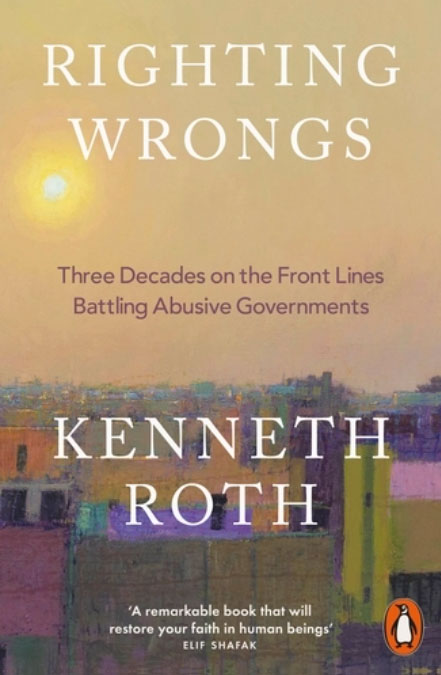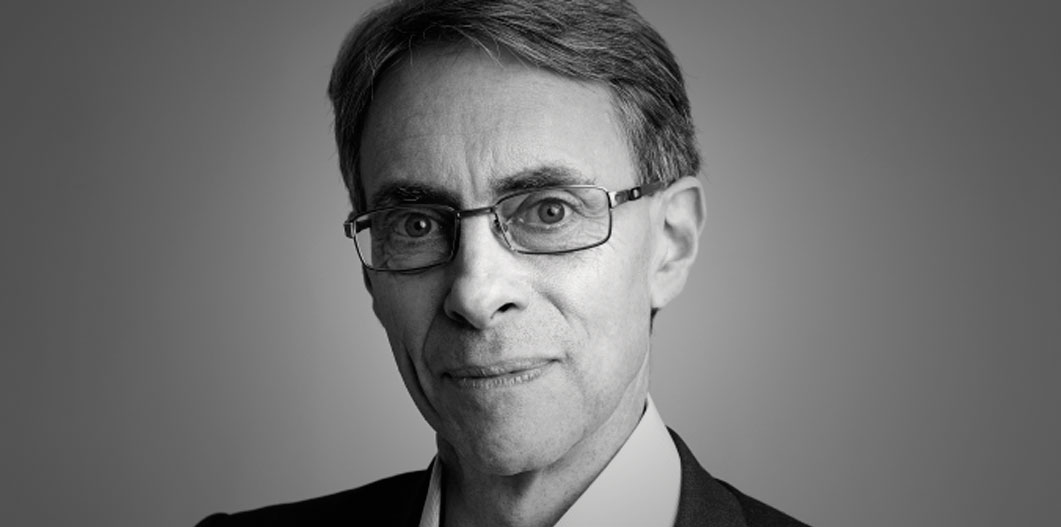

Why did I feel it was interesting to interview Ken? He is one of the most influential figures in modern human rights advocacy, best known for his nearly three decades as Executive Director of Human Rights Watch (HRW), where he helped transform the organization into a global force documenting abuses in more than 100 countries. A former federal prosecutor and Yale Law School graduate, Ken’s commitment to defending human dignity has been shaped in part by his family’s experience fleeing Nazi Germany. Over the course of his career, he became synonymous with the strategy of “naming and shaming” abusive governments—from exposing atrocities during the Rwandan genocide to confronting China’s repression in Xinjiang—while expanding international norms on accountability, war conduct, and democratic governance. Since stepping down from HRW in 2022, he has continued his scholarship and advocacy as a visiting professor at Princeton’s School of Public and International Affairs and through his recent memoir, Righting Wrongs.
This interview is compelling because he reflects on the moral and psychological toll of spending a lifetime documenting the worst forms of cruelty while explaining why, paradoxically, the work strengthened rather than eroded his faith in humanity. He offers unusually candid insights into the gap between democratic rhetoric and democratic behavior, calling out hypocrisies—from U.S. support for Israel despite grave abuses to Europe’s selective indignation over global conflicts—that undermine the moral authority of democratic states. Ken also describes how the human rights movement can still exert real pressure on even the most powerful governments, revealing a strategic optimism that counters the despair many feel about rising global authoritarianism.
Here’s our exchange:
Where are you originally from, and what was your childhood like there?
I was raised in a comfortable middle-class suburb of Chicago. There wasn’t much there that pointed me toward the wider world, but I came of age in the 1960s, when global events regularly intruded on our television screens — most notably the tumultuous 1968 Democratic National Convention in Chicago, where broad opposition to the Vietnam War came to the fore.
What was your family dynamic, and who were the key figures in your upbringing? Who were the most influential people in your childhood, and what lessons did you learn from them?
My father played a formative role in my upbringing. He escaped Nazi Germany as a twelve-year-old in July 1938, four months before Kristallnacht. He told my siblings and me stories about what it was like to be a young Jewish boy in Germany at the time — worried about being bullied by the Brownshirts on the playground and terrified that my grandfather would be arrested on some pretense. I grew up very aware of the evil that governments could do. That awareness strongly shaped my determination to devote my career to preventing the repetition of such atrocities.
What is one of your earliest memories, and how do you think it shaped who you are today?
My father was elected to the local school board in an effort to ensure that the public schools we attended served his four children well. We were his campaigners and were occasionally drawn into the heated political battles that such campaigns can generate. It gave me an early taste of politics.
Were there any cultural or family traditions from your childhood that helped define your values?
From my Judaism, I drew a strong emphasis on learning and education. I also developed a value system in which I instinctively looked at whether people were being treated fairly, rather than focusing on what was best for my particular group. That is hardly the approach of the current Israeli government, but it is the tradition of Judaism in which I was raised.
What motivated you to study what you studied?
After university, I went to law school because I saw being a lawyer as a good route to a life of public service. Over time, I developed an interest in human rights. Jimmy Carter was the U.S. president then, and he introduced — for the first time — the idea that human rights should guide U.S. foreign policy. Even though the principle was often honored in the breach, I found it exciting, a new frontier.
My pursuit of a career in human rights, however, did not begin auspiciously. I signed up for the one human rights course offered at my law school, and it was cancelled. To this day, I have never taken a formal human rights course. I also graduated into a world with barely any human rights jobs; Human Rights Watch then had only two employees. I resigned myself to working as a lawyer and volunteering nights and weekends on human rights matters, which I did off and on for six years.
At what age did you start working, and what did your first job involve?
My first jobs, for pocket money, began around age 10. I mowed neighbors’ lawns, babysat, delivered newspapers, and taught swimming lessons.
My most significant early job as a lawyer was as a federal prosecutor, mainly in New York and briefly in Washington on the Iran-Contra investigation. Being a prosecutor taught me the importance of uncovering facts to help people determine what was right and wrong — an insight that Human Rights Watch routinely deployed. When my traditional term as a prosecutor ended, I began looking for next steps and was remarkably fortunate that a position opened at Human Rights Watch. I applied and was hired. While my friends were heading off to become partners at major law firms, I went to a small, obscure organization that few had heard of. It was the best professional move I ever made.
How would you describe your current job and its responsibilities?
I am currently a visiting professor at Princeton’s School of Public and International Affairs, where I teach two courses — one graduate, one undergraduate. I recently published my first book, Righting Wrongs: Three Decades on the Front Lines Battling Abusive Governments.
But I assume you’re asking about my time at Human Rights Watch, where I served as executive director for 29 years. My responsibilities there included representing the organization before governments and the media, strategizing how to maximize pressure on governments to improve their human rights practices, managing a staff of 550 people working in 100 countries, writing about urgent human rights issues, and raising the funds needed to sustain these efforts — $100 million annually by the end. I carried out all of this work with a strong team across the HRW staff.
How has a lifetime spent documenting the worst of human brutality reshaped — or tested — your fundamental faith in humanity?
I have obviously seen the worst of humanity, but what is often overlooked is that the human rights movement succeeds by appealing to the best of humanity. By enlisting the public’s sense of right and wrong — by mobilizing outrage at repression and atrocities — the movement can exert pressure on governments to curb abuses. Seeing this process work repeatedly, as I describe in my book, continually renewed my faith in humanity.
When you look back, do you think witnessing systemic cruelty for decades strengthens one’s moral resolve, or erodes it?
As I mentioned, my work defending human rights kept restoring my moral resolve. Governments often find it convenient to ignore human rights as a means of suppressing opposition and maintaining power. The human rights movement has learned how to impose sufficient reputational, economic, and diplomatic costs to change the calculus behind such repression. As I came to appreciate our ability to influence even powerful governments and improve the lives of people in dire circumstances, my moral resolve was strengthened.
Democracies often claim moral superiority, yet frequently fall short in their own human-rights record. What is the hypocrisy that troubles you the most?
I have been particularly appalled by the exception to human rights standards that Israel seems to enjoy. It is widely considered to have just committed genocide against Palestinian civilians in Gaza. Rather than grant a Palestinian state, it is imposing apartheid on Palestinians in the occupied territory. Yet Israel continues to receive billions of dollars annually in arms and military assistance from the U.S. government. Germany has understandably made it a “reason of state” to atone for the Holocaust, but it pursues this not by upholding the human rights principles that protect Jews and everyone else, but by defending the Israeli government regardless of its conduct. Such blatant hypocrisy is readily exploited by abusive governments around the world.
Other current examples disturb me as well: the United Arab Emirates has been arming the paramilitary Rapid Support Forces as they commit genocide in Sudan’s Darfur region, yet few Western governments protest because the UAE is wealthy. European governments rightly denounce Russia’s invasion of Ukraine, yet largely ignore Rwanda’s invasion of eastern Democratic Republic of Congo. They claim to defend human rights in China but do little to halt the import of goods made with Uyghur forced labor.
Is the gap between democratic rhetoric and action widening, or are we simply more aware of these contradictions today?
Given the rise of autocratic governments today, there is a particularly wide gap between rhetoric and action, but this is not unprecedented. Similar disparities existed at the height of the Cold War or in the aftermath of the September 11, 2001 attacks. We shouldn’t despair; we should push back and work to return as quickly as possible to a more principled period.
To what extent do you believe democracies weaponise human-rights discourse for geopolitical ends, and is that phenomenon accelerating?
That has always been a problem, but I wouldn’t say it is accelerating. Since the Cold War, governments have tended to highlight the human rights abuses of their adversaries while downplaying those of their allies. But this dynamic gives the human rights movement an opening: by exposing the hypocrisy, we can increase pressure even on abusive allies.
When powerful states invoke human rights selectively, does that weaken the entire normative framework or simply reveal the reality of international politics?
When powerful states try to exempt themselves or their allies from human rights scrutiny, it naturally generates outrage. But as I describe in my book, the human rights movement has been able to harness that outrage to accomplish important things despite the opposition of superpowers. The creation of the International Criminal Court is a good example. It took an alliance of roughly 60 small and medium-sized states to muster the moral and political clout needed to overcome resistance from Washington, Moscow, and Beijing. The final vote in favor of a strong ICC was 120 to 7.
How can human-rights advocacy maintain credibility when authoritarian governments dismiss it as Western imperialism and democracies apply it inconsistently?
When authoritarian governments try to dismiss democracy and human rights as Western impositions, it often backfires. People everywhere want governments that are accountable to their needs — governments that serve the public, not rulers and their cronies. In recent years, we’ve seen people take to the streets in large numbers, often at great personal risk, to demand democracy over autocracy. Sometimes these movements succeed — as in Bangladesh, Sri Lanka, Poland, Brazil, and South Korea. Sometimes they are brutally suppressed — as in Iran, Russia, Belarus, Nicaragua, and Uganda. But as Bashar al-Assad discovered, ruling solely through violence is perilous; people are always finding ways to resist and plot your downfall.
In an increasingly fractured information landscape, what makes an organisation — or an individual — “credible” today?
Today’s information environment is challenging, with countless media outlets and social media platforms that can be flooded with disinformation, often generated by AI-driven bots. Yet a significant portion of the public still seeks out media and organizations — such as Human Rights Watch — that make a conscientious effort to convey the truth. Even leaders like Vladimir Putin and Xi Jinping reveal their own understanding of the enduring power of truth: despite commanding massive disinformation machines, they still invest heavily in censorship because they know propaganda alone won’t persuade people who are determined to find accurate information.
Do you think neutrality in human-rights work is still possible, or has the global environment made neutrality an illusion?
The human rights movement does not claim to be “neutral” about human rights — we are unapologetically partisan in defending them. But we are rigorously objective in our factual reporting. We never invent facts to generate pressure. We have long known that the most powerful form of advocacy is rooted firmly in accurate, verifiable information.
You have spent your career placing pressure on governments. Which type of government — democratic or authoritarian — ultimately reacts more predictably to human-rights criticism?
Today, governments of all kinds — democratic and authoritarian — feel compelled to pretend they respect human rights. That gives the human rights movement significant leverage. When we highlight the gap between lofty rhetoric and harsh reality, the embarrassment can be powerful. Governments go to great lengths to avoid sustained negative exposure. Ultimately, many recognize that the only way to stop a barrage of criticism is to change their conduct.
Does documenting suffering ever risk becoming emotionally numbing, and how does one continue to see the individual behind every violation?
It can be difficult to confront accounts of human suffering day after day. I kept going because I understood the purpose behind collecting this information and saw how effectively we could use it to improve people’s lives.
Have there been moments when human-rights advocacy clearly changed the trajectory of a crisis, and what made those moments possible?
Yes — my book is filled with such examples. I open with one: beginning in March 2020, sustained human rights pressure succeeded in stopping the Russian-Syrian military alliance from deliberately bombing three million civilians and civilian institutions such as hospitals in Syria’s Idlib province, the last area held by the armed opposition. Idlib later became the birthplace of the HTS rebel movement that overthrew the Assad dictatorship in December 2024.
How do you distinguish between legitimate criticism of human-rights organisations and coordinated attempts to discredit them?
It isn’t difficult. I welcome challenges to our factual reporting because we are extraordinarily careful, and we consistently prevail when the debate is grounded in facts. But when governments resort to name-calling or emotional appeals, it’s clear they are trying to avoid engaging with the evidence. That tactic is weak — and it rarely succeeds.
Is the traditional model of naming-and-shaming still effective, especially when many governments no longer fear reputational damage?
Naming and shaming remains very powerful. In my book, I describe how Xi Jinping personally called heads of state in an effort to prevent criticism at the U.N. Human Rights Council in Geneva. Even Trump is susceptible to shame — not through appeals to human rights per se, but by highlighting how other governments manipulate him into allowing their abuses to continue, despite his self-image as a master negotiator. That dynamic has contributed to positive shifts in his conduct on issues such as Gaza and Ukraine.
After decades of confronting abuses, what gives you confidence — if anything — that global human-rights protection can still be strengthened rather than eroded?
My book is filled with examples showing that, even in the most difficult circumstances, the human rights movement has been able to curb atrocities and repression. It doesn’t always succeed, but it succeeds often enough to make the pursuit of human rights entirely worthwhile.
Which book, film, or piece of art has influenced how you see the world, and in what way?
I’ve been influenced less by fiction than by real life — particularly by the many human rights defenders around the world who, at enormous personal risk, work to improve the lives and rights of people in their countries.
When you look at younger generations, what gives you hope and what worries you?
I work closely with younger generations — they are my students and the front-line activists of the human rights movement. I see no decline in their commitment to the values at the heart of human rights.
If you could spend a full day with any historical figure — not for their fame but for their mind — who would it be, and what would you ask them?
I would love to have spent time with early figures in the human rights movement, such as Andrei Sakharov. I would ask why someone of his stature and accomplishment was willing to risk everything for an ideal that, at the time, seemed novel and nearly unattainable. He foresaw the Soviet Union’s demise long before most people, and I would want to understand the basis of that foresight.
If you had to teach a class on something completely unrelated to your career, what would you teach and why?
I would love to teach a literature class. My greatest passion apart from human rights work is reading fiction.
If you could ensure that one value or principle is never lost in society, which would it be?
The belief that the “other” is still a person — someone with the same human desires and interests and the same entitlement to rights as we have.
Humanity is facing radical changes… If, in an imaginative exercise, you had the power to solve one of these problems, which one would you choose and why?
I have great faith in democracy — in government that is truly accountable to and serves its people. Many flaws exist in our democracies today. Fixing them is essential to addressing all of these larger global challenges.
What do you think humans owe each other, if anything at all?
To treat each other as we ourselves would want to be treated.
Interviews often focus on the latest positive news… Could you share something from 2025 that didn’t go as expected and what you learned from it?
This year I published my first and only book. I learned how difficult it is to sell books, but also how they create a wonderful platform to talk about the world. At many of my book events, we began by discussing the book, but most of the time felt like collective political therapy — helping people make sense of today’s challenges and think about how to work for improvements.
What personal goals — if you feel comfortable sharing them — do you have for 2026?
I’m still figuring out my next steps. I will continue teaching, probably at Princeton. I’ll keep writing regular op-eds, most often for The Guardian. I’ll continue serving on several NGO and university boards. But I’m also open to new opportunities — perhaps a new book, perhaps a podcast. I’m still exploring what comes next.
Imagine you are in the final moments of your life. What work-related news would you like to hear, and why?
I would hope to hear that we have emerged from the current negative cycle and returned to a more consistent and principled global commitment to human rights.